Patrick Radden Keefe: How to Tell a Story
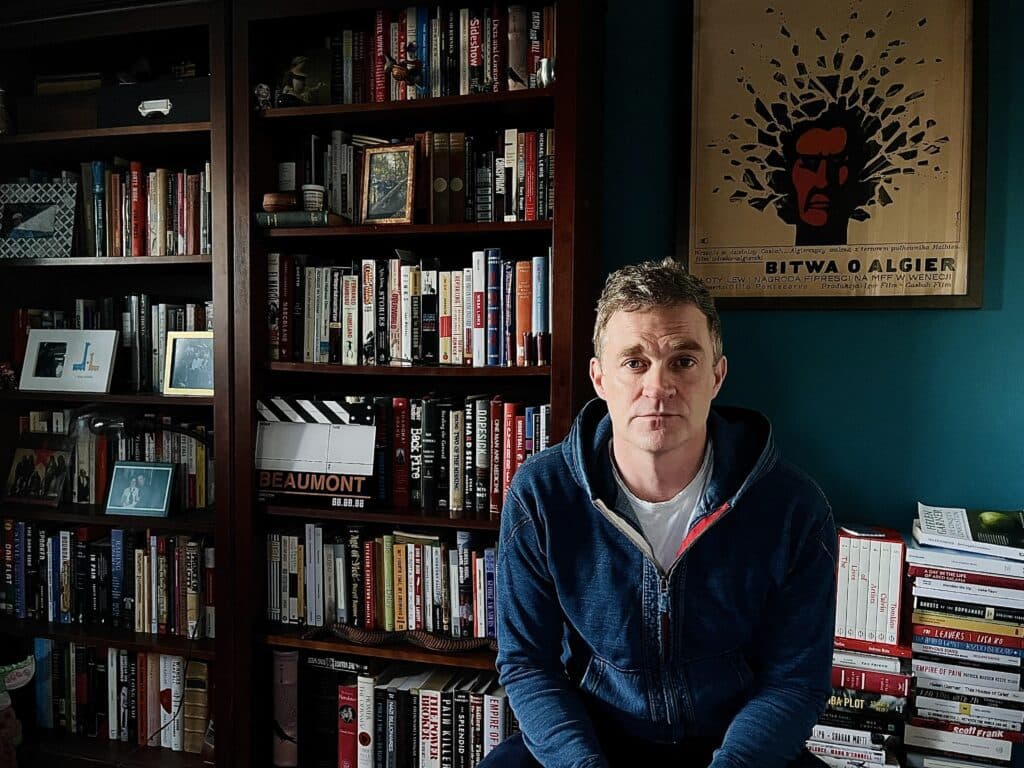
Please note: Unfortunately, this programme is fully booked, but you can still sign up for the waiting list. The New Yorker journalist Patrick Radden Keefe on his approach to reporting. What draws him to figures from the criminal underworld? How do you write journalistic true-crime stories without slipping into sensationalism? And how does he recognize a great story in the first place? This programme is held at the Balie Theatre.
Patrick Radden Keefe: How to Tell a Story
Dates
A diagnose of our times
Few nonfiction writers have attained such stature that they appear as themselves in the HBO series Industry and serve as the face of a fashion brand. Patrick Radden Keefe is one of them. Keefe previously wrote groundbreaking accounts of the Sackler family, whose pharmaceutical empire made thousands of Americans addicted to prescription painkillers, as well as exposés of the Mafia underworld in New York’s Chinatown.
In his reporting for The New Yorker, Keefe has profiled figures such as drug kingpin El Chapo and Dutch crime boss Willem Holleeder. His research is so meticulous that he solved the murder of Jean McConville, a woman who was kidnapped and killed during the ‘Troubles’ in Ireland.
Patrick Radden Keefe weaves together deeply personal, often true-crime stories with broader social and political developments, using them to offer a diagnose of our times. A compelling example is his most recent book, London Falling.
Following the mysterious death of a British teenager, it emerges that the boy had been leading a double life, posing as the heir to a Russian oligarch. Behind this personal tragedy lies a larger story: how London welcomed Russian billionaires with open arms, fundamentally reshaping the city and transforming it into what became known as ‘Londongrad.’
We’ll talk with Keefe about his approach to reporting. What draws him to figures from the criminal underworld? How do you write journalistic true-crime stories without slipping into sensationalism? And how does he recognize a great story in the first place?
How does the waiting list work?
This programme is sold out. If you log in with your Balie account, you can add your name to the waiting list. Should any tickets become available, you may receive an email from us informing you that tickets are available again.
On the day of the event, you can also turn up at the box office 15 minutes before it starts. If there are still empty seats once everyone with a ticket has entered, you can purchase a ticket on the spot. This is separate from the online waiting list.
Our waiting lists fill up quickly, and neither option guarantees a place.
Accessibility
General accessibility provisions and information
Present, available or allowed
- Service dog allowed
- Personal assistant
- Wheelchair accessible entrance
Provisions for people with reduced mobility
Present, available or allowed
- Lift
- Accessible restroom
- Mobile payment
Not present, not available or not allowed
- Guide lines
- Hearing loop (t-coil or headphones)
- Sign language interpretation provided
- Closed captioning
- Open captioning
- Hidden disability Sunflower-keycord recognised here
- Low stimulus hours
- Sensory experience
- Audio description
- Accessible information
- Material in Braille
- Stairs with handrail
- Passageways that are sufficiently wide