
Concerts
Schumann Quartett speelt Brahms' Strijkkwartet nr. 2
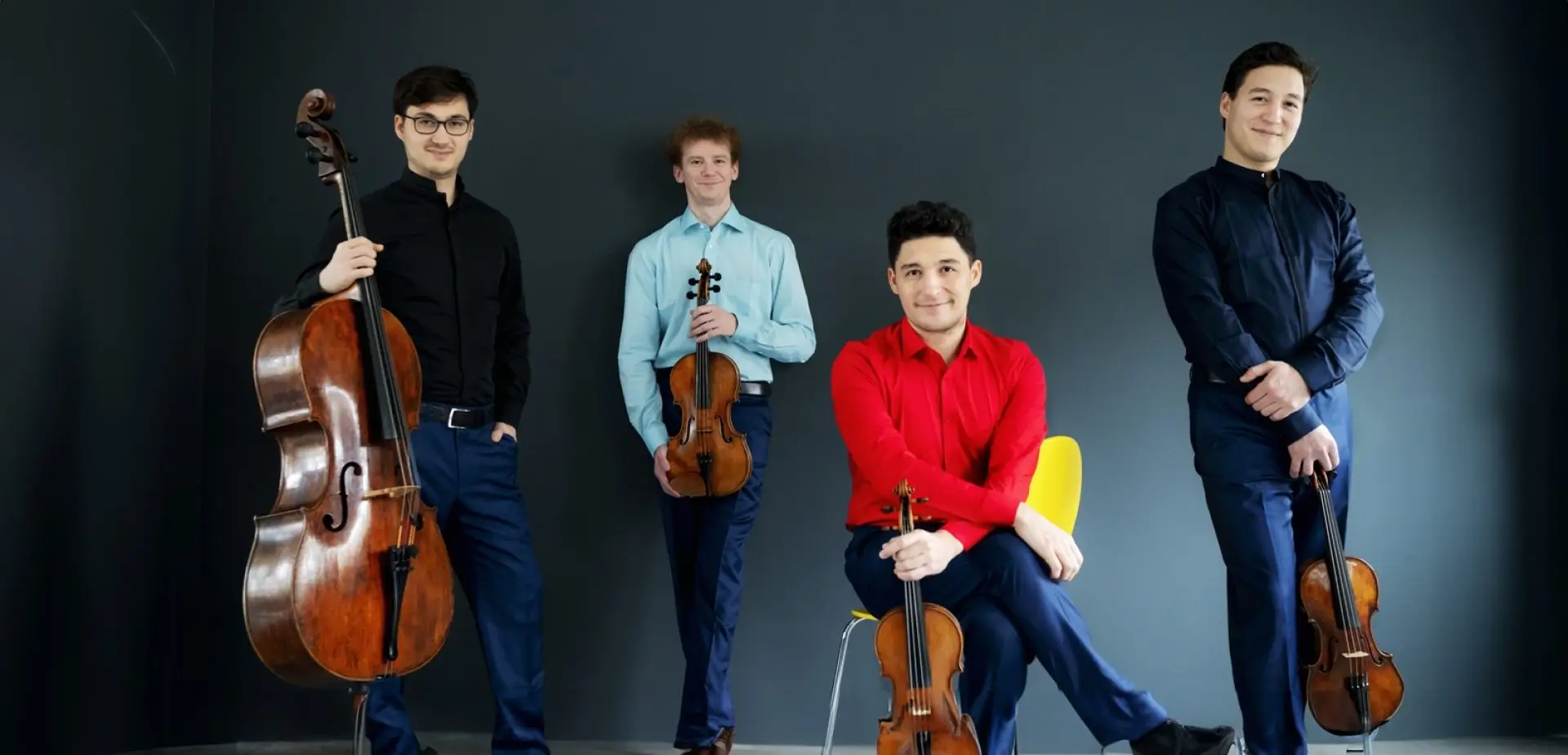
Image from © Harald Hoffmann
The Schumann Quartet guarantees spontaneity and adventure. The four musicians take you on a live experience where every moment counts. With music by Haydn, Glass, and a vintage Brahms, they push themselves to the limit, driven by the magic of the moment and the encounter with the listener.
Schumann Quartett speelt Brahms' Strijkkwartet nr. 2
Contact
Dates and times
| Date | Time |
|---|---|
| Friday 2 April | Time: 20:15 - 22:35 |
| Saturday 3 April | Time: 20:15 - 22:35 |
Accessibility
 General accessibility provisions and information
Present, available or allowed
- Service dog allowed

- Personal assistant

- Wheelchair accessible entrance

 Provisions for people with reduced mobility
Present, available or allowed
- Stairs with handrail

- Lift

- Passageways that are sufficiently wide

- Accessible restroom

- Mobile payment

 Provisions for people who are blind or partially sighted
Present, available or allowed
- Sensory experience

 Provisions for people who are deaf or hard of hearing
Present, available or allowed
- Hearing loop (t-coil or headphones)

Not present, not available or not allowed
- Guide lines

- Sign language interpretation provided

- Closed captioning

- Open captioning

- Hidden disability Sunflower-keycord recognised here

- Low stimulus hours

- Audio description

- Accessible information

- Material in Braille
