Water history with kids around Amsterdam
8 July 2026

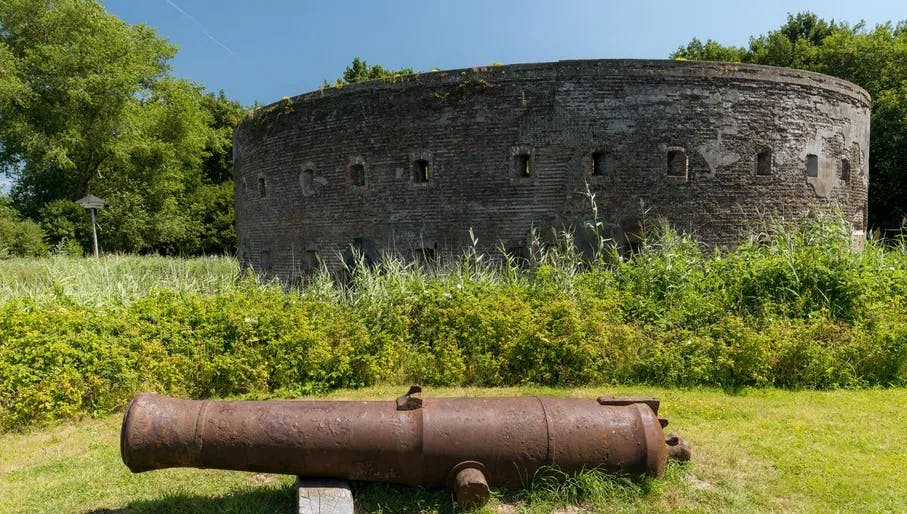
What's known as the De Stelling van Amsterdam (the Defense Line of Amsterdam), once protected against the Netherlands’ enemies. Now, visitors can roam the bastions along this 35-kilometre-long ring of fantastic forts and imagine life hundreds of years ago. Muiden and Weesp are excellent starting points for exploring it with bike routes that take you past the most beautiful highlights, Fort aan de Ossenmarkt and Fort Uitermeer. The latter can be viewed from the delightful restaurant, Porterhouse. You've also got the Dutch Water Lines, which form part of the Dutch Defence Line, and are a series of forts and locks that used existing bodies of water to flood surrounding areas as a defence mechanism. Created between 1815 and 1940, it spans 85km from Zeesluis Edam down to Fort Bakkerskilj which is now a B&B.
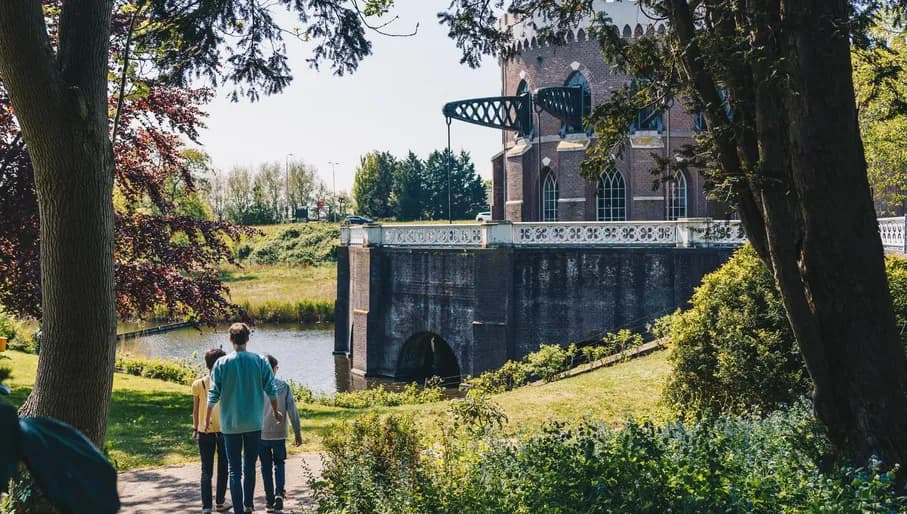
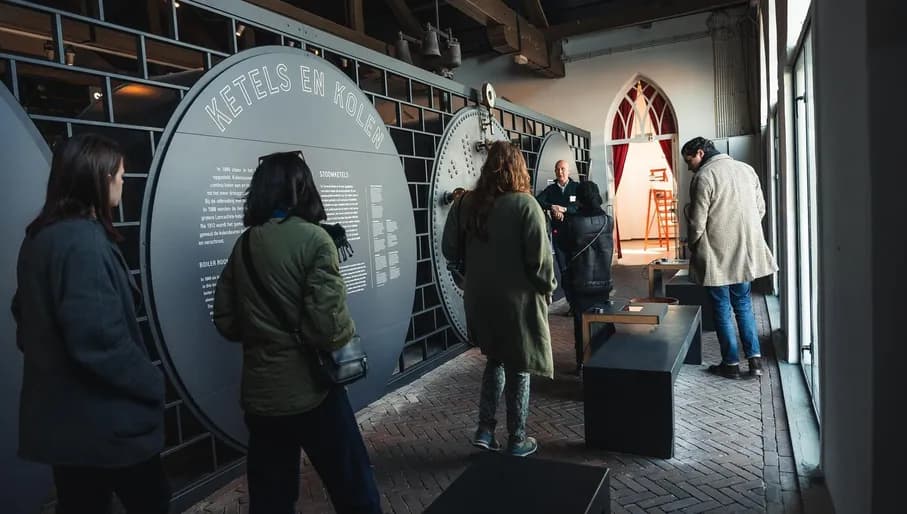
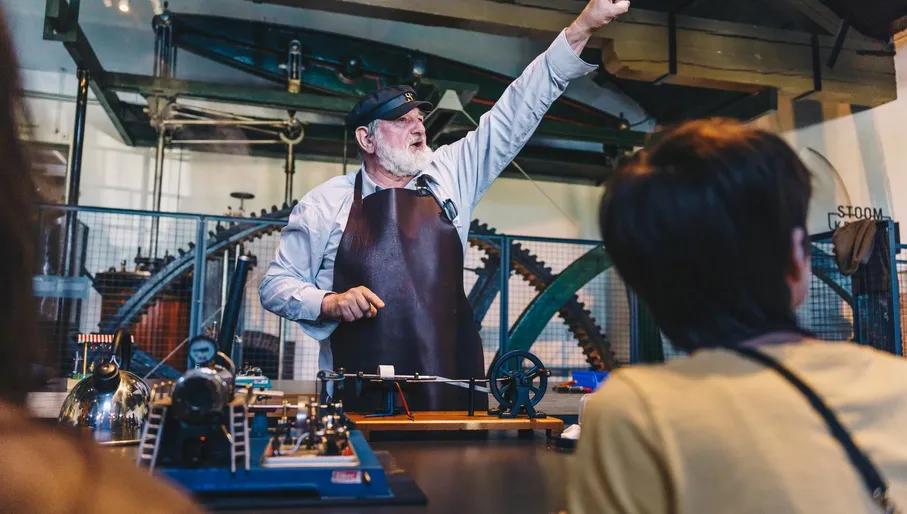
Four metres below sea level, the municipality of Haarlemmermeer harbours a historic pumping station with the world’s largest steam engine. In the middle of the 19th century, the Cruquius steam engine was used to drain a lake to create new land. The only pumping station saved from demolition, Cruquius is now part of a fascinating museum. Learn about the Dutch struggle against water, marvel at a model of how the Netherlands would look without dykes, and experience a live steam engine demonstration. Don't miss the Steam Weekends on dedicated dates throughout the year for a double-hit of watery history.
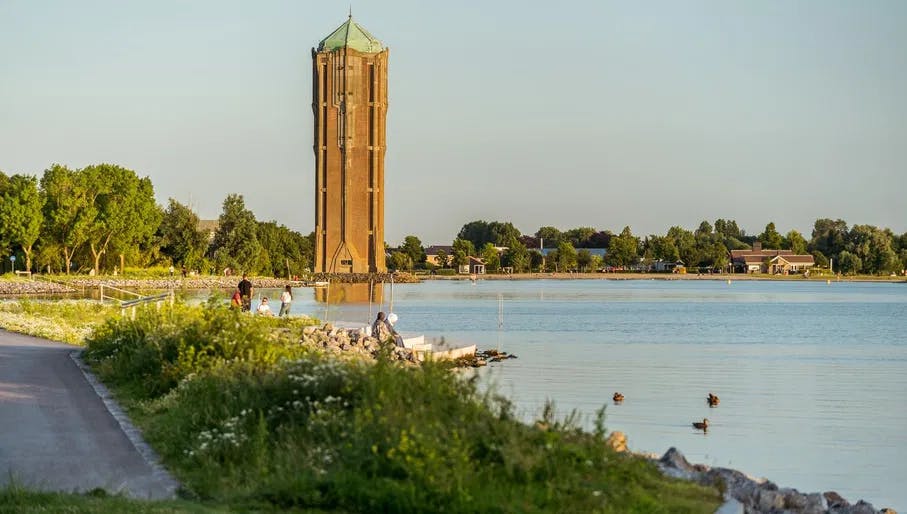
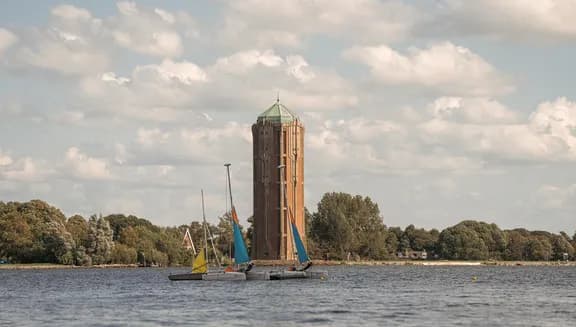
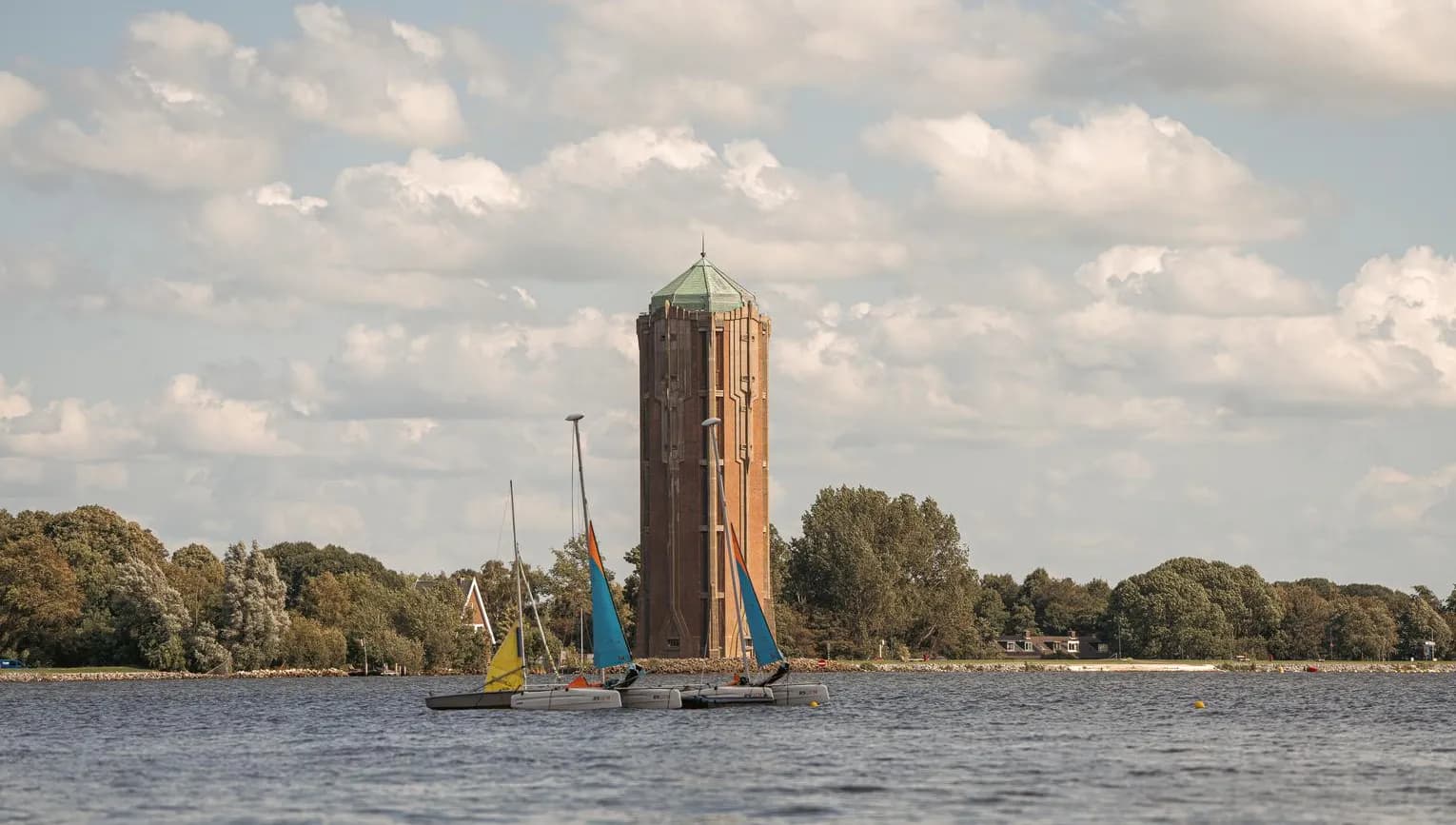
Presiding over the water, the 50-metre-high Art Deco Aalsmeer Watertoren (water tower) is one of the region's architectural showpieces. Swing by for a fascinating exhibition about local water management before climbing to the top for breathtaking views of the surrounding region. You can take an open or covered boat tour via Westereinder Rondvvaart through a maze of islands and let knowledgeable skippers fill you in on the region’s horticultural history.
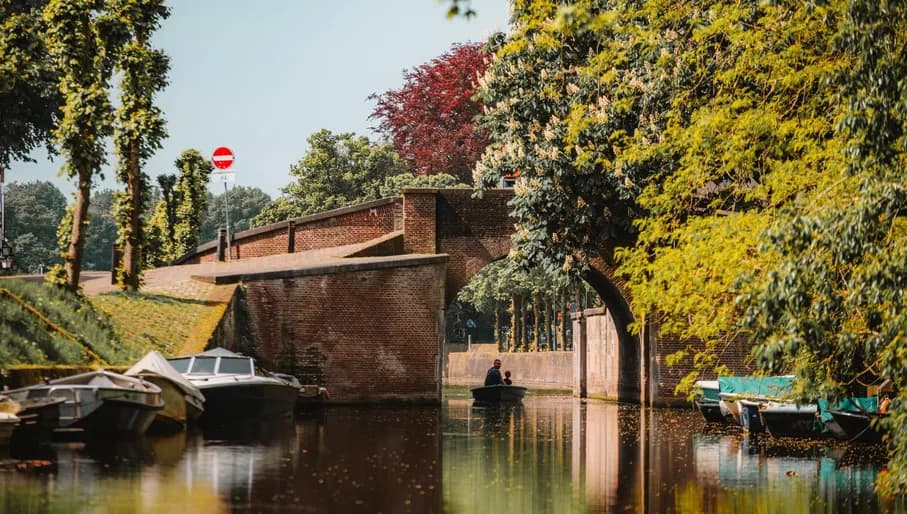

Part of the Dutch Defence Line, Naarden is one of Europe's most remarkable examples of a fortified town with its town centre still encompassed by two elaborate star-shaped moats and stone walls. Just a wander here is a lesson in water history; its unique layout is also home to charming cafés, shops, and attractions, including the Weegschaal Museum and the Dutch Fortress Museum.
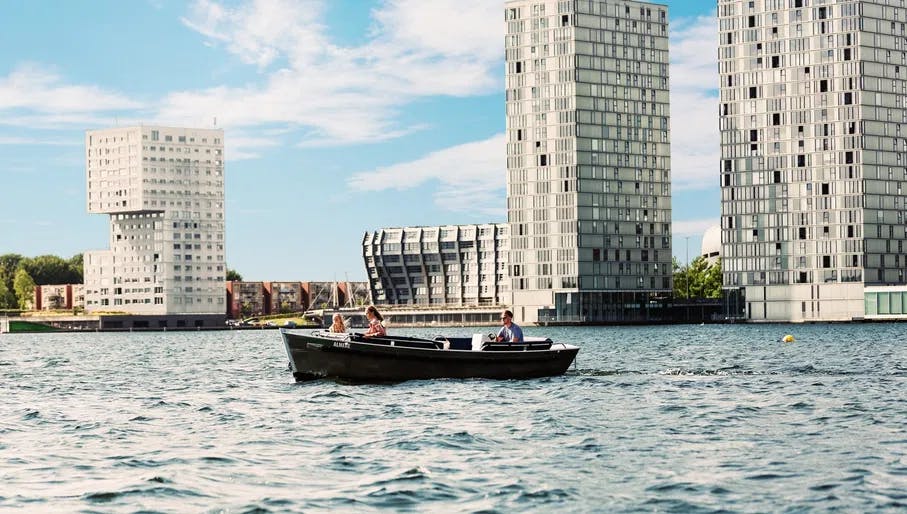
A city built on land reclaimed from the sea, Almere didn't exist 100 years ago. Created in 1975, this modern city is the major hub of Flevoland, a polder land that functions as the country's newest province, and a testament to both water management and architecture. And as a relatively new city, Almere was a blank slate on which architects could make their mark. The city now boasts incredible buildings and monuments by world-famous architects, all within one square kilometre of each other. Take a walk or check out The Wave, a massive structure that mimics the motion of the water; the Rainbow District, where the homes bring a colourful brightness to the city; and dozens of private homes in unique designs.
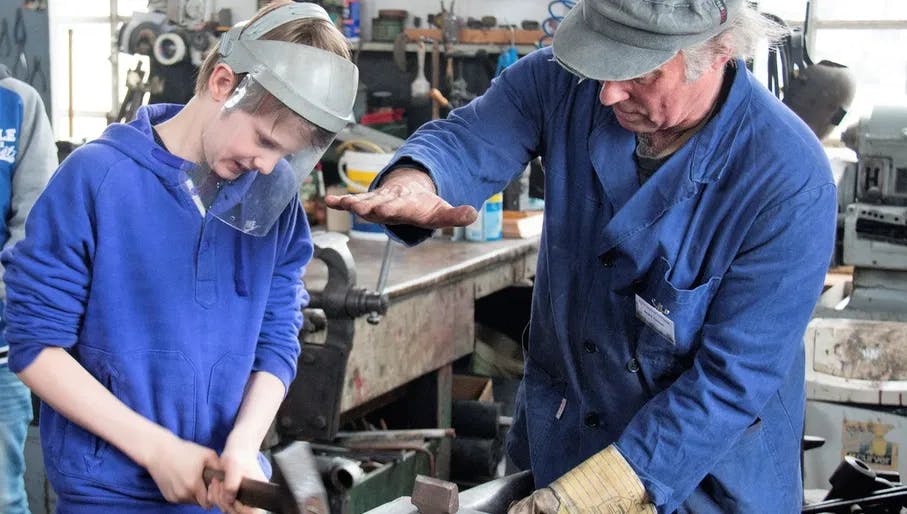
The oldest and largest operating scoop paddle-wheel steam pumping station in the world, Halfweg is a testament to the water history of the region. Open to the general public, this station was set up in 1852 after the draining of the Harlemmermeer as a way to get rid of excess water. It's since drained billions of tonnes of water. It's open to the general public and remains a marvel of engineering and a sight too – there's soemthing about the turning of the wheels that makes for a hypnotic sight.
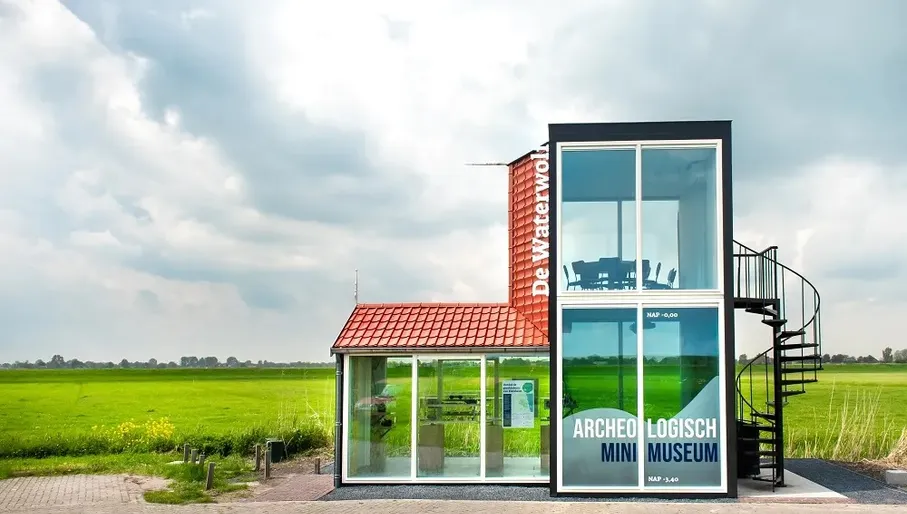
This tiny museum is steeped in history – and water. Located on the Braakpolder at one of the lowest points in the Netherlands, this little building charts the story of the drowned village of Etersheim, the battle against the sea while showcasing a range of archaeological finds discovered during the works on the Markermeerdijk, which has its own storied history that has resulted in its pivotal role in inland water management systems.
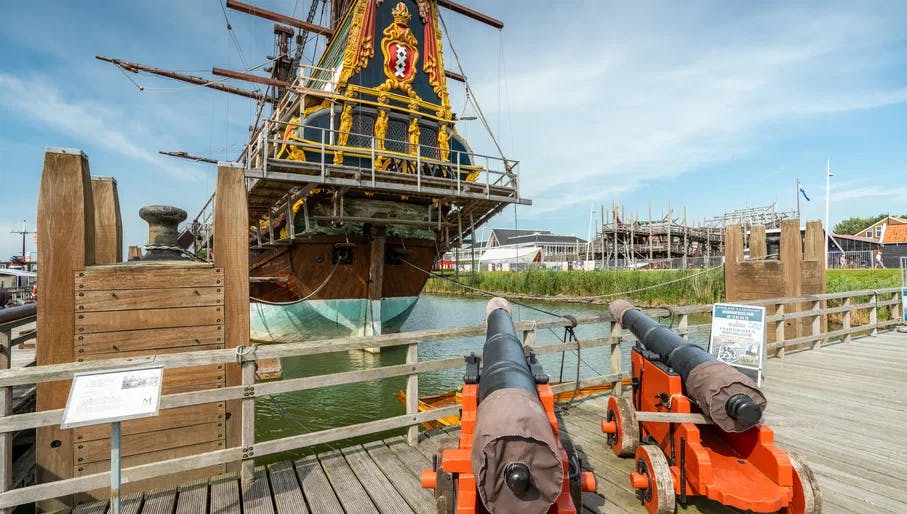
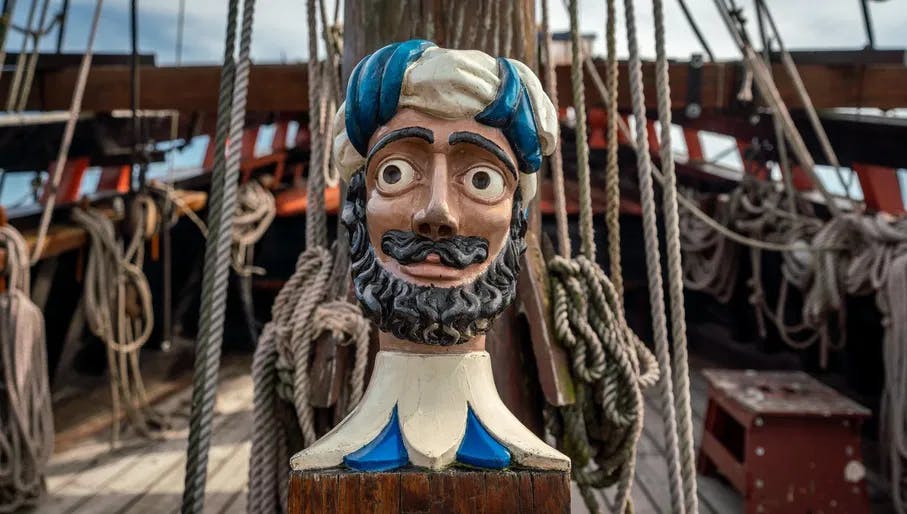

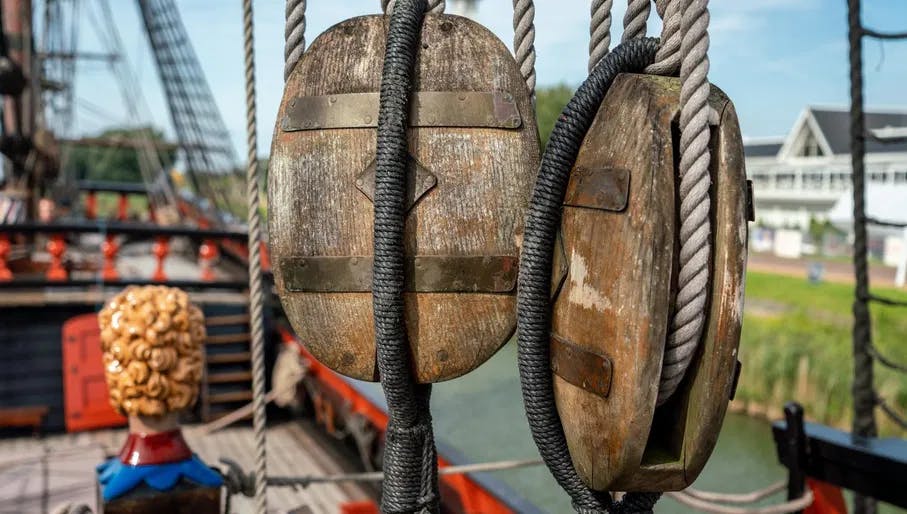
At Batavialand in Lelystad, ships with an important maritime history are taken from oblivion and returned to their former glory. The first show-stopper is the reconstruction of the 17th-century VOC ship Batavia, joined by other vessels in full 17th-century glory. The shipyard is also a great place to see the craftsmanship of yesteryear in action, and visitors can even get involved by testing their knot-tying skills or climbing the masts.
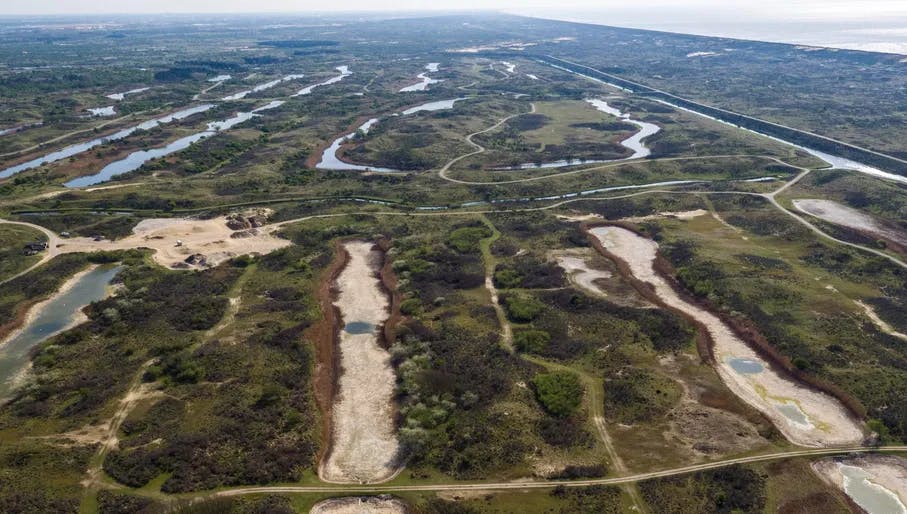
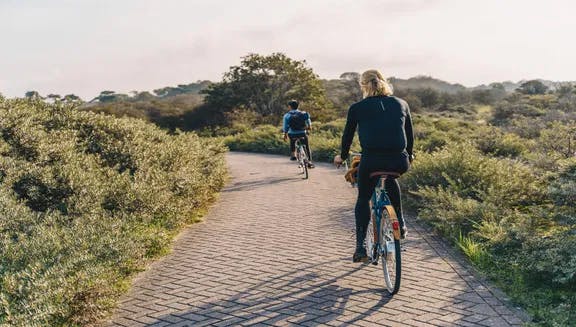
Located to the south of Zuid-Kennemerland National Park, the Amsterdamse Waterleidingduinen make up a nature reserve that supplies Amsterdam with drinking water. The hundreds of dunes of the Waterleidingduinen filter rainwater, the first step in producing fresh drinking water for the city’s residents. But it’s a great place for a walk, run or hike, but bicycles aren’t allowed in –helping to protect the dune landscape. Instead, a dedicated cycle path connects the park to the coastline. It’s not uncommon to see wild foxes romping through the underbrush and deer grazing in the dunes. And there’s naturally also plenty of plant life: the Amsterdamse Waterleidingduinen are also home to the largest array of toadstools and mushrooms in the Netherlands.