Sustainable cocoa innovation in Amsterdam: The Chocolatemakers Model
4 February 2026
The story of Favamole began ten years ago in Italy. At the time, founder and director Andres Jara was organizing dinners featuring South American dishes made with local Italian ingredients. "Guests specifically asked for guacamole because they associated it with Latin American food," he recalls. "But avocados weren't grown in Italy back then." Andres and his team wanted to use only local ingredients. "Since the fava bean harvest season had just started, we decided to create a fresh sauce using this locally grown legume. And that's how favamole, literally fava bean sauce, was born."
The idea was then put aside for several years until Andres moved to Amsterdam to run an urban farm in Amsterdam-West. "When we had the wettest spring and summer of the decade, fava beans were the only crop that kept growing. I took it as a reminder: 'Hey Andres, remember the fava beans?' They grew incredibly well in the clay soil, so I knew there was something special about these beans," he explains.
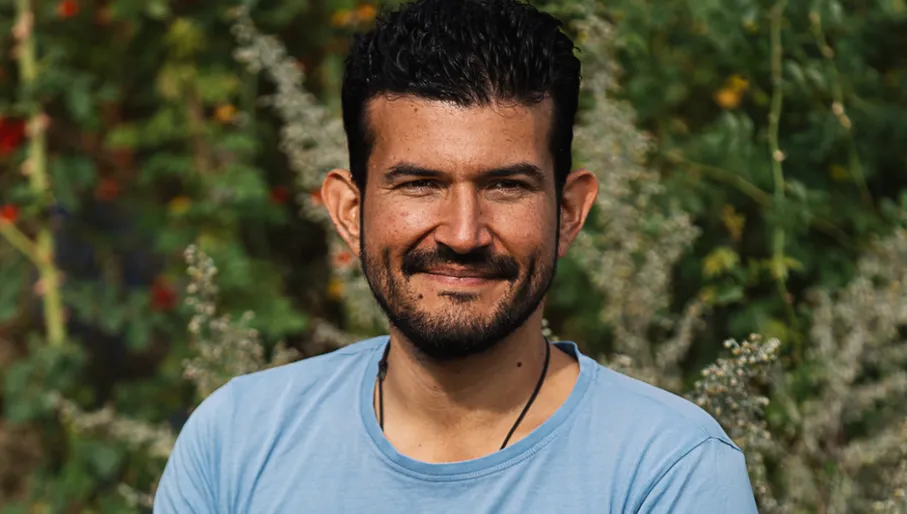
For centuries, fava beans were a staple food for Dutch farmers. They also served as a natural green fertilizer, helping to capture nitrogen from the air and return it to the soil. However, with the rise of large-scale soy and corn imports, the humble bean gradually faded into the background, contributing to soil depletion. Andres is now bringing the fava bean back into the spotlight.
"A mole adds flavor to your food and brings different tastes together," says Andres. The best-known example of a mole is something almost everyone is familiar with: guacamole. The word comes from Nahuatl, the language of the Aztecs: āhuacatl (avocado) and mōlli (sauce). Favamole follows the same principle: a sauce made from fava beans. In doing so, the company is introducing a new food category: mole. The product consists of 70 percent Dutch fava beans and yellow peas. It is a source of protein and rich in fiber. It can be enjoyed as a dip, but also works as a spread, snack, or part of a quick meal.
Expanding internationally was a natural next step. The product quickly gained traction and received recognition through the Vitafoods Europe Startup Challenge and the Healthy Innovation Award (Gezonde Innovatie Award). To grow from a startup into an international business, gaining access to major European trade shows was essential. At events such as Anuga in Cologne and SIAL in Paris, the company opened contract discussions with major international players, including Lidl Germany and SOK in Finland.
Nicky Buizer, Food Manager at Amsterdam Trade & Invest, works closely with companies like Favamole to support their international expansion. Amsterdam Trade & Invest is a public organization established through a partnership between the municipalities of Amsterdam, Amstelveen, and Haarlemmermeer. It helps businesses expand into international markets.
"Our focus is entirely on companies that contribute to a more sustainable, healthier, and fairer food system," she explains. "Favamole is a great example of how you can make the protein transition tangible for consumers. In the Amsterdam region, we excel at building brands that genuinely appeal to consumers. With Favamole, you can literally eat the change we want to see in the food system."
For a young startup with a limited marketing budget, attending major international trade shows such as SIAL can be expensive and financially risky. Amsterdam Trade & Invest helps by organizing shared Dutch pavilions at these events. To make this possible, it draws on funding from RVO and works with other regional partners within the Trade & Innovate NL network. "Participating in a major trade show is a significant financial commitment for a small business," says Nicky. "By pooling budgets across different regions, we can create a large, professional exhibition stand. This attracts far more serious buyers than a small startup would reach with a stand tucked away in a corner."
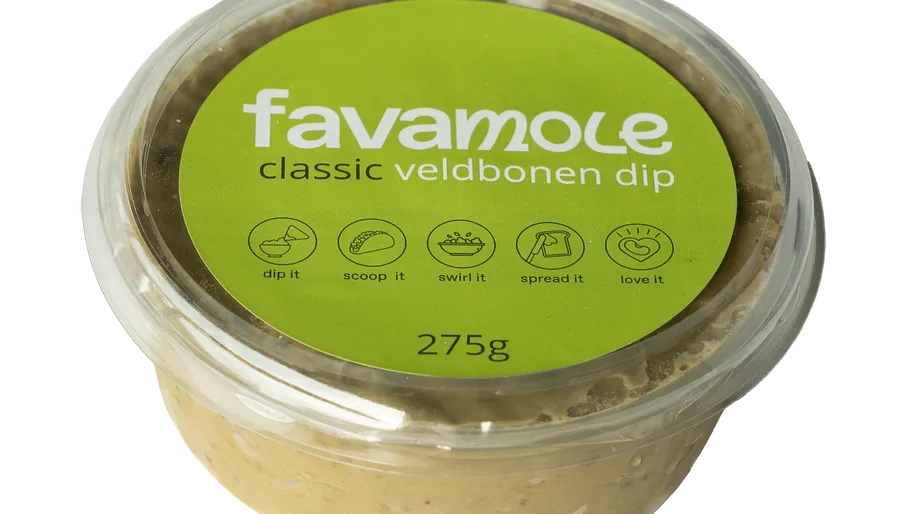
Companies pay a contribution to participate. Favamole also received an RVO SIB grant to help finance its trade show participation. The company was selected for the SIAL Innovation Selection 2026, the innovation competition held at the Paris trade show. In addition, Favamole and its partner Zonnespelt received funding through RVO's Vabiola grant scheme. This program supports the development and marketing of organic and regenerative products in the Dutch market. Favamole is using the funding for activities including a rebrand and preparations to expand into retail.
Favamole currently supplies wholesalers and catering companies, including Bidfood and Vermaat Group. Its next ambition is to expand into supermarkets, with retailers such as Albert Heijn and Ekoplaza among its targets. To support Favamole's international market entry, Amsterdam Trade & Invest draws on the network of agricultural teams and agricultural counselors at Dutch embassies. These teams have in-depth knowledge of local markets and maintain relationships with businesses abroad. The organization also promotes plant-based products from companies like Favamole to catering providers serving government institutions and major employers in the Amsterdam region. The aim is to encourage greater use of plant-based products in workplace cafeterias.