
Image from Lisa Maier
Social Sciences and Humanities
Last updated on 10 June 2026 at 12:49
Reading time: 6 minutes
Amsterdam’s thriving knowledge sector is particularly well known for its research in social sciences and humanities. In such turbulent times, its world-leading expertise is helping provide insights and solutions for global issues and rapidly developing technologies. In particular, its many research institutions are already leading the way in shaping the development, adoption and impact of (responsible) AI – with the collaboration of industries and the public sector.
Responsible AI in Amsterdam: from development to application in society
Amsterdam is at the centre of the movement to maximise not only the benefit of AI and other digital technologies, but also the societal benefits they bring. Our work informs global expertise on AI innovation, adoption and the digital transition, by questioning how technological development is – and should be – embraced in society. From training talent to improving the digital skills of citizens and employees alike, within and outside organisations and businesses, and within and beyond Europe.
The social sciences and humanities in Amsterdam play a key role in this. They provide knowledge on social, ethical, legal, cultural, organisational and economic aspects – helping to develop responsible solutions, future-proof work and good governance. They collaborate on initiatives from technology-oriented labs and impact centres through to research infrastructures and entrepreneurship initiatives. Through such partnerships within the city and by sharing knowledge, a safe and equitable ‘Amsterdam AI adoption model’ is also being developed and tested. This model will demonstrate how responsible AI applications can create value in sectors such as education, government, media, financial services, healthcare, energy and climate, industry and security.
A global leader in social sciences and humanities
Amsterdam social sciences and humanities benefit from collaboration between three leading universities, 8,000 world-class researchers and 80,000 international students.
Amsterdam is one of Europe’s strongest knowledge regions at the intersection of technology, society and culture. It boasts three universities collaborating on social sciences and humanities research: The University of Amsterdam (UvA), Vrije Universiteit Amsterdam (VU) and the Amsterdam University of Applied Sciences (HvA).
Together, they represent approximately 8,000 researchers and 80,000 students in these fields – including some world-topping programmes. The UvA’s Communications programme, for example, is ranked #1 globally (QS 2026; Shanghai 2025), besides internationally top-ranked programmes in Psychology and Law, and a Business & Economics faculty consistently ranked among Europe’s top 25. This gives the city an exceptionally strong knowledge and talent base to embed technological and AI innovations in society.
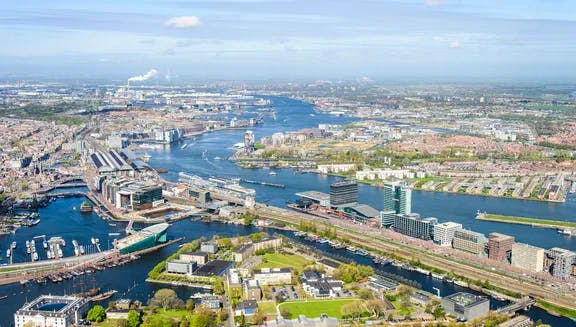
These and several other partner organisations are concentrated in four innovation districts in the city: the University Quarter, Roeterseiland Campus, Knowledge Mile and Zuidas Innovation District.
Why Amsterdam leads in technology research
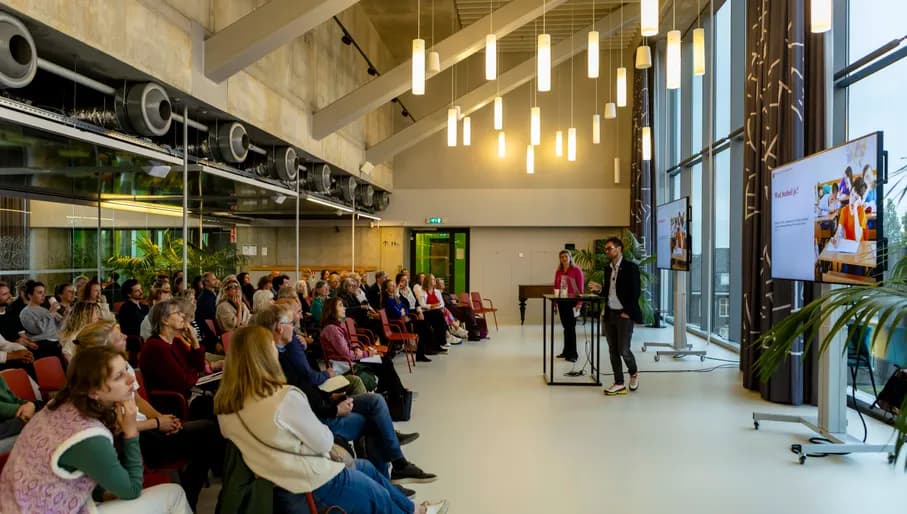
Image from Levi van Dam
This broad and international range of programmes in the social sciences and humanities at the UvA, VU and HvA acts as a magnet for talent: at the UvA, for example, around 35% of the student population is now international. Meanwhile, within the social and cultural domain, the number of degree programmes and specialisations explicitly focused on technological and AI applications is growing, ranging from data and AI analysis to digital culture, media and law. Each year, around 10,000 graduates from this domain go on to work in businesses, the creative industries, culture, the financial and legal sectors, social services and government. Amsterdam is also home to AISO, the leading AI student community, where enthusiastic students are matched with companies for AI-related projects and hackathons.
Amsterdam's knowledge institutions make up a rich ecosystem thanks to partnerships with regional businesses, the creative industries, culture, the financial and legal sectors, social services and government.
Amsterdam’s strength lies in the intensive collaboration between universities, technology developers, creative makers, the financial and legal sectors, civil society organisations, and national and European policymakers. Through internships, educational assignments and joint research projects, a close-knit network is created in which AI and digital technology are continuously tested and further developed in practice. This fits seamlessly with Amsterdam’s position as a cultural capital (accounting for approximately 64% of the Dutch cultural sector) and as a major centre for financial, legal and social services.
Key focus areas for Amsterdam social sciences and humanities research
As collaborators, the above institutions and their partners have identified some key priorities focusing on the most urgent dimensions in the adoption and impact of technology on societies:
- People, media, law, governance and democracy in a digital society
- AI and the future of work and the labour market, including for SMEs
- Data-driven organisations and an inclusive digital economy
- Language, cognition and responsible AI systems
- The creative industries and digital heritage in the AI era
These themes are explored through interdisciplinary research and teaching, bringing together social, technical, legal, economic, psychological and cultural perspectives.
The unique benefits of Amsterdam’s social sciences and humanities
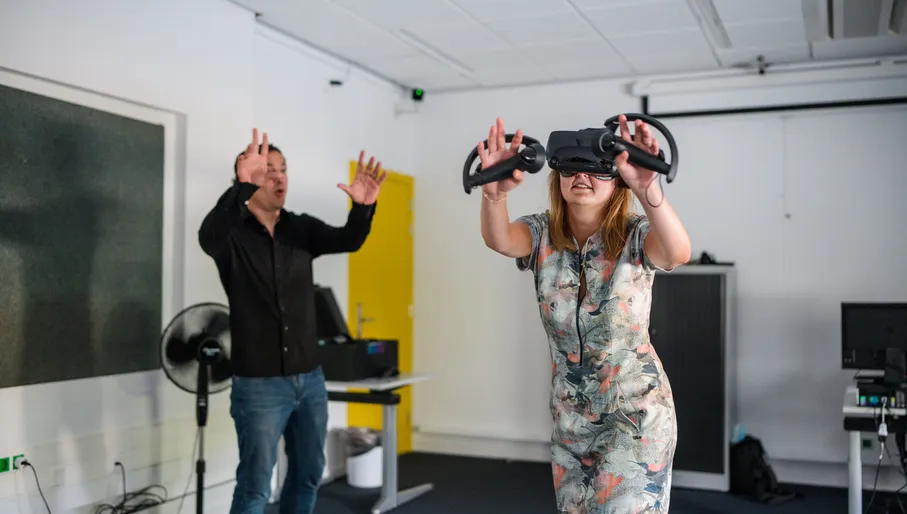
Image from FOTOGRAAFNIELS.NL
The city of Amsterdam presents numerous unique benefits when it comes to social sciences and humanities expertise. Firstly, it boasts a highly interdisciplinary research landscape, where technological development, knowledge of people and society, and applied practical research converge.
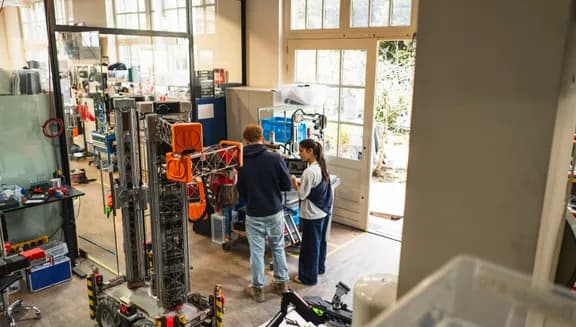
Much of this collaboration takes place at various experimental, technology-oriented labs and impact centres, such as the Centre of Expertise Applied AI, the Legal Tech Lab (HvA) (link in Dutch), AI, Media & Democracy Lab and the programme Public Values in the Algorithmic Society, where researchers, students and industry partners collaborate to design, test, evaluate and implement new AI and digital applications.
In particular, work focused on social and economic data, cultural and linguistic archives benefits from Amsterdam’s renowned research infrastructures such as ODISSEI, CLARIAH and Macroscope. And Amsterdam entrepreneurship can count on unique initiatives including including Amsterdam Humanities Hub, and REC Impact, where impact-driven start-ups and social initiatives centred on technology and AI are developed.
Amsterdam’s role in European social sciences and responsible AI
Image from Helberger
The social sciences and humanities in Amsterdam form a crucial link in the development and application of ethical technology and AI in Europe. Here, technological innovation is structurally linked to people, culture and society. Thanks to a robust knowledge ecosystem comprising research groups, labs, study programmes, entrepreneurial initiatives and urban networks, we in Amsterdam can offer critical analysis whilst developing concrete solutions to pressing societal and urban issues. This makes Amsterdam the ideal place to put European ambitions for human-centred and responsible digital transformation into practice.