Companies shaping sustainable urban development in Amsterdam
2 February 2026
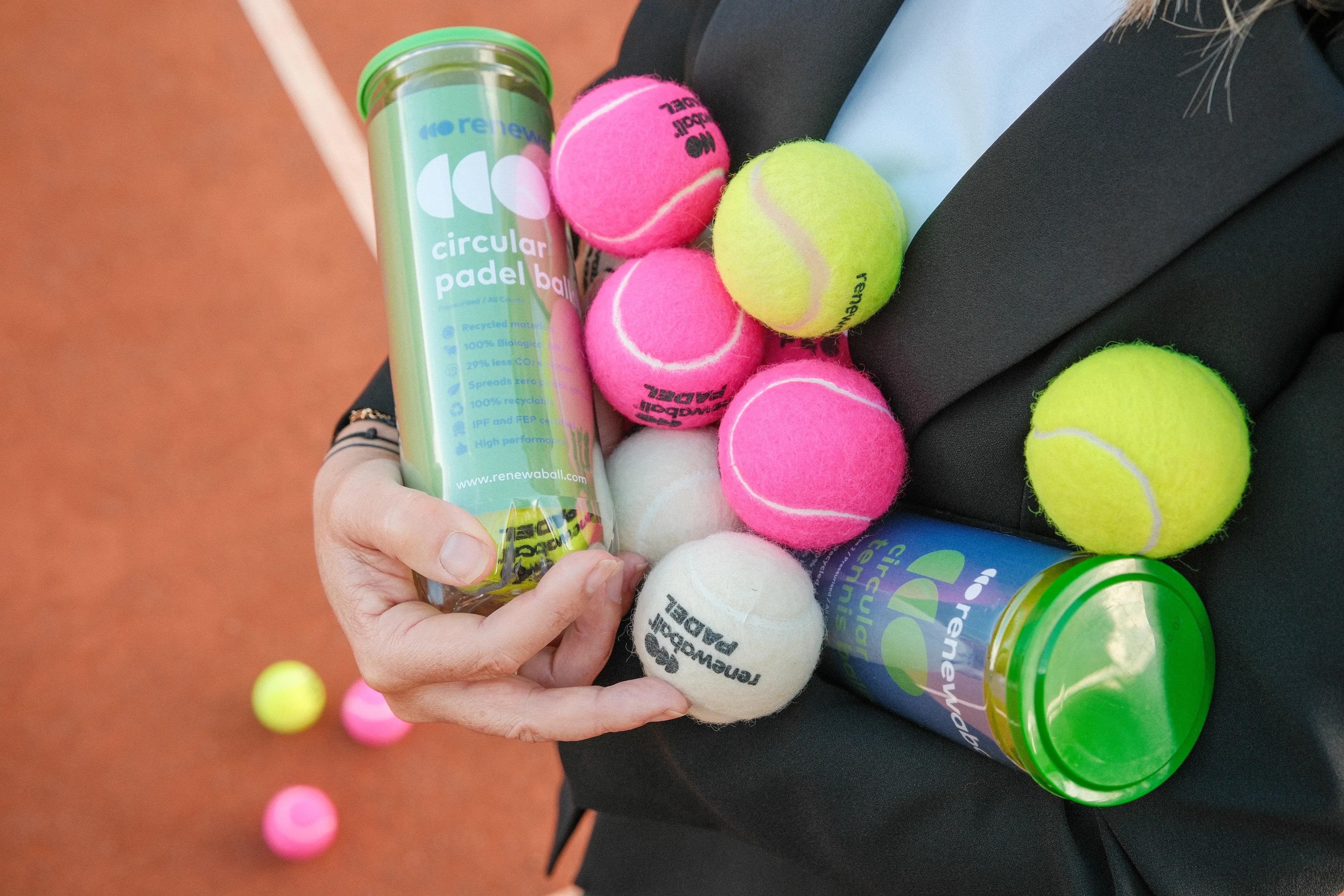
Playing a racquet sport is a healthy pastime, but there’s a hidden environmental cost: each time a tennis or padel ball is hit, microscopic synthetic fibres are released into the air. When playing indoors these can be inhaled, while outdoors, these microplastics can seep away from the court, finding their way into the waterways and local environment at large.
And then we have the rubber centre of the ball itself. Yes, it’s strong, yes it’s durable, but it also takes up to 400 years to decompose. That means a tennis or padel ball you throw away today would last across fifteen generations of your family, all the way to the 25th century.
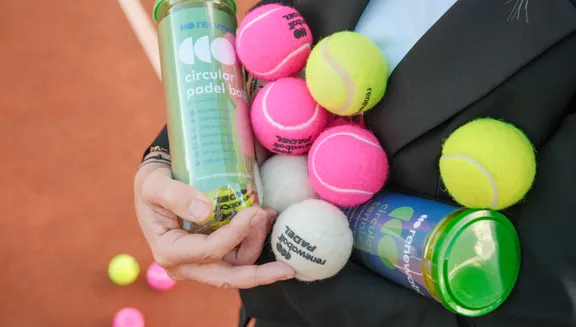
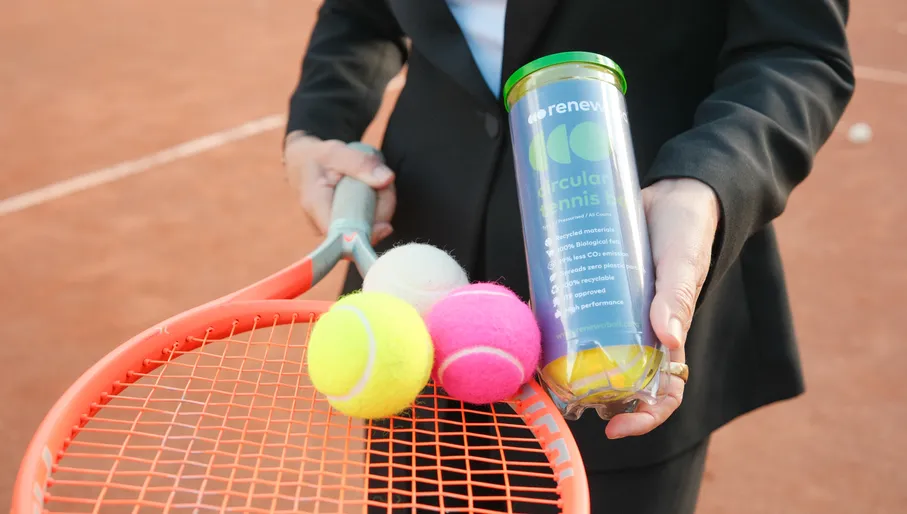
Yet it doesn’t have to be this way — and Renewaball is showing the path forward with its sustainable tennis and padel balls.
Hoogeboom has lived in Amsterdam for more than 40 years and spent 27 of those at TBWA Worldwide, a premier global ad agency, but it was her subsequent role as Global Lead Sustainability at tcc global that was particularly influential. This position brought Hoogeboom in direct contact with circularity, and showed her how “businesses can create real impact at scale.”
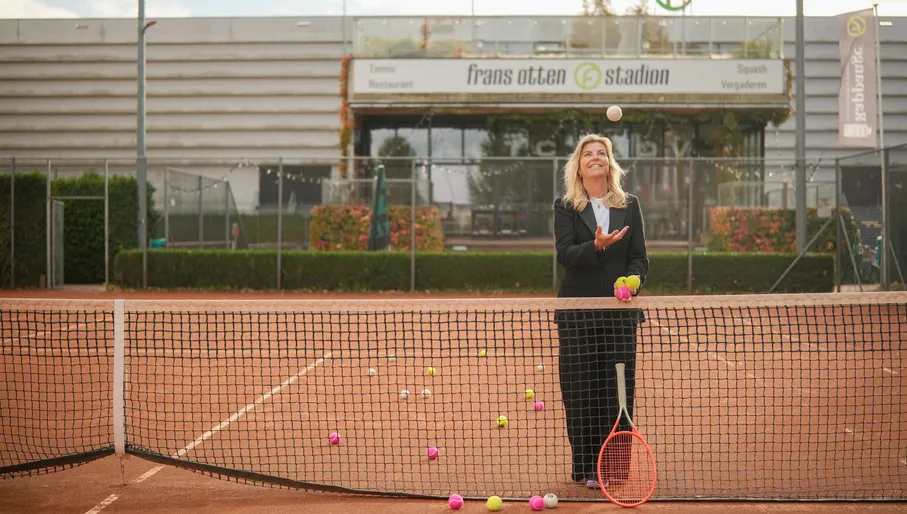
The trigger point for the birth of Renewaball arrived with the ABN AMRO Open in Rotterdam. “They wanted to make the tournament more sustainable,” Hoogeboom tells us, “and they looked into the balls and found they were very polluting.”
Tournaments of this size often go through 80,000 to 90,000 balls and, when ABN AMRO realised the scale of the issue, they put out a call for ideas to help create a more sustainable tennis ball.
And Hoogeboom and her team answered. Things, though, didn’t work straight from the off.
“The first ball wasn’t very good,” Hoogeboom tells us, “but there was so much enthusiasm for the idea that we thought we should start our own brand.”
Although Hoogeboom wasn’t in the sports industry beforehand, she was a keen tennis player and was even ranked at a national level for horseback riding. “I came into the tennis and padel industry very much as an outsider, which I think has actually helped. You start asking questions that people within an industry sometimes no longer ask.”
Like whether tennis and padel balls designed to be trashed after several uses are fit for purpose. That question became Renewaball.
Renewaball works in conjunction with tennis and padel clubs, retailers, and local governments. This involves the company setting up collection bins at clubs and retailers, such as Decathlon. Once these are full, the old balls are collected, brought to the Netherlands, and sorted by brand.
Following this, the felt is separated from the rubber. Because the core of the ball is so durable, this is recycled and used again in Renewaball units. This is done by shredding and devulcanising the collected rubber before mixing it into a proprietary blend.
Hoogeboom refers to this as their “Coca-Cola recipe.”
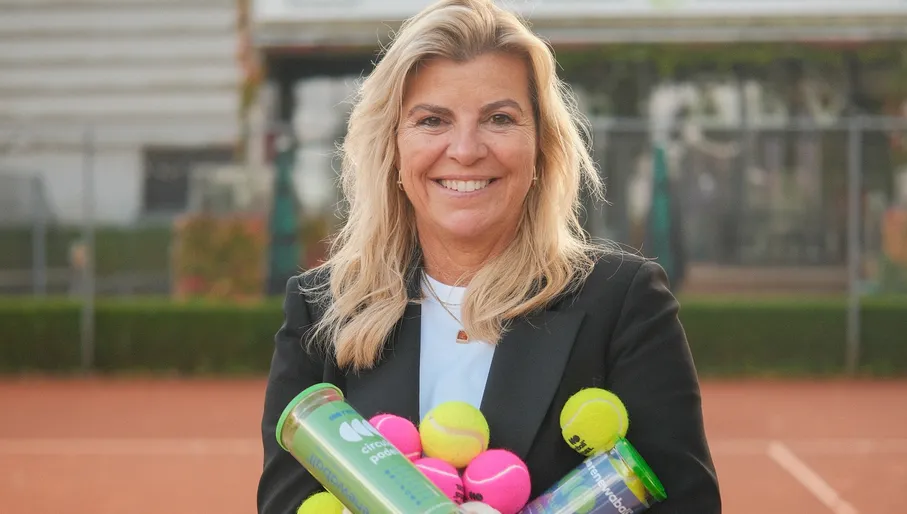
The outer part of the ball is also innovative, but in a different way, as the Renewaball team looked to nature. “We put sheep's wool from Norway and Yorkshire around the ball,” she says, “which contains no microplastics and is completely biodegradable.”
This means that whenever a Renewaball tennis or padel ball is hit, it’s not harmful to people’s health or the environment. The concern here, of course, might be that the quality of the balls will suffer from this approach, but this is far from the case.
Hoogeboom tells us that their units are approved by both the International Tennis Federation and by the International Padel Federation. This means they are tournament-ready and can be used in any situation.
On top of this, they’re B Corp certified, and independent assessments show their balls generate 49% fewer CO₂ emissions than standard competitors. “We’ve shown you do not have to compromise on performance to make a more sustainable product.”
Really, though, it’s the scale where there’s potential for real change. “A tennis or padel ball is a very small product, but when hundreds of millions are used every year, changing that product can have a substantial impact,” Hoogeboom says, “that’s what motivates us.”
While Renewaball has spread across the globe with talent spanning Germany, Italy, Singapore, and the United States, its operational heartbeat remains anchored in Amsterdam — and for good reason.
Hoogeboom believes the city has been important to the growth of Renewaball. “Amsterdam offers a lot of programmes for startups,” she says, drawing specific attention to the Amsterdam Circular 2050 scheme, and how that has helped her get feedback on how to operate a sustainability-focused business.
On top of this, the city also has a thriving tennis and padel scene, which has led to a healthy adoption of Renewaball gear.
Still, Hoogeboom believes more can be done. “There are examples of cities, local and national governent in France, Luxembourg, Italy, and Germany that collect balls [for recycling],” and this is something she wants to see Amsterdam adopt too.
This ties directly into how Hoogeboom envisions the future growth of Renewaball: through community and teamwork.
To achieve their environmental goals and make a positive difference, they have to work with as many organisations in the chain as possible. This is why Renewaball is planning to license their technology to other brands to help speed up the transition. “We have to work together to solve this problem and make tennis and padel healthier.”
Ultimately, Hoogeboom wants people to “stop seeing sustainability as an alternative choice,” believing it should instead become “the smarter way to make the same product with less impact.”
And if Renewaball can do that? Well, that’d be ace.