AI, Media & Democracy Lab: making AI work for people
25 November 2026
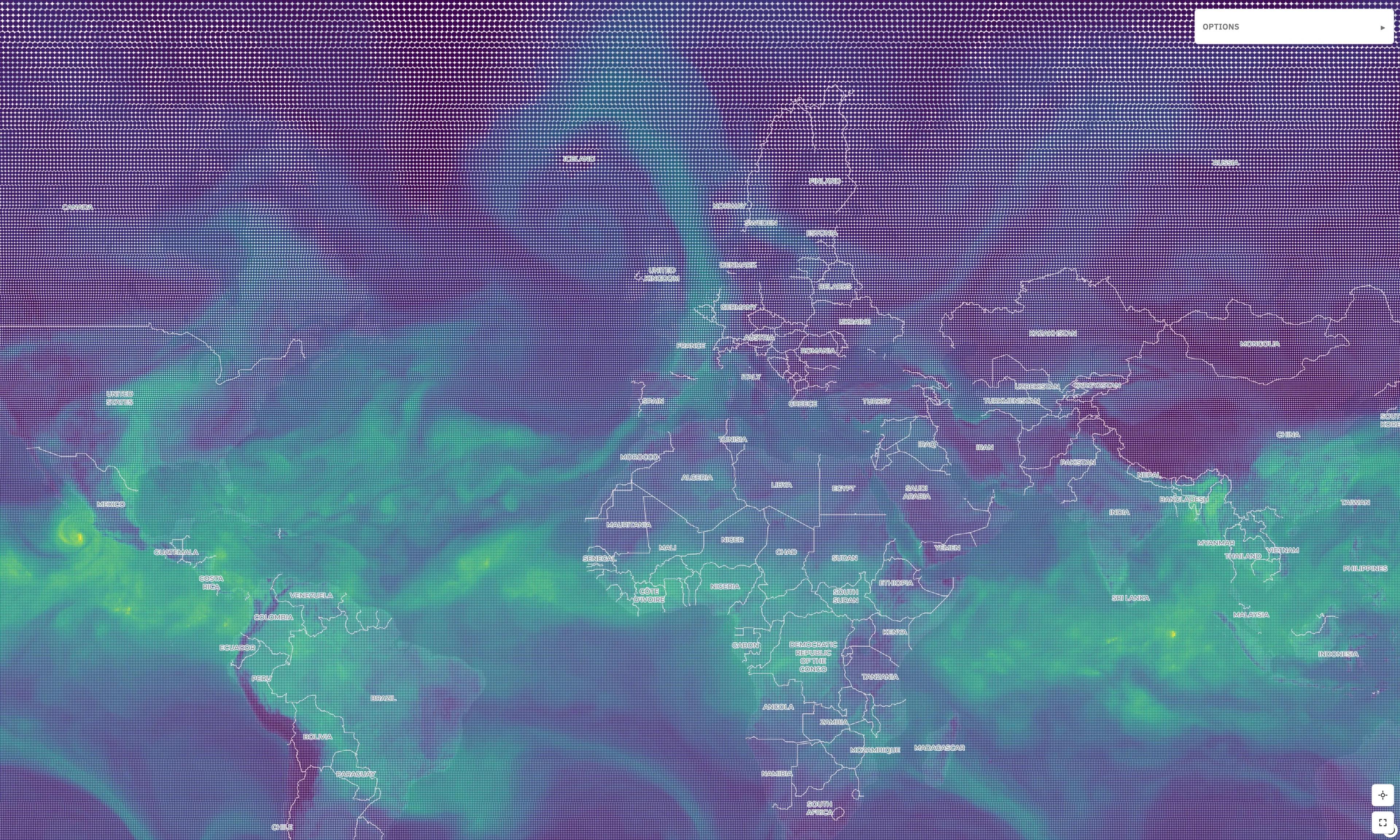
There’s a paradox when it comes to talking about the weather. On the one hand, it’s mundane: the stuff of smalltalk. “It’s just there”, confirms Jannes van Ingen, CEO and co-founder of AI startup Beyond Weather, based in Amsterdam Science Park. On the other hand, weather has long been understood as the language – even the wrath – of the gods themselves. Predicting it would once have been witchcraft – a divine power with increasing importance now, as the climate crisis deepens. In the face of tempestuous, extreme weather events, the ability to accurately forecast drought, rainfall and storms begins to look like a superpower.
However, what Jannes and Beyond Weather are increasingly showing is that it’s actually there in the mundane, among the granular detail of weather prediction, that these tools may make a real impact. Using AI to predict long-range weather patterns and also tailor them to specific use-cases, Beyond Weather is not only providing a novel product but also supporting steps towards greater food security and climate resilience. “If we can forecast well and contribute to this in a world that is experiencing more extreme weather,” explains Jannes, “then we can be really proud of ourselves.”
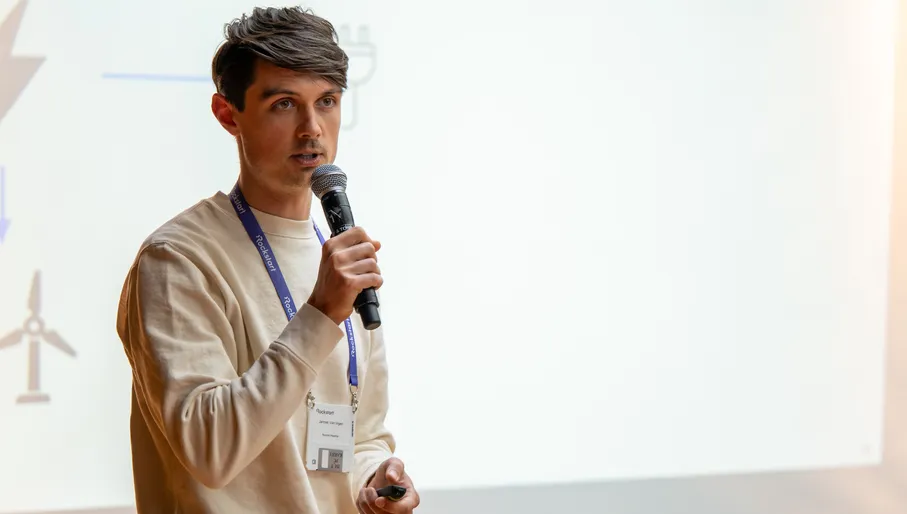
Beyond Weather initially started as a spin-off from the Climate Extremes research group at the Vrije Universiteit Amsterdam (VU). Jannes was completing his master’s in econometrics there, with a thesis on weather forecasting, when he teamed up with then-PhD Sem Vijverberg and Professor Dim Coumou around 2021.
For all of them, Beyond Weather was a way to “create impact in the real world”, according to Jannes. “As academics, we felt it's a bit of a rat race: you write papers and claim something new, but you don't really build anything that is then used in the real world”.
When founded in 2023, Beyond Weather’s original aim was to use cutting-edge AI models to generate weather forecasting for humanitarian organisations and NGOs, as well as agriculture and energy sectors. Early work with the World Food Programme, for example, helped produce and translate seasonal forecasts to support vulnerable societies in climate-proofing their food systems.
Since then, Beyond Weather has shifted away from long-range forecasting. “It's not the regular kind of weather forecasting, like, Do I need to take my rain jacket for tomorrow?” explains Jannes.
Now, however, the focus has shifted both in the industry and for Beyond Weather. Lower reliance on gas, milder winters, and increased use of renewables has shifted the demand for such predictions. Meanwhile, the AI boom in weather has introduced new, highly advanced weather models, including from big tech companies, that have revolutionised the industry.
All this has led Beyond Weather to reassess their model, then still based on their work at university. Their new focus? Instead of competing with these models, Beyond Weather is developing a product that customises existing AI weather models to optimise for specific tasks or questions, particularly those of energy companies.
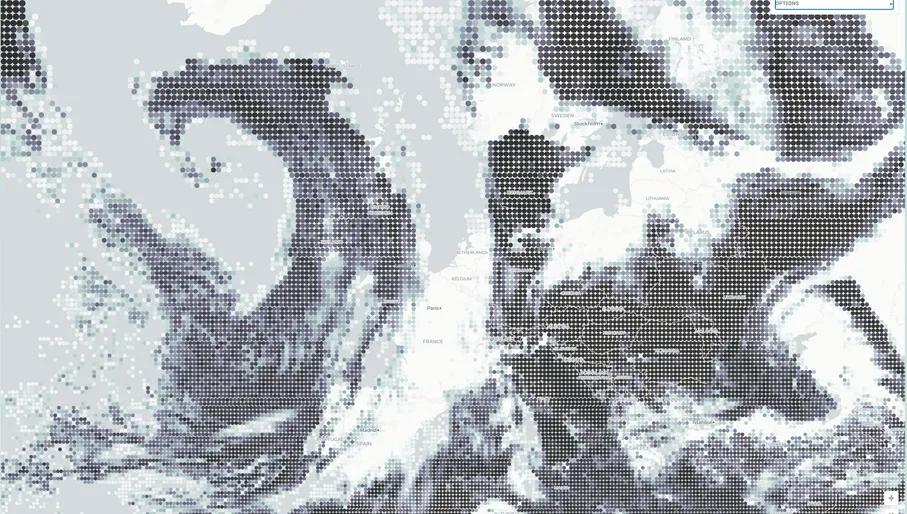
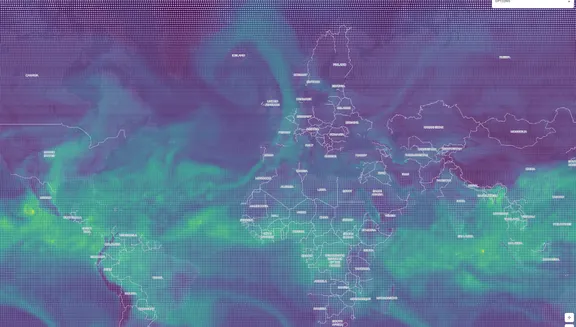
“AI weather models are very broad. There are hundreds of variables globally”, explains Jannes. “But most people are not interested in the wind on Antarctica, right? They're interested in wind on the North Sea at this very specific time and location. So we are giving these AI weather models a bit more focus, fine-tuning them, to also improve these companies’ climate adaptation or their preparedness for weather risk.”
This shift away from long-range modelling and towards fine-tuning for the energy sector might appear less dramatic, but its impact is still widespread. For TenneT, the Dutch grid operator and innovation partner with Beyond Weather, the startup is improving weather data in the longer range so they can better plan their maintenance.
TenneT gives Beyond Weather a list of thresholds or weather variables, and the startup optimises a model from their pipeline to pilot in its operations as it rebuilds the grid. “They’re like, I want to know if the wind in week three is going to be above X, so we can plan offshore wind maintenance. That impacts the energy transition.”
Jannes also points to work supporting utilities and power producers, which has a knock-on effect for the cost of living crisis: “Sometimes energy companies are really taken by surprise by something that happens in weather, and then they need to buy energy at a very costly price. That means that better weather risk estimation also translates into better costs for customers.”
This all started in Amsterdam, and it looks set to stay there. It was the VU’s expertise that spawned the group in the first place, though most of the founders lived in Utrecht. After two years in the Utrecht Incubator, Beyond Weather began to grow: with its first investments in 2024 and a more recent grant from the European Innovation Council, the startup was able to expand its team and relocate back to Amsterdam. For Jannes, this was “a good strategic move”, almost inevitable: “We felt like the talent in Amsterdam on AI was really relevant”.
The team moved into Lab42 in Science Park, a campus housing the city’s foremost AI researchers. Sharing the building are academic peers, including regular advisor to the startup Professor Ana Lucic, alongside a thriving ecosystem of AI businesses, such as industry heavyweight CuspAI.
When we speak, Jannes is fresh from giving a talk for national initiative TTT-AI, and the nearby Centrum Wiskunde & Informatica (CWI), the national research institute for mathematics and computer science, have recently hosted the first meeting for AI Met NL – a new group for meteorology AI in the Netherlands set up by Jannes and colleagues. As the startup streamlines its offering, its emergence into this cutting-edge Amsterdam AI ecosystem is “ongoing”, as Jannes clarifies. But it’s easy to see: the forecast looks bright for Beyond Weather, and all who can benefit from its solutions.
Read more about Amsterdam Innovation District.