Van Gogh and the postman Joseph Roulin. Finally together again
Exhibitions
Van Gogh and the postman Joseph Roulin. Finally together again
Image from Van Gogh Museum, Amsterdam (Vincent van Gogh Stichting)
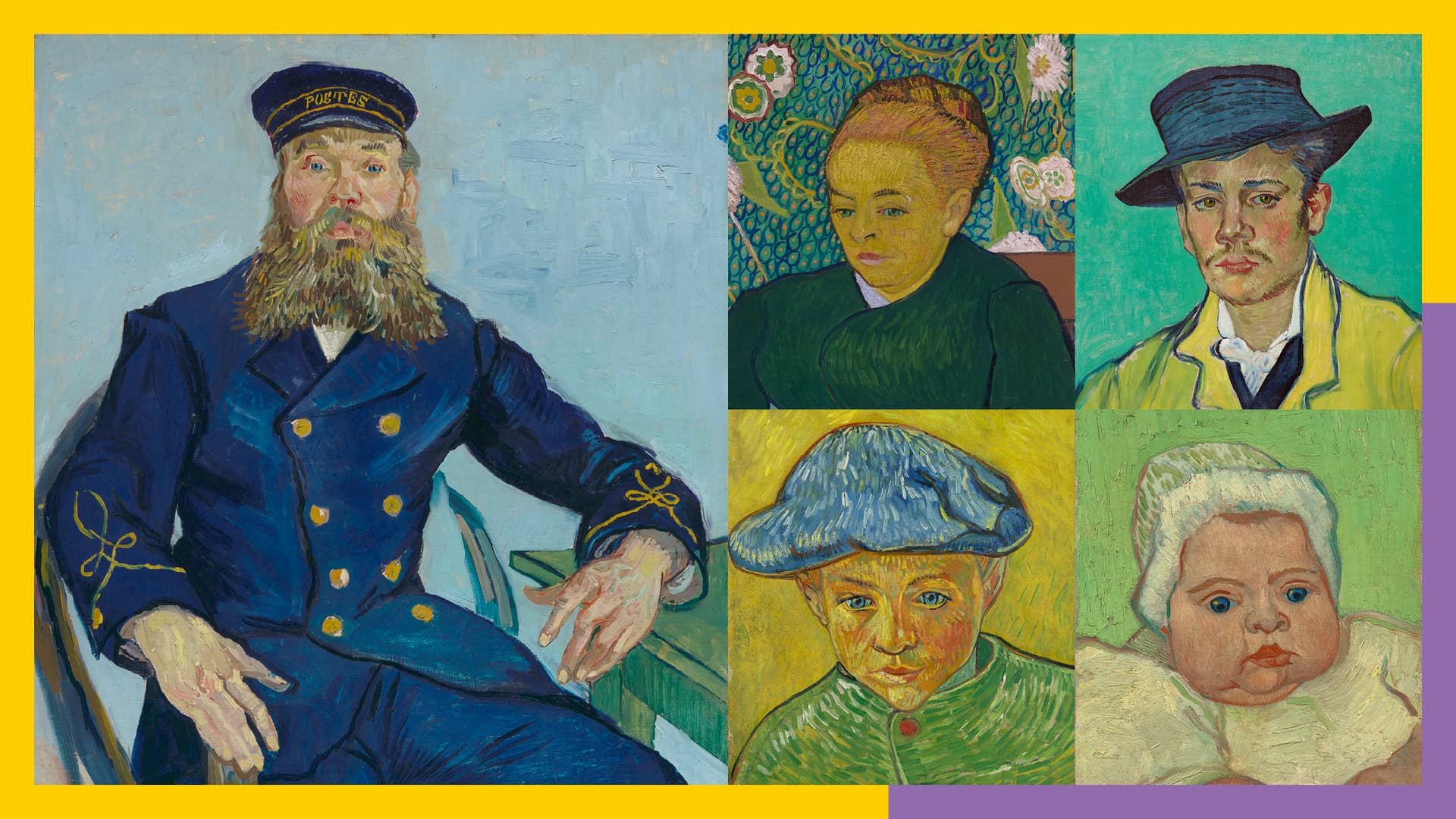
In under two years, Vincent van Gogh made 26 portraits of members of a single family. A special relationship developed between Van Gogh and the postman Joseph Roulin, his wife Augustine and their three children in Arles, in the South of France, which would lead to one of the most impressive portrait series in art history.
Van Gogh and the postman Joseph Roulin. Finally together again
A large number of portraits from this unique series, which are now in museums and private collections around the world, are being reunited for the first time this autumn in the exhibition Van Gogh and the Roulins. Together Again at Last.
Featuring more than twenty loans from prominent international collections, the exhibition offers a rare opportunity to see this series of iconic portraits together.
A special friendship
When Van Gogh arrived in Arles in 1888, he had difficulty finding common ground with the local residents, but he found a kindred spirit in Joseph Roulin. The postman, with his striking beard and blue uniform, became a favourite model and Van Gogh’s best friend in the southern French town. Van Gogh painted not only Joseph, but also his wife Augustine and their three children: the seventeen-year-old Armand, the eleven-year-old Camille, and baby Marcelle.
When Van Gogh suffered a severe mental crisis at the end of 1888, Joseph Roulin offered Vincent his unwavering support. He visited the artist at the hospital every day, and faithfully kept Vincent’s brother Theo updated in a series of letters, which are now being exhibited together for the first time. Together with the portraits, these letters offer a unique reflection on this remarkable friendship.
The modern portrait
The portraits that Van Gogh made of the family reflect his deepest artistic ambitions. He wanted to capture more than just a physical likeness. Following the artistic example of his predecessors Rembrandt and Frans Hals, he tried to penetrate the soul of his models – an ambition that coincided with his personal search for connection in a period of increasing loneliness and mental health problems.
Context
The exhibition places the Roulin portraits in a broader art historical context by also showing work by Frans Hals, Rembrandt and Adriaen van Ostade – artists who Vincent meticulously studied. Work by Paul Gauguin is also on display. During his time at the Yellow House in Arles, the French artist also portrayed several members of the Roulin family.
The photographs of the Roulin family members taken between 1902 and 1955 are a remarkable inclusion in the exhibition, revealing how Joseph, Augustine, Armand, Camille and Marcelle Roulin looked in later life.
On the second floor of the exhibition, visitors head through a life-sized replica of the Yellow House to enter Van Gogh’s studio, where he painted the Roulins. Old photographs of Arles complete the experience.
The exhibition will first be on display at the Museum of Fine Arts in Boston (30 March to 7 September 2025) before travelling to the Van Gogh Museum in Amsterdam (3 October 2025 to 11 January 2026).
Ticket sales
From July 7, 2025
Dates and times
Friday 3 October
09:00 - 18:00
Saturday 4 October
09:00 - 18:00
Sunday 5 October
09:00 - 18:00
Van Gogh and the postman Joseph Roulin. Finally together again