Farewell and thanksgiving
The cantata “Herr, wenn die stolzen Feinde schnauben” was written for 6 January, otherwise known as Epiphany, the feast day that celebrates the first manifestation of Christ. It is part of the Christmas Oratorio, a collection of six cantatas for the Sundays and feast days from Christmas Day until Epiphany.
The cantata “Wir danken dir, Gott, wir danken dir” (BWV 29) is a “Ratswechsel” cantata. These cantatas were performed at the annual inauguration of the city council and were intended to thank God for the blessings the city enjoyed and to ask for support for the new councillors. Christmas is of course an appropriate time to perform this exuberant cantata where thanksgiving is central.
The music may feel surprisingly familiar – in fact, you might hear the so-called “Nokia tune” in the opening sinfonia. And the setting of the opening chorus is also known as the “Gratias” from the B minor Mass.
Performers
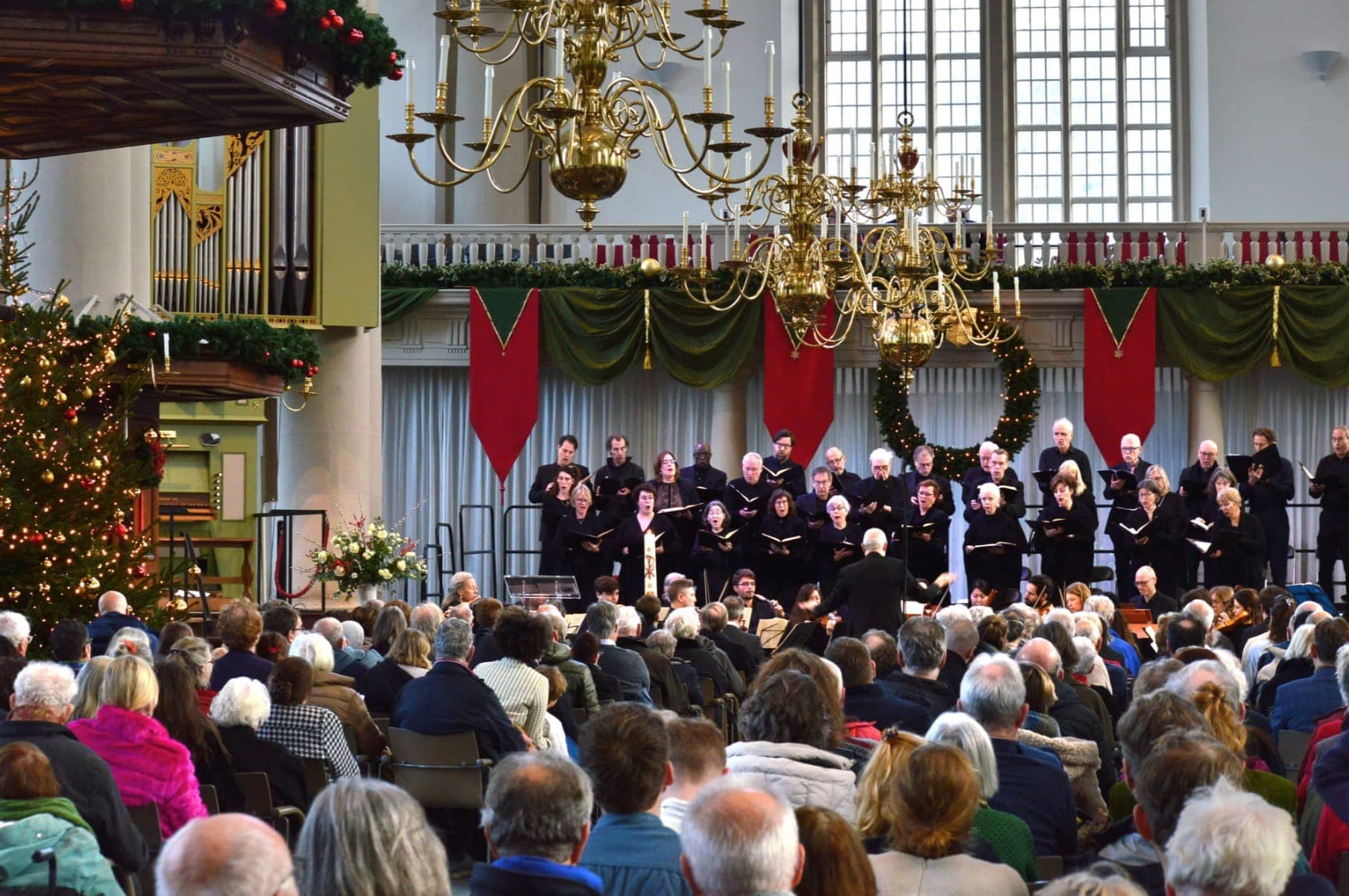
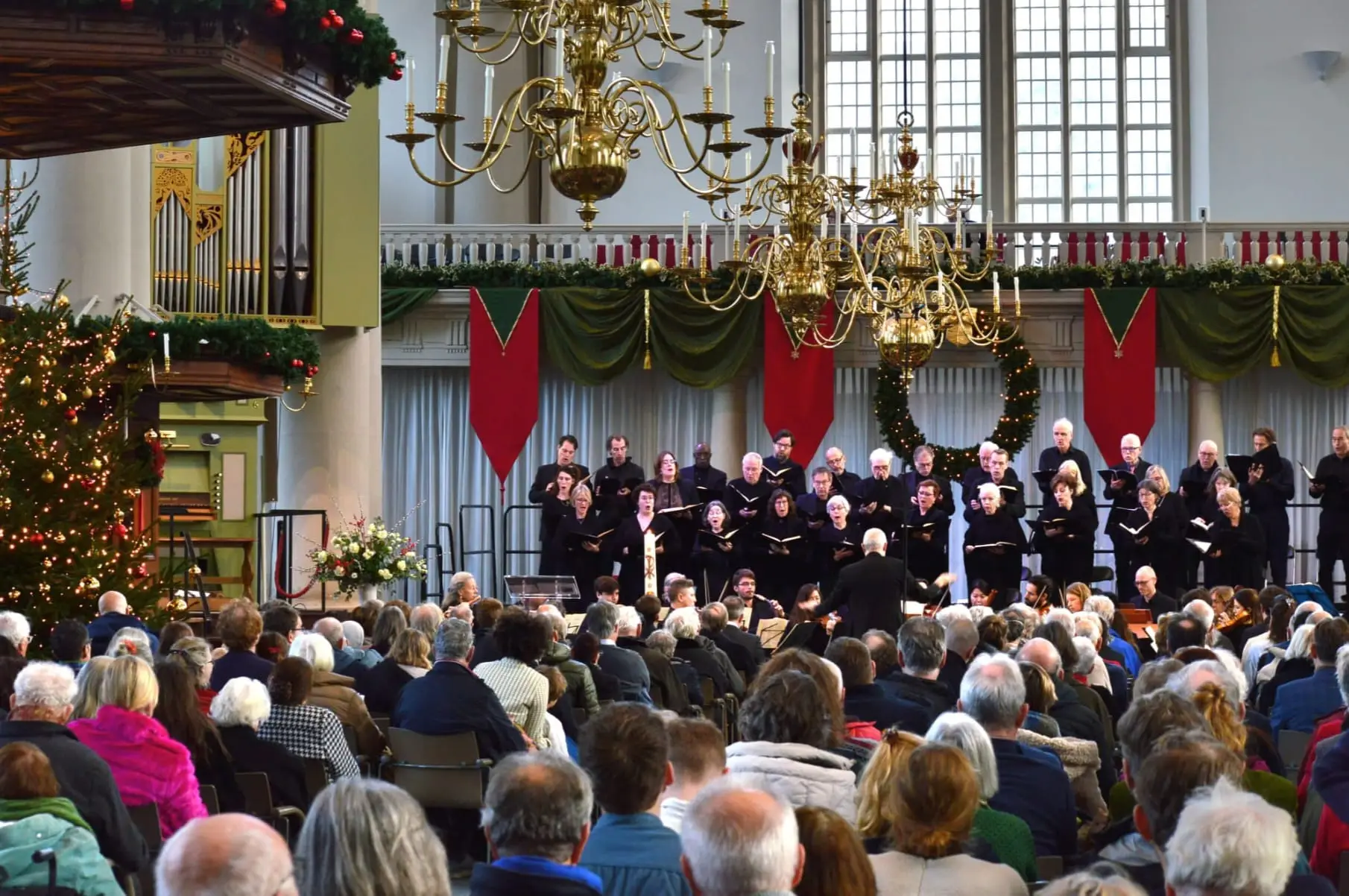
The Westerkerk choir will sing the choral movements of both cantatas. Marjon Strijk (soprano), Ingeborg Bröcheler (alto), Francis Ng (tenor) and Wessel van der Ham (bass) will sing the beautiful arias and recitatives. The instrumental accompaniment will be provided by acclaimed Ensemble ’t Kabinet, and the musical director is JanJoost van Elburg. The service will be led by Dr Cristina Pumplun, and Evan Bogerd will play the organ.
Bach in the neighbourhood – a cantata tradition
Around eight times a year the Westerkerk holds a cantata service, featuring works by Bach and religious music by other composers. The music forms part of a church service with a brief spiritual reflection on the cantata and its connection to everyday life. The Westerkerk has done this for more than 70 years, continuing an important tradition: performing Bach’s cantatas in the context for which they were intended.