Beyond Weather: tailored weather prediction for climate resilience
25 November 2026
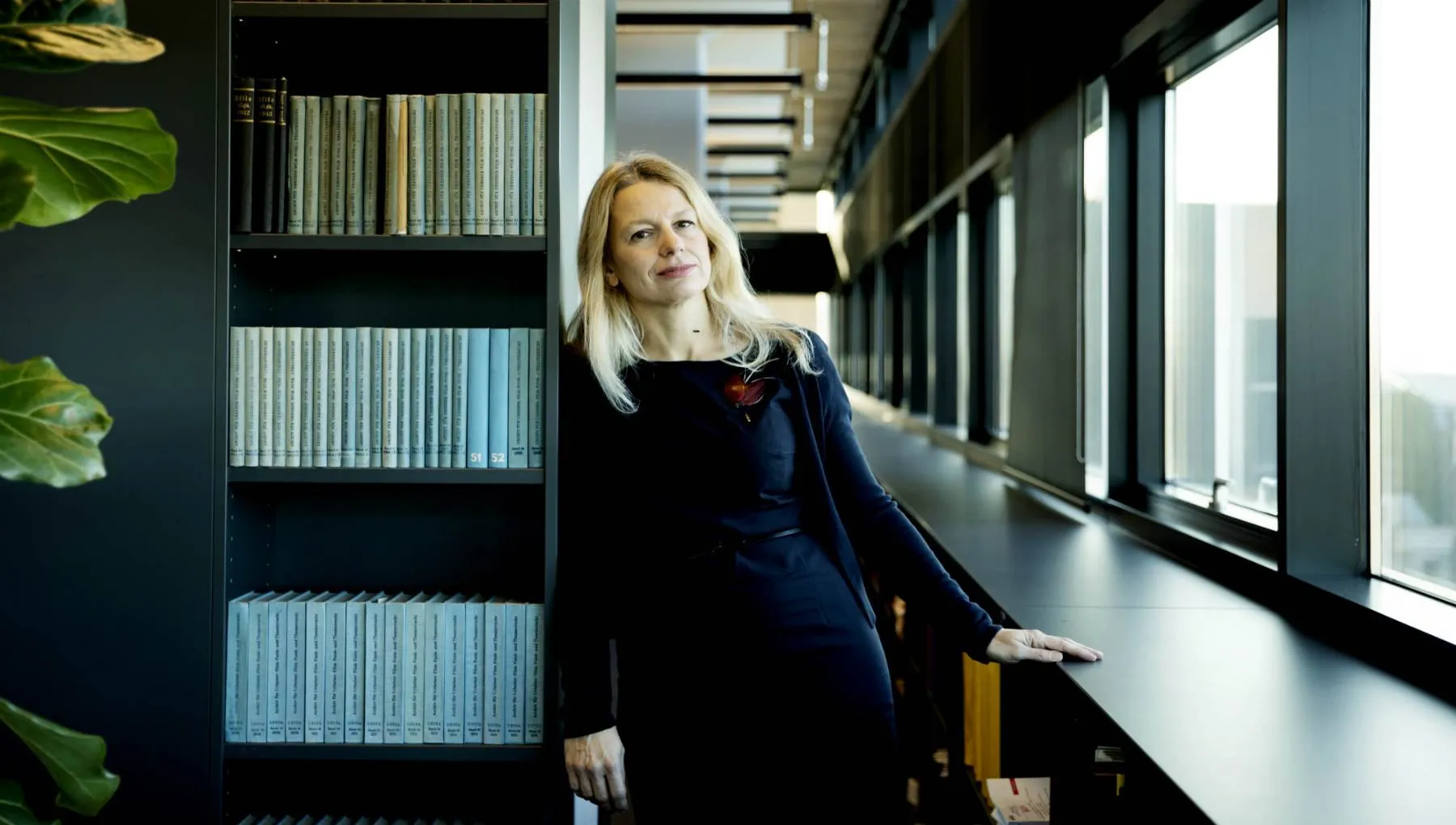
“At the moment we have this dominant narrative”, explains Natali Helberger, who is clearly very accustomed to explaining AI risk to the uninitiated. “‘The faster and more AI we get, the sooner this will magically translate into innovation and a better society.’ But we do not think about how.”
This is the crux for the AI, Media & Democracy Lab, an interdisciplinary research lab co-founded by Natali and researchers across the University of Amsterdam (UvA) and the Amsterdam University of Applied Sciences (AUAS, HvA in Dutch). It exists to counteract a bleak future in which AI is led entirely for profit by a Big Tech oligarchy with no scrutiny, regulation or democratic process – “which is a very close scenario!”, Natali insists.
However, the Lab is also not interested in hand-wringing. “You’re reading enough doom scenarios in the newspapers these days.” Instead, Natali and her colleagues are interested not only in the risks presented by AI but also the potential benefits. “If we do not also try to figure out where we would like AI and how it could contribute and make the world a better place, then we will not see technological innovation leading to societal innovation.”
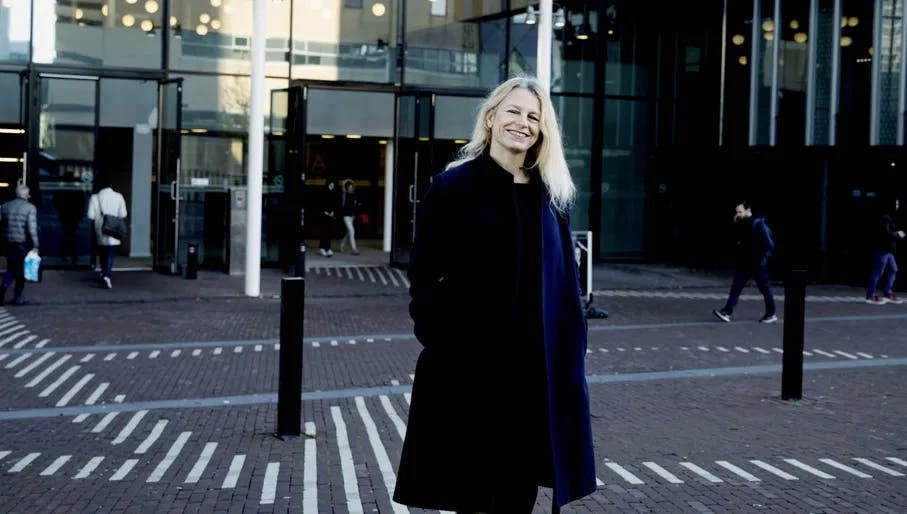
The Lab exists for several reasons. Firstly, to complement computer science with expertise in the social sciences and humanities on AI, technology and media – providing much-needed perspectives on the social dimensions of these rapid developments. “I’m deeply convinced that in the end AI is as much a societal issue as it is a technological one”, Natali insists. Secondly, to proactively seek positive use cases for AI.
In particular, the Lab works at the intersection of AI and media – which is a primary reason why it came about in Amsterdam, specifically. “I think media and journalism is a beautiful area because it’s so critical for the functioning of democracy. It’s very important for the realisation of fundamental rights like freedom of expression”.
Though Natali has long worked around this topic, she developed the Lab in conversation with colleagues: “We thought that actually in Amsterdam we have so much expertise in technology, humanities, law and ethics, social sciences… And we very quickly arrived at the topics of media and democracy: Amsterdam is a media city, after all, together with Hilversum.”
Thanks to collaborations between the universities (UvA and HvA), Centrum Wiskunde & Informatica, various media partners, regulators and civil society, as well as host organisation the Institute for Advanced Studies, the Lab quickly gathered pace – “and by now we are a live and kicking community of 20–25 researchers from three institutions, eight or more disciplines, working with 20+ media partners on trying to figure out how to do responsible AI instead of just talking about it.”
Many of these solutions are already here, and they range from policy advice to practical solutions that journalists, media organisations and consumers can already use. In terms of policy, the Lab has delivered a report and recommendations for the Council of Europe on generative AI and democracy, as well as advice based on extensive user research to the AI Office ahead of their drafting of the Code of Practice for GenAI transparency.
More concretely, the Lab has worked with media partners on various AI-driven tools to support the democratic function of journalism. One project with Omroep Zwart, BNN Vara and EO explored “how AI can help journalists to recognise bias in their reporting, and to make them more aware of their own writing and their unconscious biases”. With Follow the Money and De Correspondent, the Lab is working on a project to encourage transitioning to small-tech, open-source LLMs to open up media archives for readers.
Other partnerships with media companies use AI to develop “modular journalism”, improving access and readability for diverse audiences, and also to rethink recommender systems: developing metrics and a toolkit for journalists and media organisations to develop value-driven systems instead of filter bubbles and echo chambers.
Ultimately, these tools and research could not exist without Amsterdam’s strong expertise in research around and media and democracy. Natali cites the unique depth of expertise at the UvA among many “excellent conditions” for the Lab.
The Lab also works hard to strengthen its own ecosystem, for example in terms of its third aim: fostering young researchers to work in interdisciplinary, collaborative, applied research – the kind of work that connects expertise across public-private and disciplinary boundaries. “The Lab is not only about impact, which traditionally is something you do after the research, but for us it’s also about doing better research.”
However, the Lab also exists partly “to help redefine the position of the social sciences and humanities and tech discourse” more generally. Natali explains: “Very often, there is a strong focus on innovation and technology, but societal and humanities questions are seen as ‘nice to have’: things that you do with leftover budget or when there’s nothing else to do. But we fundamentally have to rethink this because what is the point of building all this technology if it does not respond to societal needs, the way we work and how institutions work? Social sciences and humanities are not an add-on; we are a critical part of making technology work for people.”
As AI increasingly permeates our lives, our democratic processes and our media, this kind of scrutiny becomes paramount. The Lab, its partners, and the social sciences and humanities sector more broadly are all contributing to a technological future that works fundamentally for people, not profit.
Read more about innovation in Amsterdam.