#Founders Fridays: in conversation with Robin Hoffmans from TKRAMREPUS
21 November 2025
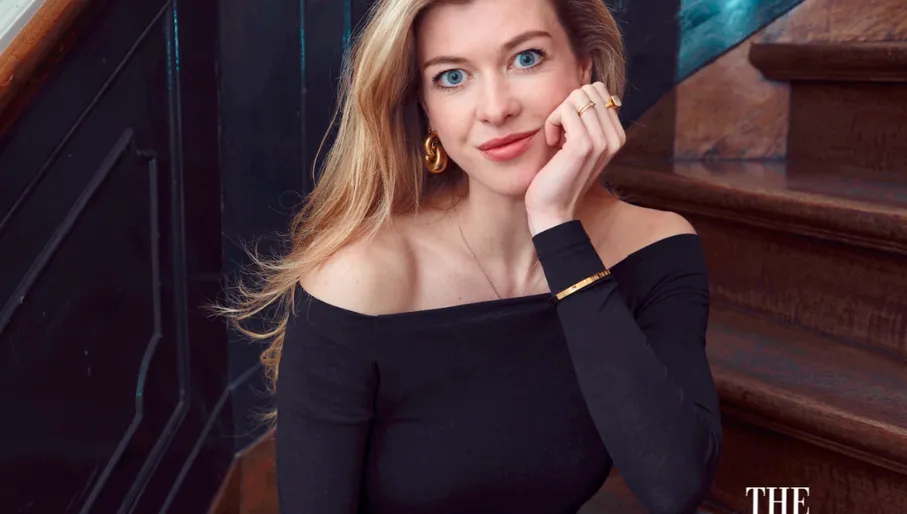
The urge to create stories was there from an early age. I always wanted to do something with journalism or storytelling. To share stories about things that truly matter. Yet that desire faded into the background for a while. As with so many people, life took over: studies, expectations, the 'logical' path.
I studied Business and Management at the University of St Andrews, amongst other things, and did a management traineeship at Heineken. There I found myself in an environment where thinking big was encouraged. Creativity, ambition, a nothing-is-impossible mentality, particularly in marketing. But during an assignment in Congo, something began to shift in how I felt. What struck me in Congo was the authenticity and creativity of people. I felt alive there, yet it also felt bittersweet. I wanted to do something that mattered.
Back in the Netherlands, that feeling lingered. I realised I wanted to contribute, but didn't yet know how. Within Heineken, I committed myself to sustainability by setting up an internal committee. But the nagging feeling remained. It no longer fitted.
I felt that I would eventually start something for myself, but I didn't dare to fully commit yet. I wanted to understand how that world worked first. Which players were involved. Which business models existed. What was going wrong in the way impact was deployed within companies and how it was communicated. In the media, success is still defined as maximum profit and growth. I saw an opportunity for a platform with the same allure and appeal as mainstream newspapers and magazines, but focused on the new economy.
For people to believe in change, they need to see clear examples. In that sense, media steers what we pay attention to. And what gets attention, grows.
With The Green Times, we tell the stories of entrepreneurs from the new economy to a broad audience. Through campaigns, partnerships, videos, and articles, we show that impact and entrepreneurship don't exclude each other, but rather reinforce one another.
Impact entrepreneurs often carry an extra burden. They have the concerns of every other entrepreneur, plus everything involved in creating impact. But that can also be an advantage, because there's momentum. Investors are increasingly looking at sustainability, and with good storytelling you can win consumers' hearts.
I want to make the movement so tangible that you almost can't help but join in.
A few years before I started my own venture, everything changed. I suffered a severe concussion and could barely work behind a screen for a year. My world became very small.
It turned out to be a defining year. I could truly feel: what do I want? What do I find important? My ego became smaller, my motivation purer. I no longer felt I had to prove anything. This simply had to happen.
That period changed how I view entrepreneurship. Not harder, faster, bigger, but more consciously. You don't need to show everything immediately. When you know why you're building something, calm naturally emerges. And from that calm, a different way of building emerged. I connected with mission-driven partners who committed for the long term, and built a large network of organisations and ambassadors. The Green Times exists because more than a hundred people and organisations have contributed their thinking to the end result.
Not everything happened naturally. Everyone wanted to get involved and contribute, so I thought: the more, the better. But that proved to be a misconception. There was vision, but too little direction. And that direction had to come from me. I became drained managing people. My energy went towards organising, not creating.
But it was also very educational. Better a small, strong core than a large team without clear frameworks. I now take time to reflect. I see entrepreneurship as a wave motion. After a period of going full throttle with campaigns, we consciously take time to slow down. We use this time to get the back end in order and set things up properly. That calm is just as important as the peak moments.
What gives me the most energy isn't in numbers or reach. For me, impact lies in restoring nature, less pollution, more space for life. But above all in humanity and courage. I see daily how many people are working towards a better world. They might not always make the front page, but they're there. And that gives hope.
That hope is needed, especially now. We see a lot of polarisation and a movement away from sustainability. That actually spurs me on. Our latest campaign was shared widely because people feel the urgency is only growing.
Many people focus on raising money; it seems like the holy grail. I deliberately chose not to do that. By bootstrapping, I could experiment without external pressure. That's how you discover what works and what doesn't. And you stay close to your mission. Only when you have that clear can you scale sustainably.
And perhaps the most important insight: you don't have to do it alone. Don't walk around with an idea in your head for too long. Bring people together, share where you want to go, and make agreements about next steps. People want to be part of something bigger than themselves; I see that time and again. With The Green Times, I want to continue offering that space: a platform for entrepreneurs who are building solutions, and with that, a different definition of the word success.
More about #FoundersFridays
#FoundersFridays is an interview series about entrepreneurs, for entrepreneurs. Each edition features a founder sharing key learnings, milestones, challenges, and reflections—especially on Amsterdam’s role in the Dutch innovation and impact ecosystem.
If you’re an Amsterdam-based founder working on an innovative solution to an urban or social challenge, and you’d like to share your story with our audience, email Catalina Iorga.