#FoundersFridays: Meet Antigoni Kourou of NEKOD
17 October 2025
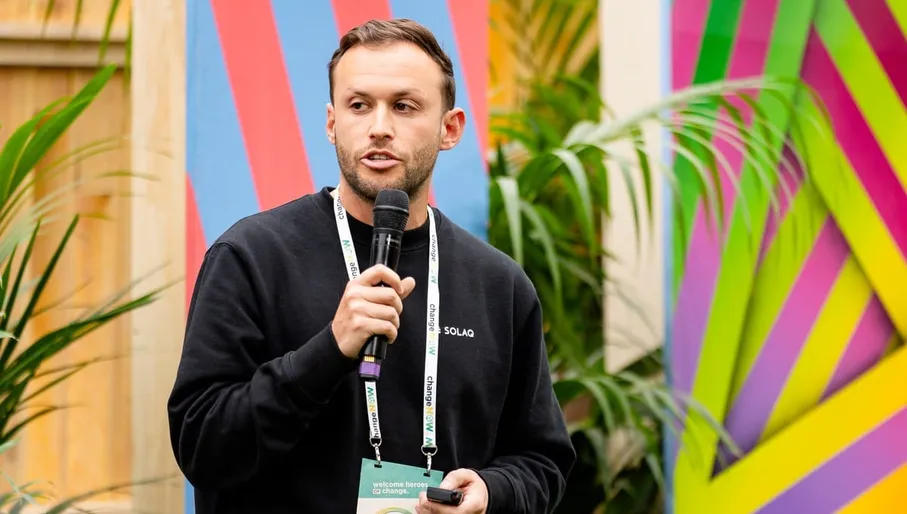
A few things came together for that. Back in high school, I was already brainstorming business ideas with friends. During my bachelor’s degree, I did a minor in entrepreneurship. I wasn’t explicitly planning to go in that direction, but it was always in the back of my mind.
After finishing my master’s degree in Sustainable Energy Technology at TU Delft, I stayed in touch with my co-founders Evert van Voorthuysen and Peter Solleveld, who I’d met during a bachelor’s project. We had worked on concentrating solar power technology for seawater desalination. This experience laid the groundwork for our later focus.
Right after my studies I set up my own engineering consultancy to be a partner in various hardware development projects. Around that time (in 2016), we started ideating with Evert and Peter on atmospheric water generation. So basically, I’ve never worked for another company.
Atmospheric water generation, extracting water from air, relies on two main methods.
Most existing systems use cooling condensation, where electrical energy creates a cold surface for water to condense on. It’s relatively straightforward but requires a lot of electricity and works best in high-humidity environments.
We’ve developed a process called liquid desiccation. It’s a two-step process: first, we absorb water from the air into a hygroscopic liquid. Then, we use thermal energy (heat) to separate the water from the liquid, producing pure, distilled water.
For drinking water, we would remineralize it by adding salts. But for industrial applications (such as process water, green hydrogen production, or mining) you can use the distilled water directly.
We’ve focused most of our business development on the Latin American market. There’s a combination of physical water scarcity and governments actively seeking solutions, which means they’re willing to invest in early-stage systems.
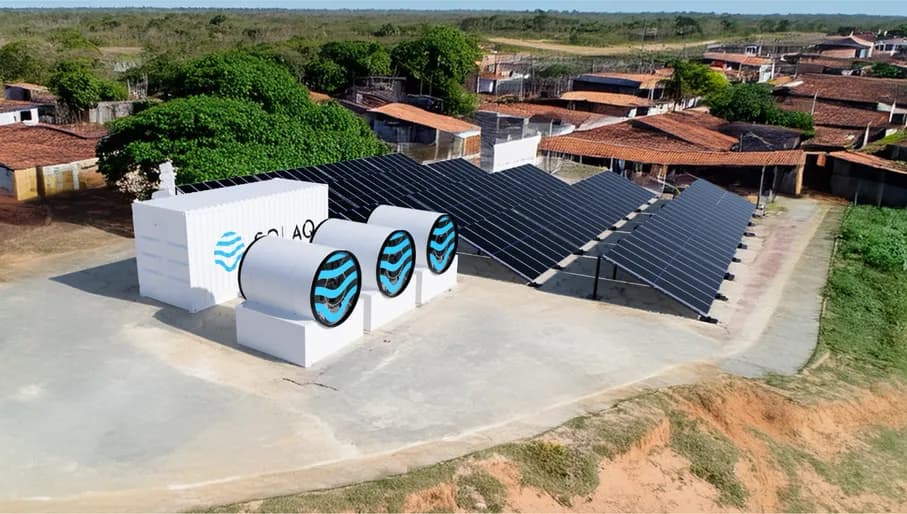
About two and a half years ago, we tested our first integrated prototype at one-tenth scale, producing 200 liters per day, which we demonstrated in northeastern Brazil during the peak of the dry season.
Now, we’re building our first commercial systems, set to be installed in 2026 in Brazil and Mexico. These full-scale systems will produce 2000 liters per day. A key feature of our technology is fixed water production, independent of climate conditions.
I was born and raised in Amsterdam. My parents are from the US and moved here in the late ’70s. I’ve traveled a lot, but I’ve never seriously considered living anywhere else.
Solaq started in Groningen, and we’ve since built a strong network in Leeuwarden via the WaterCampus. But when we raised funding in 2023 to grow the team and needed a larger workshop, we moved closer to Amsterdam. Many of our team members are based in Amsterdam, Rotterdam, Delft, Utrecht, and Leiden, so Amsterdam made the most sense.
Since relocating about a year ago, I've reconnected with the local startup and scale-up ecosystem.
What we do has the greatest impact in places without reliable water sources. While there are many potential use cases in the Netherlands (especially looking ahead), our true potential for large-scale impact lies in regions like Latin America and the MENA region.
We’re open to pilots in the Netherlands, mainly to simplify early operations, but our business development focus has to be where we can grow at scale.
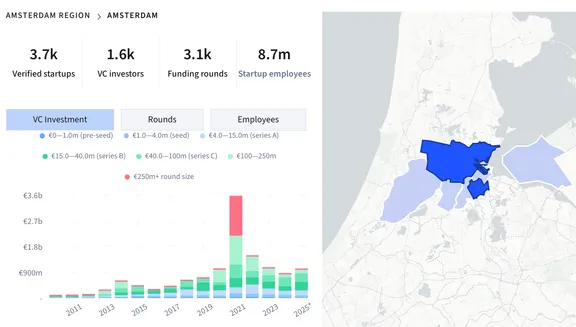
That said, Amsterdam has a strong investor and accelerator ecosystem. It’s more geared toward software, fintech, and AI than deep tech and hardware, which has both pros and cons. But that also helps us stand out. A deep-tech, climate-impact hardware startup like ours brings something unique and valuable to the local ecosystem.
For the first six years (between 2016 and 2022), we were fully in the lab, operating entirely on RVO [the Netherlands Enterprise Agency] and EU subsidies. Progress was slower, since we were dependent on the timing of subsidy applications, documentation, and grant cycles.
Over the course of 2023 and 2024, we closed a €1.9 million pre-seed round. That’s when things really started to accelerate. But given that we’re still pre-revenue, I’d definitely still call us a startup.
Right after, there was an opportunity. They needed someone younger to “pull on the cart,” as we say in Dutch (basically, to take the lead in commercializing the technology). It was a lot of learning by doing, especially at the beginning.
Now, nearly 10 years later, we've come a long way.
The biggest challenge is balancing where we want to create the most impact with what’s easiest and most commercially appealing to investors. Few investors are willing to back hardware startups, especially those targeting impact in distant markets that don’t yet exist.
We believe that if we succeed with demos, there’s huge potential to combine impact and profit. So, we pitch water security and impact first; if people are interested, we then discuss other profitable opportunities.
Take our collaboration with TNO, CEW, and Douna on offshore green hydrogen integration. Producing pure water for this application is a significant opportunity. But I don't lead with it in pitches because it might shift focus away from our core mission: addressing global water security.
Keep fundraising continuously. Always talk to new people even if you’re confident about a round, so you can learn and have backups. This also helps reduce stress.
Be honest and transparent. Don’t sugarcoat or lie because it doesn’t help. If you’re still figuring things out, say so and ask for help. Also, find the right investors who bring more than just money and with whom you can have meaningful collaboration.
Investors can also help with business development, legal expertise, introductions, and more. They can connect you to corporations, governments, other investors, or support you with unit economics, business models, financials, people and culture—you name it. Just figure out what you need and see if an investor can support that.
I’d say, just do it. When I did an entrepreneurship minor years ago, we debated spending a bit of money on a project, and someone said, “10 years from now, will you regret spending €200 each on this?” And we said no, so we did it and learned a ton.
The process of setting up a company teaches you everything, from technical development to hiring, financials, legal, and conversations. That experience is invaluable, maybe even more than just having a successful business.
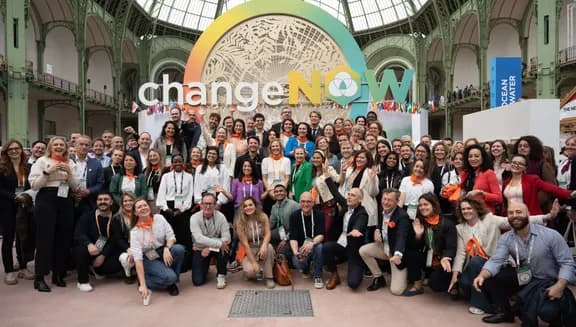
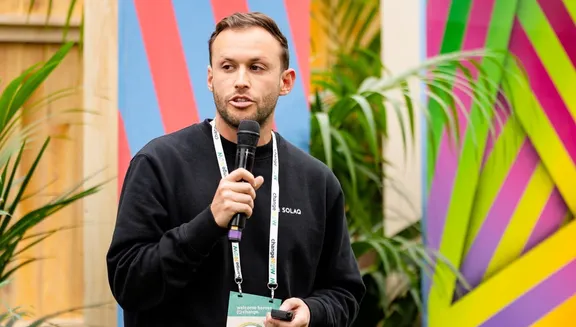
So much happens that we sometimes forget to celebrate. We have to remind ourselves to pause and acknowledge our achievements, like winning the Ocean & Water pitch competition at the 2025 edition of ChangeNOW, the world’s largest event for solutions for the planet.
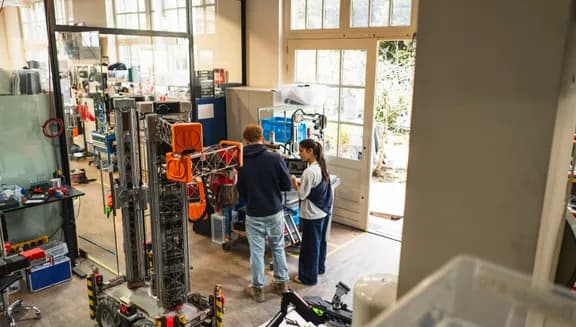
From a technical perspective, we’re making strong progress on hardware development and preparing to ship to our first customer. We’re building the first full-scale, 2,000-liter-per-day absorber, regeneration, and distillation unit here in Amsterdam. Over the next two months, it will be commissioned and tested, which is very exciting!
On the business side, we’re close to securing full-scale commercial pilots with governments in Latin America. Successful demos there could lead to serious scaling. In the coming months, moving from letters of intent to signing contracts will be a huge milestone.
On the government side, we’re doing well. But on the corporate side, we’d like to connect with larger companies with international manufacturing or supply chains that want to be water positive. They either need water security for production or want to offset their water use by supporting impactful projects worldwide.
Many of these organizations are also in the Netherlands, with huge global networks that could assist us.
If you're interested in joining us on our mission for global water security, now’s the perfect time to connect, whether you're a potential partner or investor. We’re in Amsterdam, reach out, come visit. Every conversation or meeting leads to something interesting, whether an introduction, insight, or learning.
If you’re an Amsterdam-based founder working on an innovative solution to an urban or social challenge, and you’d like to share your story with our audience, email Catalina Iorga.