Image from Siebe Swart
Metropolitan Transitions
Last updated on 10 June 2026 at 12:55
Reading time: 4 minutes
Amsterdam is a leading hub for metropolitan innovation, where urgent urban challenges such as climate, energy, housing, mobility, material use and social inequality come together in a dense urban environment. Governments and knowledge institutions in the region work closely together with companies and residents to develop solutions that are not only technologically innovative, but also socially inclusive, scalable and applicable in complex urban settings. Together, these contribute to a model city prepared to face the transitions ahead.
Amsterdam’s progress towards metropolitan transitions
To develop its response to these challenges, Amsterdam counts on strong public-private collaboration, living labs across the city and world-class urban research institutes. These work together to shape urban solutions not only for Amsterdam but for sustainable and resilient cities worldwide.
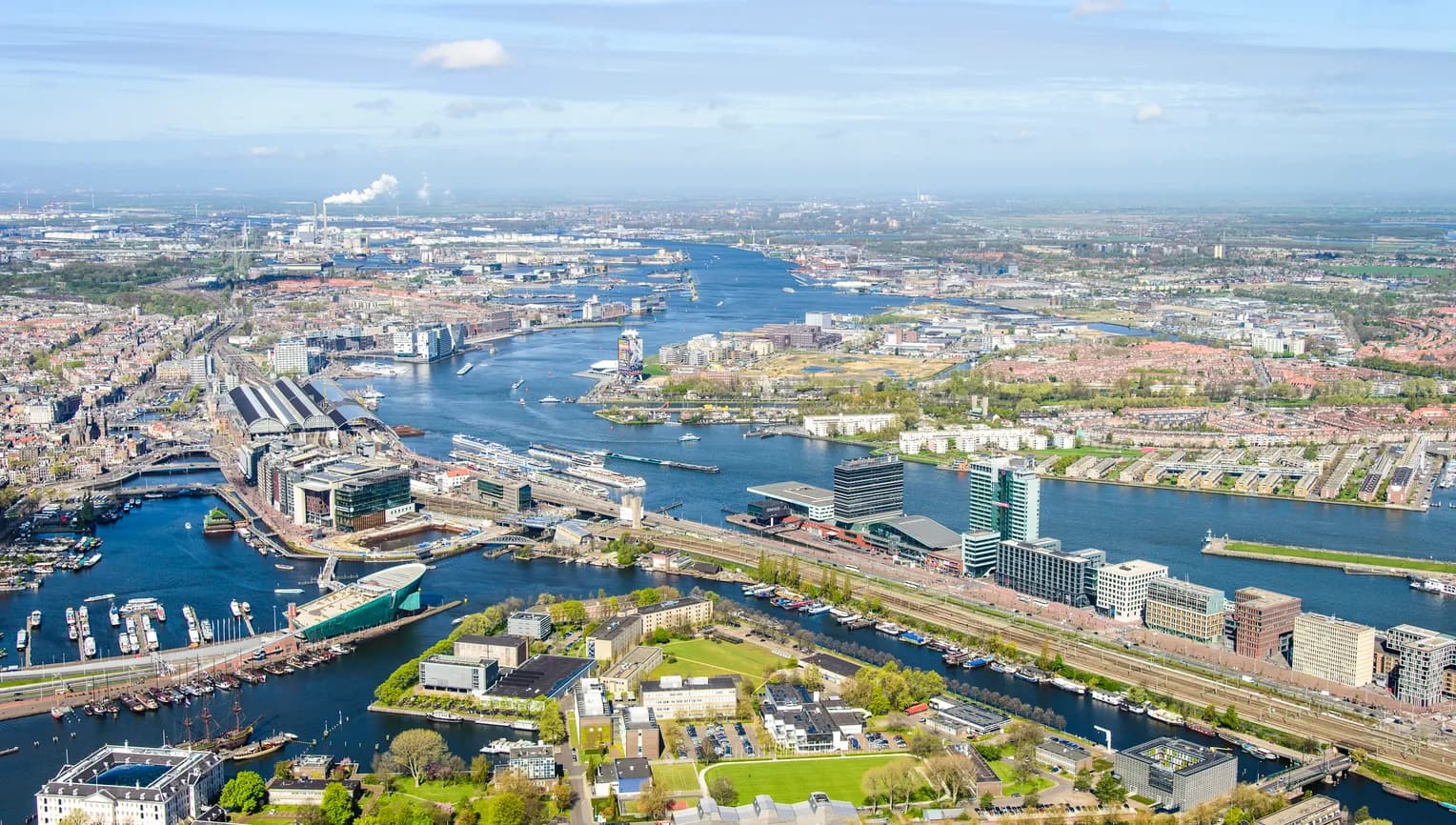
The Amsterdam region has a deeply connected ecosystem in which public authorities, universities, companies and residents work closely together on complex urban challenges. This is often centred in innovation districts such as Marineterrein, Knowledge Mile and Energielab Zuidoost (in Dutch) – enabling real-world experimentation and scaling in a dense urban environment. Amsterdam is also home to the AMS Institute, a globally unique organisation focusing specifically on metropolitan solutions to complex urban challenges, founded by TU Delft, Wageningen University & Research, and MIT, working in close collaboration with the City of Amsterdam.
Facing urban challenges in Amsterdam
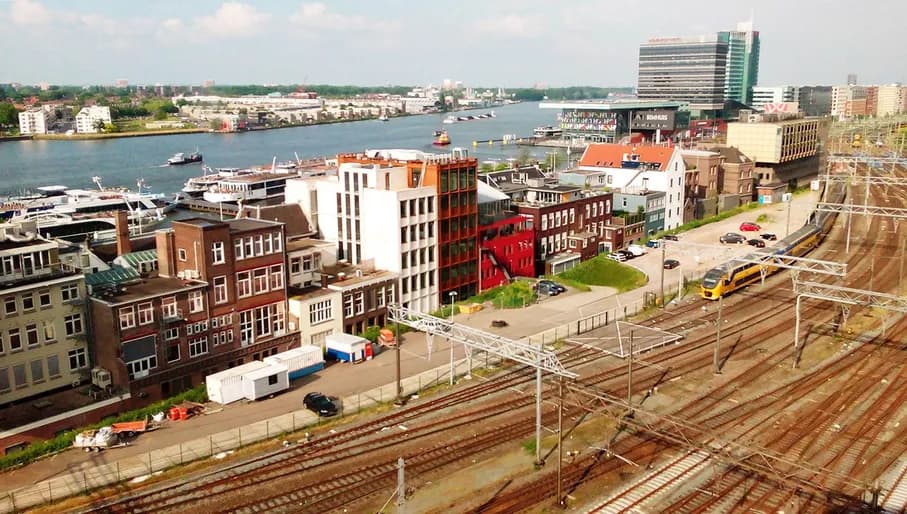
Image from Birgitta Seegers
Cities worldwide are facing major and interconnected challenges in housing, mobility, climate, material use, digitalisation and social inequality. In the Netherlands, nearly three-quarters of the population lives in urban regions, making the country one of the most urbanised in Europe. These challenges converge in dense urban environments and require approaches that connect and accelerate small-scale innovations into system-wide transitions: technologically innovative, socially inclusive, scalable, and grounded in the complexity of real cities. These interconnected metropolitan transitions manifest across key urban domains:
- Housing & densification: accelerating the transition to affordable, low-carbon housing by scaling circular and timber construction solutions that reduce emissions while enabling denser urban living
- Public space & mobility: reimagining urban space through system-wide mobility transitions that prioritise safety, accessibility, active transport, and quality of life in increasingly crowded cities
- Energy transition & grid congestion: developing integrated energy systems that connect heat, electricity, storage, and mobility to support the shift away from fossil fuels within the limits of existing infrastructure
- Inclusive cities & social cohesion: designing urban transitions that reduce segregation and ensure that access to housing, food, mobility, technology, and public space benefits all residents equally
- Circular materials & waste systems: moving from linear consumption to circular urban systems by redesigning material chains, reducing waste streams, and extending the lifespan of products and resources
- Digitalisation & sustainable ICT: addressing the environmental impact of digital infrastructure through circular ICT, responsible data systems, and strengthening digital autonomy at city scale
- Critical infrastructure and asset lifespan: transforming the renewal of bridges, roads, quays, and urban assets into long-term system change through smarter maintenance, circular engineering, and life-extension strategies
- Climate adaptation: building resilient urban systems that can adapt to heat, flooding, drought, and extreme weather while improving liveability, biodiversity, and public health
- Urban resilience: strengthening the resilience of cities by connecting physical infrastructure, supply chains, digital systems, governance and communities to better respond to future shocks and uncertainties
The city as living lab for urban innovation
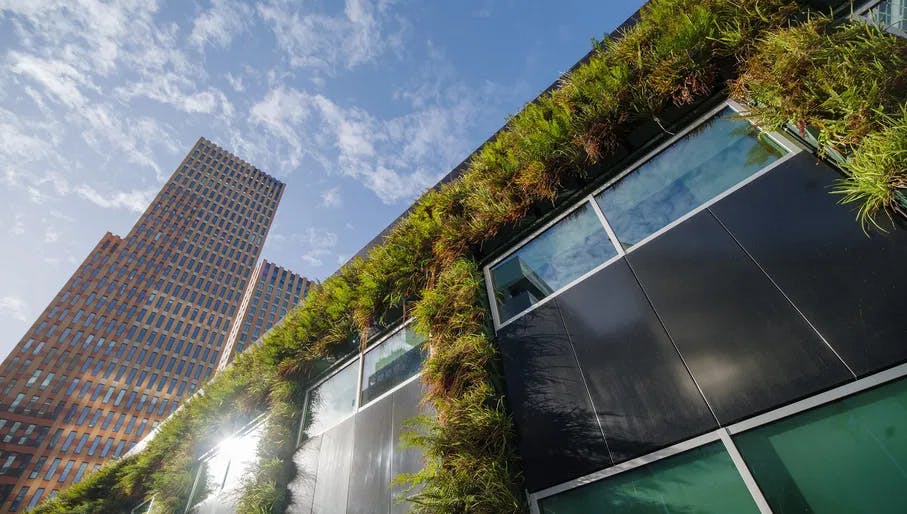
Image from JAN VONK
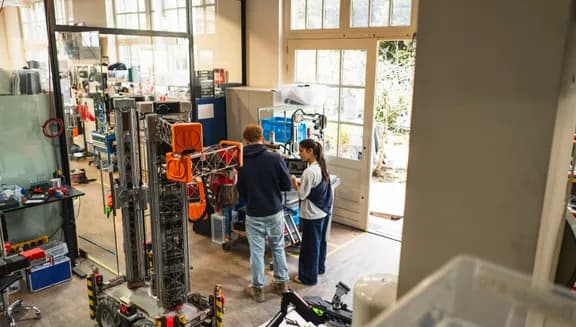
Amsterdam is not a city of isolated pilot programmes. It has a deeply integrated knowledge- and innovation ecosystem where science, innovation and public policy come together to address metropolitan transitions. Across the city, this network brings together expertise in engineering, tech & AI, digital technologies, urban planning, governance and social sciences. Besides the AMS Institute, Amsterdam’s universities, applied sciences institutions and research centres actively connect education and applied research to the urban environment.
Urban innovations are not only researched here, but also tested, evaluated and scaled in practice. Programmes such as Energielab Zuidoost (in Dutch) show how the energy transition can be linked to affordability, local ownership and social justice. At innovation districts such as Marineterrein, innovators experiment with new forms of public innovation and sustainable infrastructure in the heart of the city, whereas at the Knowledge Mile research, entrepreneurship and urban communities are directly connected to the existing city fabric.
What distinguishes Amsterdam is its knowledge-driven and entrepreneurial approach to implementation. The City of Amsterdam and other public authorities collaborate closely with knowledge institutions, companies and residents to accelerate innovation, adapt policy and scale successful solutions. The city’s strength lies not in one specific technology but in its ecosystem approach: by bringing together policymakers, researchers, startups, businesses and citizens, Amsterdam is creating future-proof, liveable and inclusive urban solutions for cities around the world.