Famous artworks in Amsterdam you shouldn't miss
28 September 2026
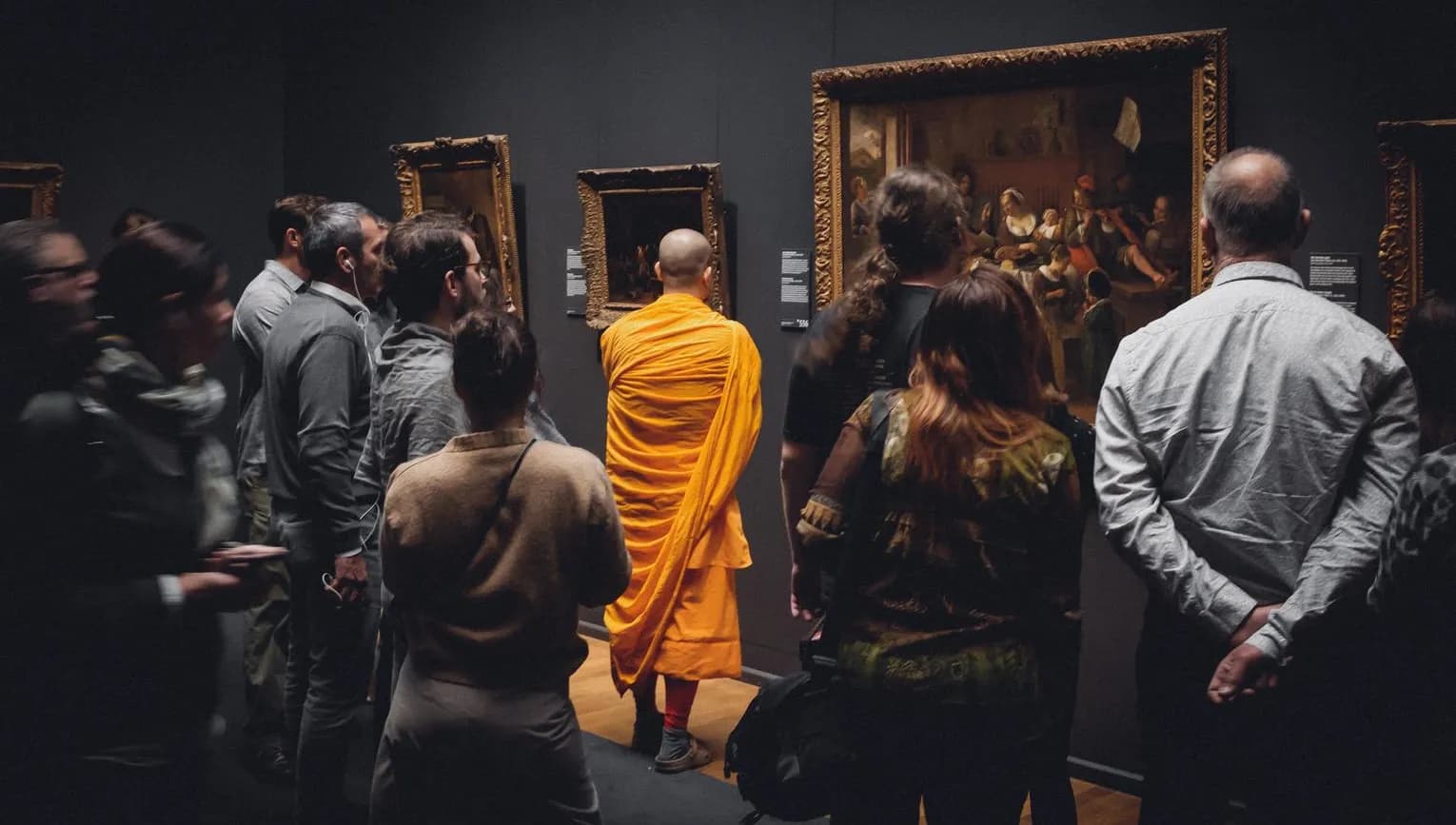
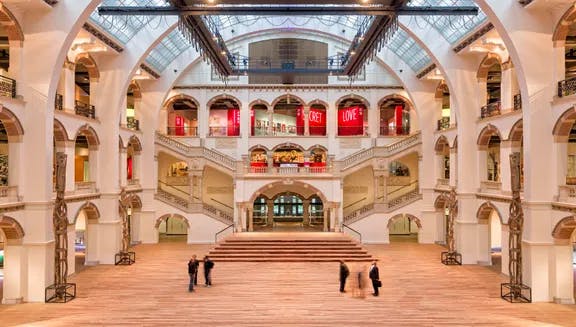
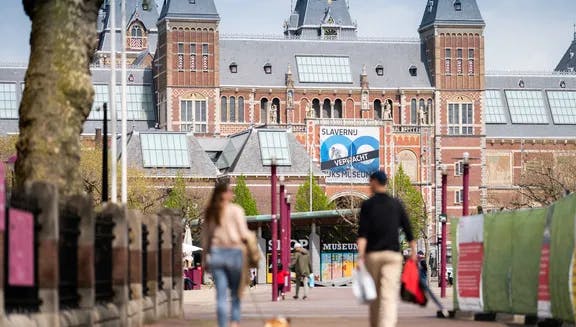
The Rijksmuseum in Amsterdam is home to many world-class works of art and is one of Amsterdam's major museums. We've collected the main highlights in this round-up to help you discover what is in the Rijksmuseum and how to spend your time during a visit. Unforgettable paintings such as Rembrandt's Night Watch, Vermeer's The Milkmaid and special highlights such as the museum's unique architecture, it Cuypers Library and gardens are definitely worth a visit, and, luckily, entrance is free with the I amsterdam City Card.
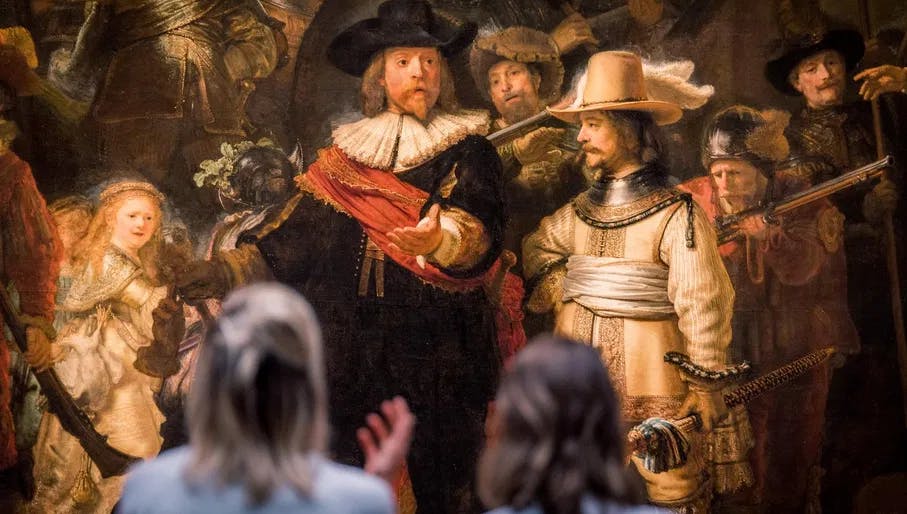
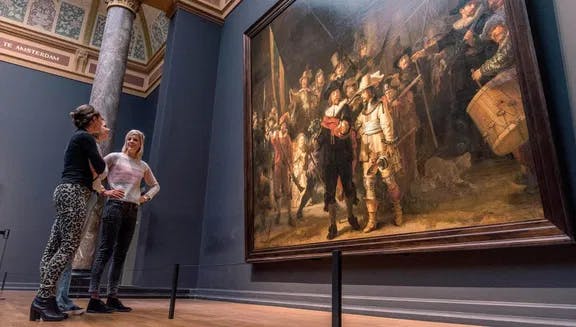
Rembrandt’s best-known masterpiece, which marked a turning point in the artist’s career, takes pride of place in its own eponymous gallery. The large-scale painting depicts guardsmen getting into formation, with a young girl in the foreground rumoured to be modelled on Rembrandt’s late wife. The opulent space is dedicated to Rembrandt’s vision and talent, complete with a frieze commemorating key moments in the artist’s life.
The Night Watch, Rembrandt van Rijn, 1642
The Rijksmuseum’s Milkmaid is Johannes Vermeer’s only painting of a domestic servant and one of his most recognisable works, rivalled only by Girl with a Pearl Earring at the Mauritshuis in The Hague. Admire the intensely saturated blue and yellow tones and the artist’s beautiful handling of natural light, which led generations of art historians to comment on the artwork’s photographic realism.
The Milkmaid, Johannes Vermeer, 1654–58
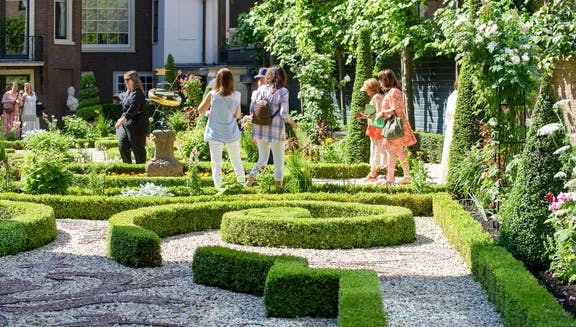
Before you’re even inside the museum, you can enjoy the artistic whimsy of the sculpture-filled secret museum garden designed by Pierre Cuypers in 1901. Among the intricate topiaries, water features and colourful flowerbeds, an enormous wingnut tree looks over the play areas, installations and temporary exhibitions in the summer.
Among its quirkier items, the Rijksmuseum has three antique dolls’ houses on display (including the one that inspired Jessie Burton’s 2014 novel, The Miniaturist). These 17th-century curiosities were not children’s toys, but rather a sort of expensive hobby for wealthy housewives. Houses such as this were decorated with glass, silver, china and textile furnishings created exactly to scale.
Dolls’ house of Petronella Oortman, c. 1676
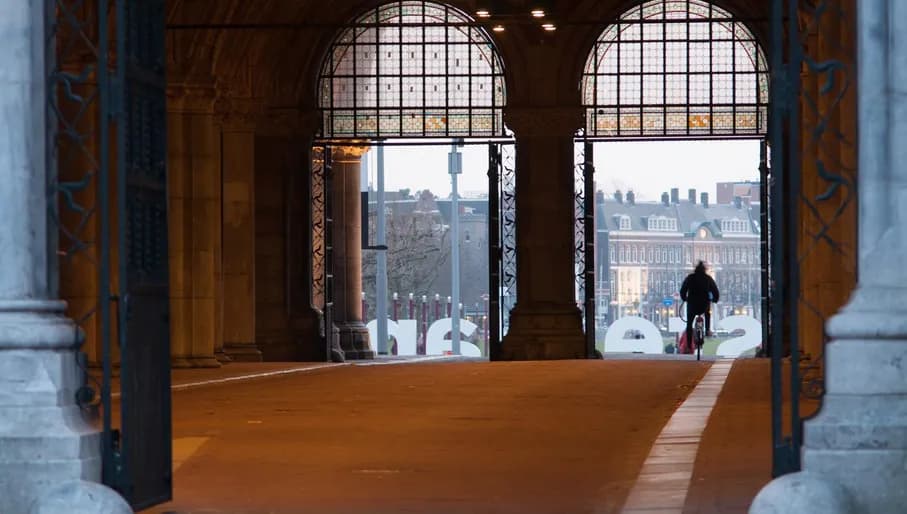
Only in Amsterdam would a national museum allow cyclists to speed right through it! The Rijksmuseum’s passageway connects the two halves of the atrium, with glass panels giving passers-by a glimpse into the museum’s grand interior. The passage’s excellent acoustics make it popular among street musicians. Best of all, it's entirely free to visit, as it is technically not inside the museum.
Wim Pijbes, former director of the Rijksmuseum, describes these works as ‘the most wanted and least exhibited Rembrandts in the world.’ The pair of paintings were purchased jointly by the Netherlands and France in 2016. Following restoration at the Rijksmuseum, the paintings now alternate between their two homes at the Rijksmuseum and the Louvre in Paris.
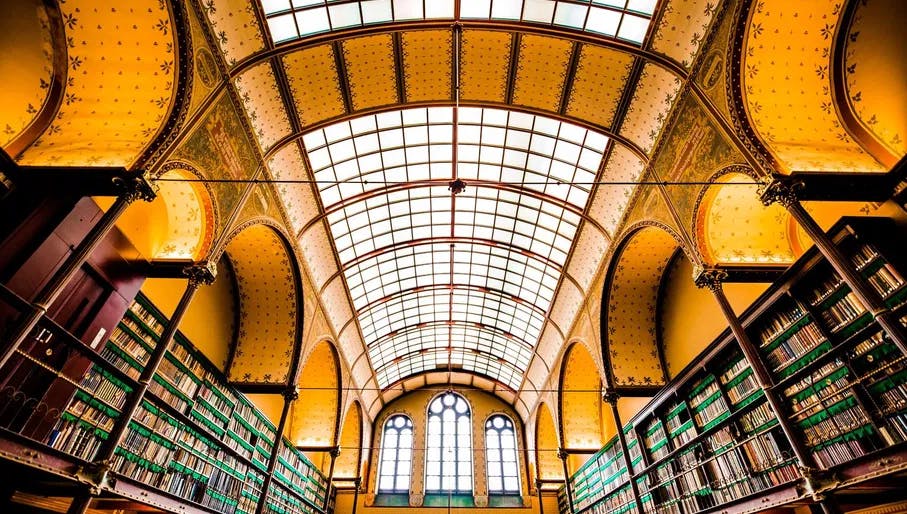
A booklover’s paradise, the Cuypers Library is the oldest and most extensive collection of art history texts in the Netherlands. Visitors are welcomed to come and browse the shelves and study, or view the museum’s (seemingly endless!) online collection on the library’s iPads.
This painting by Jan Asselijn was the first piece purchased by the Nationale Kunstgalerij (the Rijksmuseum’s predecessor) but that’s not all that’s special about it. The swan fiercely defending its nest from a dog was later understood to represent Johan de Witt who fought against enemies of the state. The swan has since become a symbol of Dutch national resistance.
The Threatened Swan, Jan Asselijn, c. 1650.
Frans Hals’ portrait of the couple believed to be Isaac Massa and Beatrix van der Laen is one of the Dutch master’s more unusual compositions. When it was painted in the 17th century, wedding portraits were unwaveringly stiff and stoic – the smiling and comfortable body positioning of this couple caused quite the scandal.
Portrait of a Couple, Probably Isaac Abrahamsz Massa and Beatrix van der Laen, Frans Hals, c. 1622
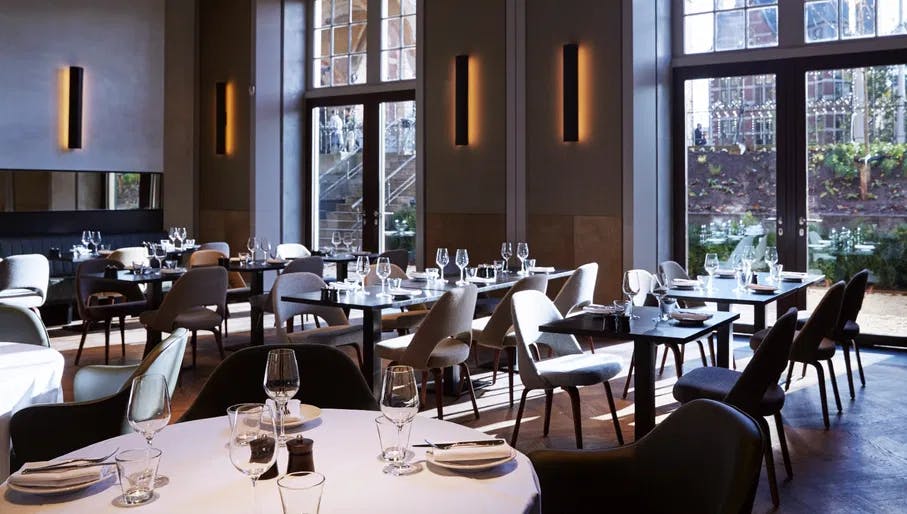
While there are a great many more paintings we could list here, the museum’s Michelin-starred restaurant, RIJKS, is a testament to Dutch creativity – of the kind you can eat. Executive chef Joris Bijdendijk’s menus are inspired by the flavours that have influenced Dutch cuisine throughout history. The team also regularly invite prominent guest chefs into the kitchen - akin to guest curators in a museum.