Quantum
Last updated on 10 June 2026 at 12:21
Reading time: 6 minutes
The quantum sector in Amsterdam is helping pave the way for cutting-edge solutions to a variety of social and environmental challenges. Its collaborative quantum landscape is connecting private, public and academic innovators to develop quantum applications in a range of fields, from engineering and infrastructure to sustainability. Together, this collaborative ecosystem and groundbreaking facilities are maximising the sector's social and environmental impact in and beyond the region.
Amsterdam’s quantum leap in development
Quantum technology harnesses the principles of quantum physics to process information in entirely new ways. While still an emerging field, quantum innovation has the potential to help solve some of society’s most complex challenges – from tackling engineering challenges and designing secure, instantaneous communications to improving infrastructure and tackling environmental challenges. That’s why Amsterdam brings together researchers, businesses and public partners to turn pioneering quantum research into real-world impact.
Amsterdam is at the forefront of quantum technologies in the Netherlands, one of Europe’s leaders in quantum research and development. At the national level, a new Quantum Technology Action Agenda (2025–2035) is being developed to strengthen the Dutch quantum industry beyond the existing national QDNL network. As one of five nodes in this network, the strength of Amsterdam’s quantum landscape lies in the combination of world-class theoretical research, growing experimental capabilities, and a collaborative, impact-driven culture that connects science, education, and industry.
Quantum research in Amsterdam

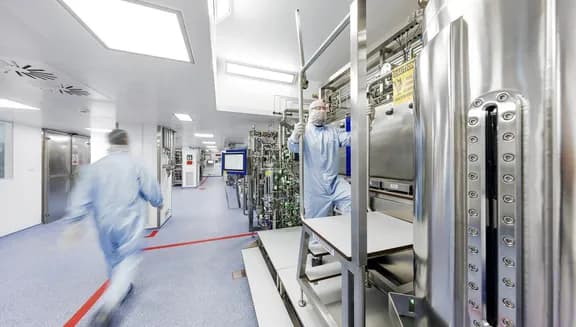
Image from divinetechygirl via Pexels
Quantum researchers and businesses can already count on expertise within and beyond Amsterdam’s three universities: The University of Amsterdam (UvA), Vrije Universiteit Amsterdam (VU) and the Amsterdam University of Applied Sciences (HvA/AUAS). QuSoft, AMOLF, ARCNL and Centrum Wiskunde & Informatica (CWI) all present pioneering developments on quantum algorithms, software, and information theory, with a rapidly expanding focus on experimental and hardware-based research – as well as the legal and societal implications of quantum technologies.
Amsterdam’s leadingcutting-edge research and experimental facilities are fostering groundbreaking quantum experimentation and working towards innovative applications.
In particular, quantum experimentation in Amsterdam extends into precision metrology, quantum sensing and optics – for example in the UvA’s Quantum Gases & Quantum Information group and the VU's Quantum Metrology and Laser Applications group. These activities connect Amsterdam to wider European and national initiatives, positioning the city as a key contributor to Europe’s quantum infrastructure. This combination of theory, computation, and experimentation establishes Amsterdam quantum as a wide-ranging and pioneering hub.
Talent development and collaboration in Amsterdam’s quantum ecosystem
Amsterdam’s thriving knowledge network not only attracts and supercharges talent in the quantum landscape but also enables partnerships between research and industry. Specialised programmes and talent pipelines across these institutions attract highly skilled international students, facilitating their advanced research and connecting them to innovating quantum companies in the region.
Upcoming events in quantum, tech and AI
This ecosystem includes companies like Quantum Gateway Foundation, OpticsFoundry and Amsterdam Scientific Instruments, as well as governmental organisations such as Rijkswaterstaat and SRON – all working alongside academic partners on use cases including security, finance, communication, navigation, medical, and optimisation applications.
Amsterdam quantum in action: three case studies
The traction and collaboration of Amsterdam quantum can be seen most clearly in the following case studies – examples of how academic, industrial and governmental partners are already developing quantum for a variety of applications.
- Quantum clocks and fail-safe timing network: the VU and UvA are working together with the National Metrology Institute (VSL) and SURF to develop quantum clocks connected via fail-safe time and frequency networks. Through quantum communication, clients will be able to develop secure messaging and transactions, enabling rapid innovation in terrestrial navigation.
- QuSoft, a collaboration between UvA and CWI, is a leading research centre for quantum software. Besides their fundamental research, they are increasingly focusing on practical use-cases with large real-world impact, such as chemistry and material science simulations.
- Quantum applications in engineering: regional startups are gaining traction in solving real-world engineering challenges. For example, Amsterdam-based startup Fermioniq is working on quantum solutions for complex infrastructure and environmental problems, and the HvA is developing quantum magneto-sensors to detect underground cables and pipelines for Rijkswaterstaat.
Quantum infrastructure and connectivity in Amsterdam
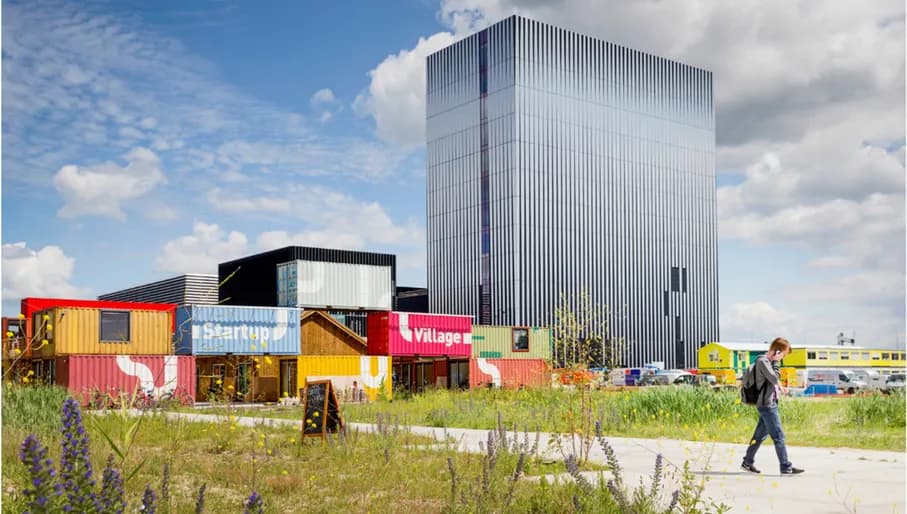
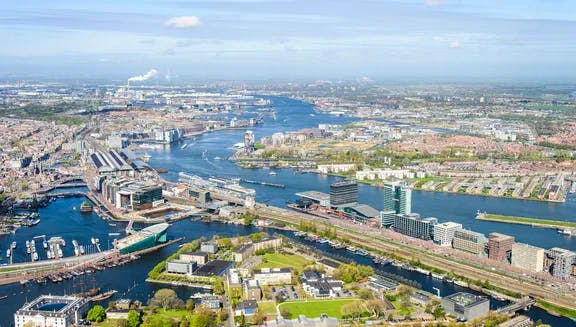
Image from Amsterdam Science Park
These and many other directions and applications are enabled in Amsterdam thanks to its advanced – and rapidly developing – quantum infrastructure. The UvA and VU already have a national quantum sensing ultracold atom testbed. Meanwhile, SURF, in Amsterdam Science Park, will soon host a European quantum computer, connected to national supercomputer Snellius and supporting hybrid HPC–quantum research and education.
Elsewhere, Amsterdam’s quantum, technology and research landscapes also count on physical and community infrastructures to support further innovation, experimentation and entrepreneurship – including in the city's key innovation districts. Startup Village and Matrix ONE, for example, foster early-stage ventures and collaboration in quantum, AI and other forward-thinking sectors, while QDNL Amsterdam connects academia, industry and society by facilitating knowledge exchanges and innovation. Meanwhile, HoQ Amsterdam is a space to cluster various initiatives, attract startups, and foster collaboration between research and industry – before the upcoming LabQ is built at the UvA. With Amsterdam already a leader in digital and entrepreneurial connectivity, the city is fertile ground for this growing quantum ecosystem.
Amsterdam’s future is quantum
Ultimately, as quantum technologies become more viable and investment grows in the Netherlands and beyond, Amsterdam is well situated to move things forward. The city’s knowledge networks are already contributing to the quantum revolution, while its regional, national and international connections are fostering innovation and collaboration with the potential to provide solutions to a host of social and environmental issues.