Voting in the local elections in Amsterdam for internationals
11 November 2025
The parliamentary elections (or general elections) in the Netherlands take place at least every four years and determine who sits in the Dutch House of Representatives (Tweede Kamer). This is the main legislative body in the country; it has 150 seats. Members of the House of Representatives are directly elected and various political parties compete for the seats.
The Netherlands operates a system of proportional representation. This means that the number of votes a party receives is proportional to the number of seats it wins.
There has never been a majority government in the Netherlands under this system, so after the elections, the parties who have won seats negotiate to form a coalition government. This government will determine national policies on issues such as housing, education, the environment and climate change, immigration and healthcare.
To vote in the Dutch parliamentary elections, you must:
If you meet these criteria, you will automatically receive a poll card (stempas, ‘voting pass’) in the post before the elections.
There are many political parties in the Netherlands, ranging from large, well-known parties to smaller parties. Some of the smaller parties are focused on specific issues (such as animal rights, green policies or farming reforms) or population groups (such as senior citizens). Each party has its own platform and priorities.
There are a number of online tools and guides that provide an overview of the parties and their goals and manifestos. These tools can help voters to decide how to cast their vote. They usually ask a series of questions about current affairs and more general issues and then suggest parties that might align with these views.
These guides are only available in Dutch, but you can use various browsers or platforms that offer English translations or summaries. The tools include:
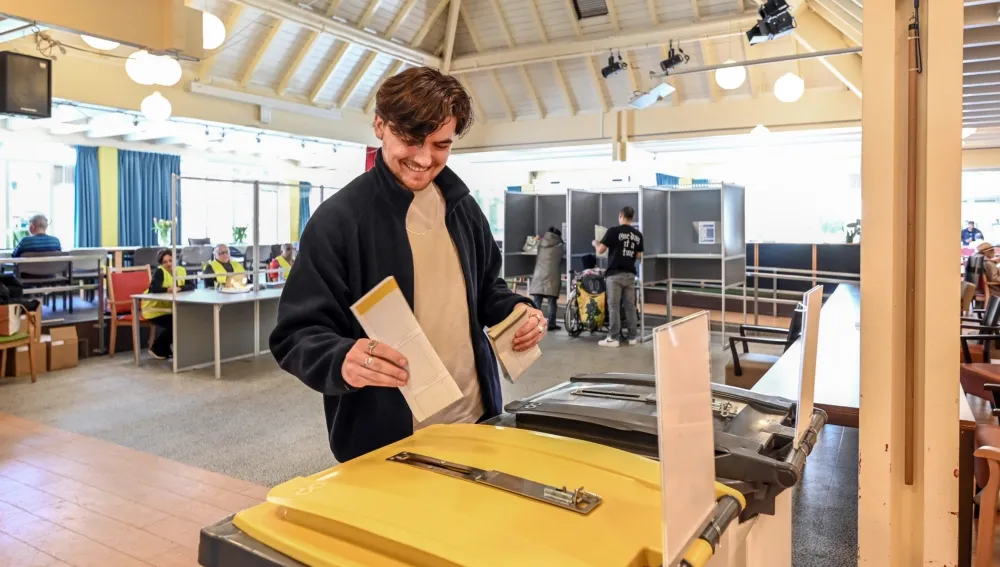
You can vote at any polling station in your municipality – check your municipality’s website for polling stations or visit this list and map of all polling stations in the country.
You will need to bring your poll card (stempas, ‘voting pass’), which you will have received by post before the elections, and a valid form of identification.
The following are considered valid proof of identity:
You can bring expired documents, but the expiry date must be less than five years ago.
The Dutch government consists of the monarch, the ministers (who form the cabinet) and state secretaries. Ministers and state secretaries (junior ministers) are responsible for the day-to-day running of the government. They implement government policy.
Government ministers are in charge of a ministry. There are also so-called ‘ministers without portfolio’, who work for a ministry headed by a different minister. State secretaries support and sometimes stand in for the ministers.
The government must have the confidence of a majority of the House of Representatives and is subject to parliamentary scrutiny.
In the Netherlands, parliament consists of the Eerste Kamer (the Senate) and the Tweede Kamer (the House of Representatives). New laws must be approved by both the Senate and the House of Representatives.
The main tasks of the House of Representatives are:
The 75 members of the Senate are elected by the members of the Provincial Councils every four years. The Senate’s main duty is to approve or reject bills.
The Netherlands is a constitutional monarchy. This means that the head of state is a king or queen whose powers are laid down in the constitution. Currently, this is King Willem-Alexander. The powers of the monarch are very limited. It’s the ministers who are responsible for what the Government does.