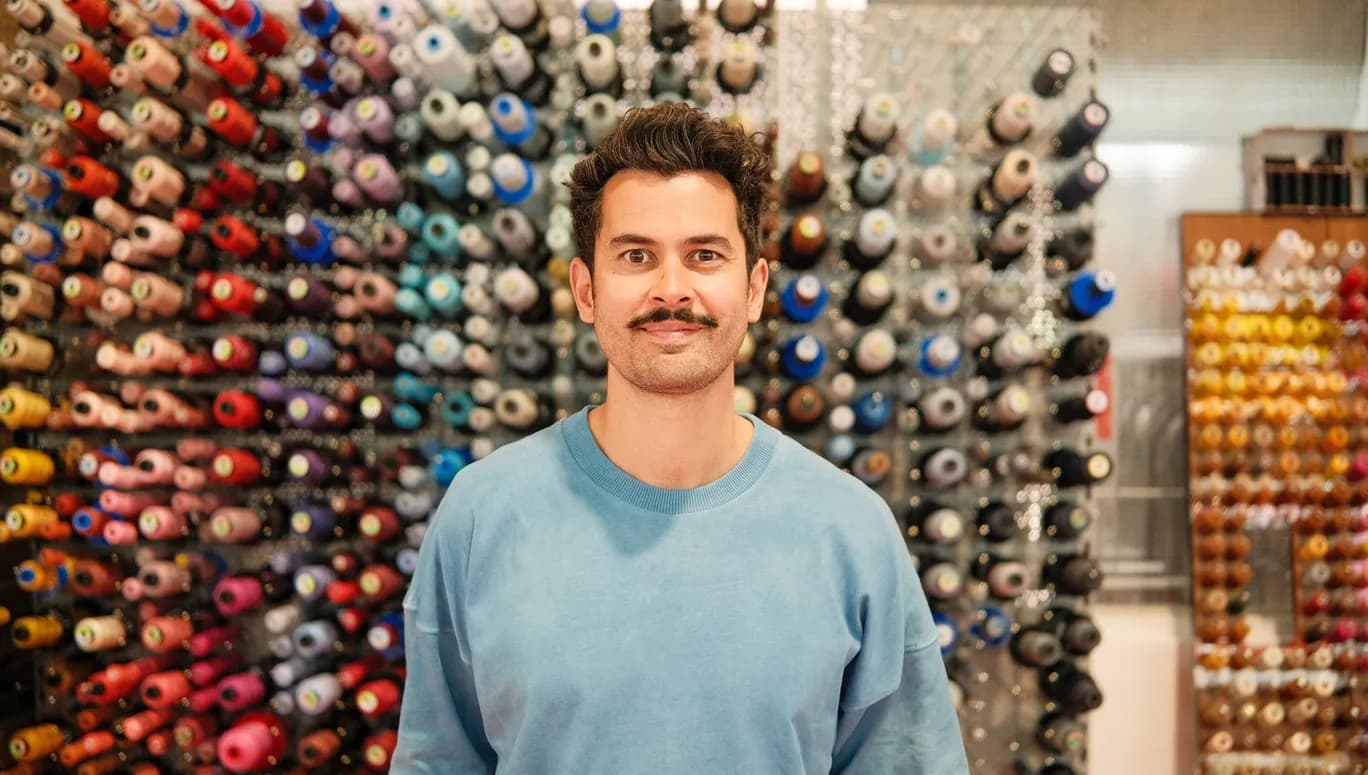
Q: Ok, let’s jump in. Can you tell me a little bit about your journey to becoming the CEO of United Repair Centre?
A: Ok, well, I’m Brazilian-Dutch, born in São Paulo, with a Dutch mother from Amsterdam. Growing up, Amsterdam was this mythical, avant-garde city to me, with a tradition of free will and liberty. I’ve always wanted to be a designer, and over the past two decades, design has evolved into a more responsible, sustainable and socially driven practice. In my view, Amsterdam sits at the heart of this movement.
So, I moved to Amsterdam 15 years ago, got involved in local social design through volunteering and interning, and, inspired by a City of Amsterdam event during the refugee crisis, I co-founded Makers Unite. A social enterprise transforming discarded life vests into products and supporting refugees into employment.
Q: That is a great initiative. And how did that lead to the founding of the United Repair Centre?
A: Makers Unite evolved into a B2B business producing upcycled products for brands like Ben & Jerry’s, Filling Pieces, and Tommy Hilfiger. Then, during COVID, the Amsterdam Economic Board organised a think tank to explore sustainable recovery ideas, and textiles were a key theme. That’s when Patagonia approached us about doing garment repairs.
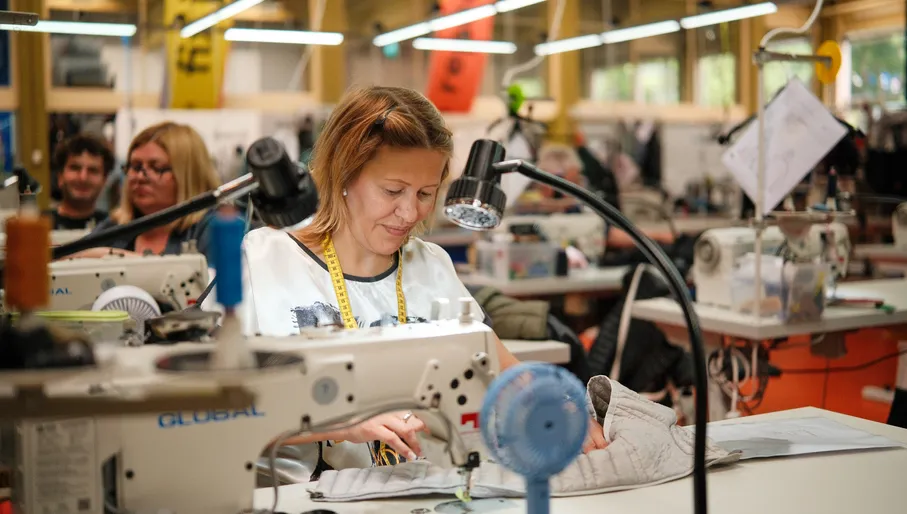
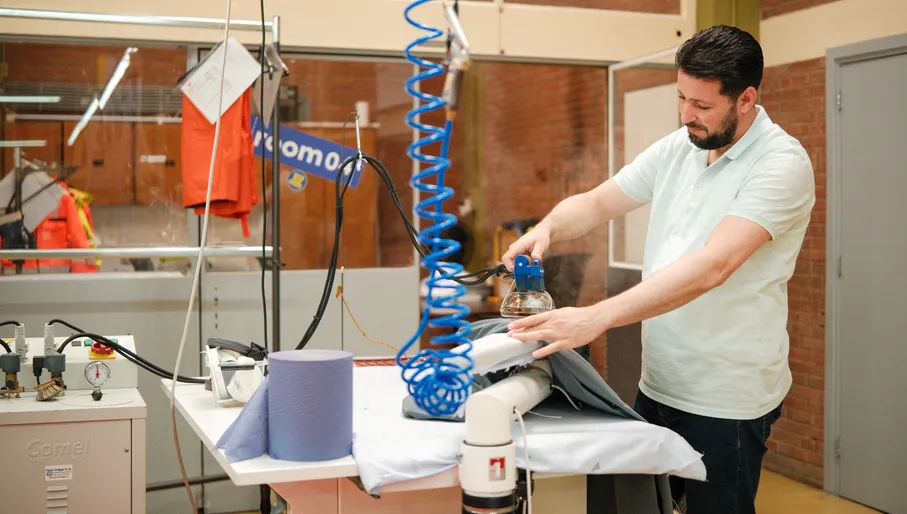
I soon realised repairs are the backbone of circularity: they enable warranties, rental models, second-hand sales, and upcycling. But there was almost no scalable B2B repair service in Europe. So I asked Patagonia, along with our co-founder, Paul Kerssens, if we could open our blueprint and offer it to other brands, which was the start of United Repair Centre (URC) in 2021.
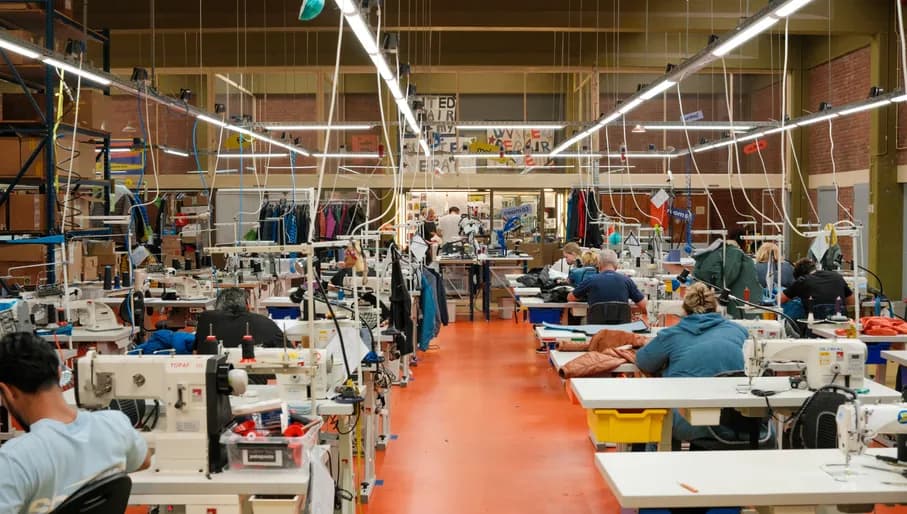
Q: What is it then about Amsterdam that makes it such a natural home for URC?
A: So, while Amsterdam isn’t a global fashion capital, it is a breeding ground for bold ideas. A crib or a kind of nest for greater ideas, right? There’s a culture here where people say, “Go for it! See what happens.” So that really pushes people to try different things. The city also nurtures the circular ecosystem here and has a progressive local government and a strong connection between the municipality, citizens, and industry.
You also have the commitment of Amsterdam being the first city to want to become fully circular, through The Doughnut Economy. That’s really remarkable because now we have 400 cities in the world to follow that. It’s also a great city for clustering, gathering brands, embassies, and entrepreneurs, which we’ve done, for example, at the Global Fashion Agenda in Copenhagen, where the City of Amsterdam supported us in hosting a major event there.
Q: Leading on from that, what does circularity mean to you in practice, and what role do repairs play in that?
A: Well, everyone now recognises the responsibility we have to tackle textile waste and build more socially responsible businesses. But solutions at scale remain pretty rare. So our role is twofold: one, to provide practical, operational solutions that brands can plug into easily; and two, to offer thought leadership to help reshape the sector’s mindset.
Repairs reconnect consumers with the makers of their clothes and shift habits away from fast consumption. At the same time, repairs enable brands to develop second-hand lines, rental services, and upcycling. Everything links back to repairs.
Q: Interesting, and what would you say is driving this change? Is it a consumer push or something greater?
A: The short answer is, there are three key drivers: first, legislation in Europe pushing brands to take responsibility and enable the right to repair. Second, public opinion, with increasingly informed consumers aware of brand supply chains. Third, circular innovation, where brands launching second-hand programmes drive competitors to follow.
Q: So in a way, it is competitive sustainability.
A: Yes, exactly that.
Q: You mentioned a few collaborations before. How do these collaborations with the City of Amsterdam and other partners help URC scale its impact?
A: The City of Amsterdam plays a key role by connecting us to networks, trade missions, and events, especially through Amsterdam Impact and the Amsterdam Economic Board. They also provide us with access to social employment programmes and welfare agencies, promote our job vacancies, and help us hire. We feel genuinely supported here. No other city would make this possible in the same way. Amsterdam offers a lot of advantages: connections, access to officials in other cities, and a strong entrepreneurial ecosystem. Other cities like Paris, London, and Copenhagen visit us to learn from what we’re doing here. Amsterdam’s daring, its experimental spirit, make it the perfect home for us. We wouldn’t want to be based anywhere else.
Q: And finally, what advice do you have for businesses, local or international, wanting to go circular in Amsterdam?
A: It’s an incredibly exciting time to be here. Amsterdam is a city that keeps pushing for new ways of thinking, like I mentioned with the “try it and see” mentality. And there’s so much support available to help turn a small, local idea into something international. But it takes initiative. You have to dare to take that first step. The city really supports local, grassroots projects, and if your idea has impact, there are numerous ways to scale it up.
I think it’s important for international companies coming in to really aim to create genuine connections with local citizens and grassroots organisations. That’s where some of the most exciting and meaningful innovation is happening. The big challenge now is how we bring multinationals and local initiatives together, because that’s where the future lies.
Want to learn more about the circular economy in Amsterdam? Read more or get in touch with our team.
