Mapping Amsterdam’s smart mobility projects
12 March 2025
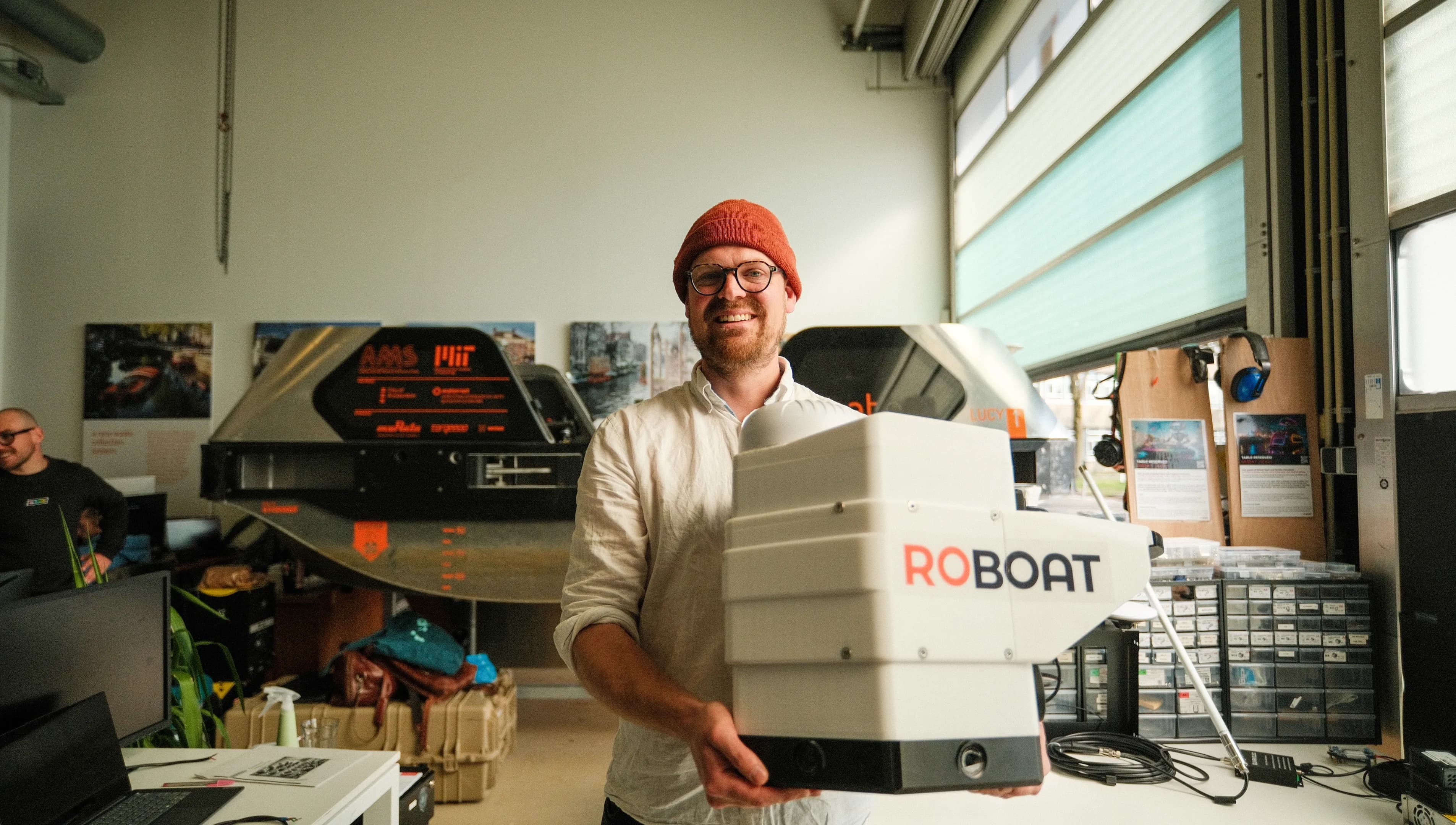
As cities face increasing demand in the public transport and logistics infrastructure expansion, Roboat’s mission is to unlock the full potential of inland waterways to facilitate this challenge through their automated software that can be installed on existing, and newly built vessels.
Starting as a project through a collaboration between the Massachusetts Institute of Technology (MIT) and the Amsterdam Institute for Advanced Metropolitan Solutions (AMS Institute), Roboat has now made the impressive move to become a startup and combines years of research with real-world testing on Amsterdam’s iconic canals.
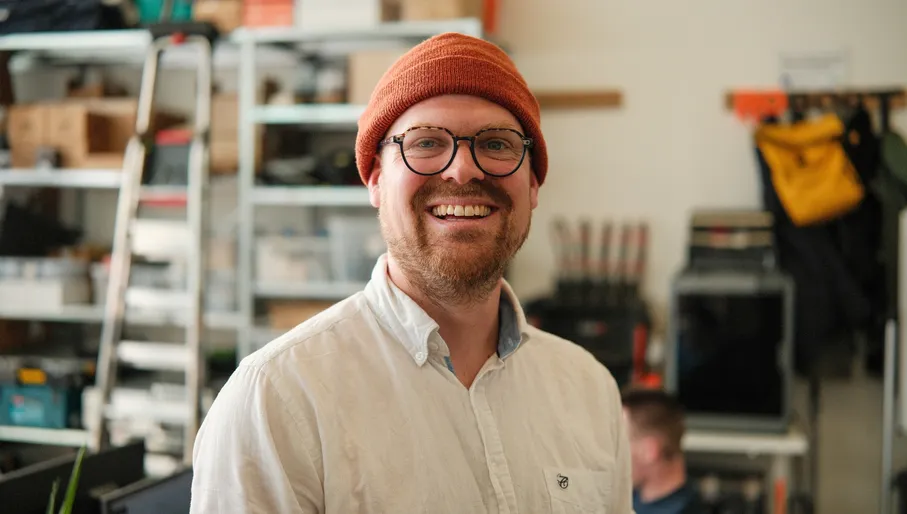
For CEO Ynse Deinema, the journey to Roboat is both professional and personal.
My father taught me to see the potential in any vessel – even the neglected ones, covered in grass somewhere hidden in the back of marinas. If we can clean it up or fix it, it’s usable again.
That early fascination stayed with him through his career. Deinema joined Roboat in 2019, having previously worked at TU Delft in the field of robotics. When working in Delft, Deinema heard of the Roboat project in Amsterdam, and things instantly clicked: “I love boats, I like robotics and innovation projects and I thought, that’s me!”
Now leading the team, Deinema is helping steer Roboat into its next phase. One focused on real-world application and impact.
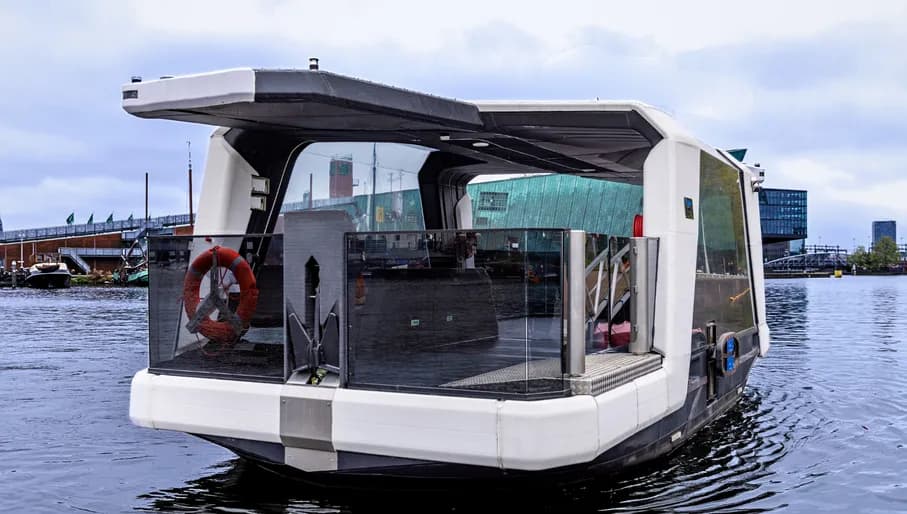
Launched in 2015, Roboat has quickly evolved from an academic research project into a startup that incorporated in 2024. Originally focused on solving urban challenges and the ambitious goal of building autonomous vessels, Roboat successfully demoed two in 2021, catching the global interests of cities like London and Venice.
That was the starting point. How can we solve the urban challenges of mobility and transportation in confined spaces, where roads are fully congested? It’s good to look at alternative modalities.
Ynse Deinema
As Roboat transitioned from academic project to startup, Deinema highlights a focus shift to scalable market-ready solutions. Instead of focusing on building autonomous boats, Roboat has innovated retrofit hard- and software to enhance existing vessels with automated and semi-automated capabilities.
We’re step-by-step automating the inland shipping industry. Our dot on the horizon, is the high level automated navigation, where the vessel only needs to be supervised, and the system takes full control. This will help with safety, reduce energy consumption and it will result in more comfort for skippers and passengers.
Ynse Deinema
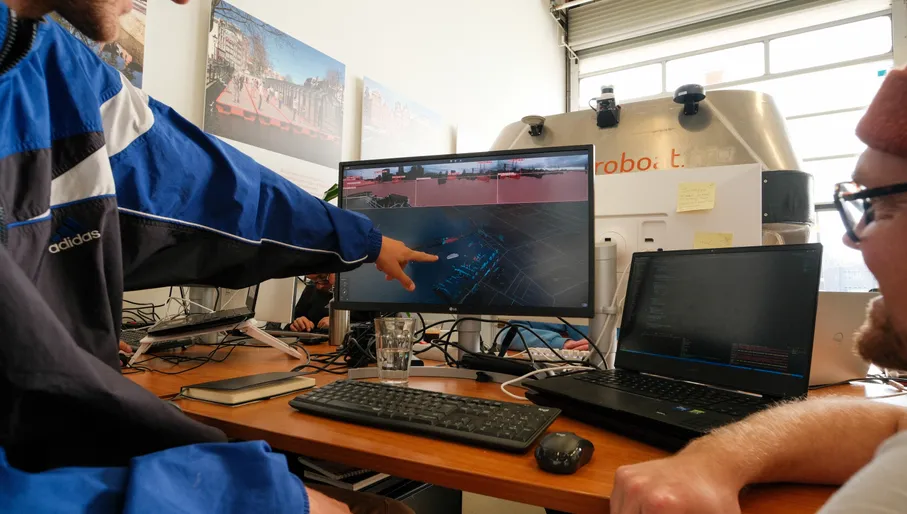
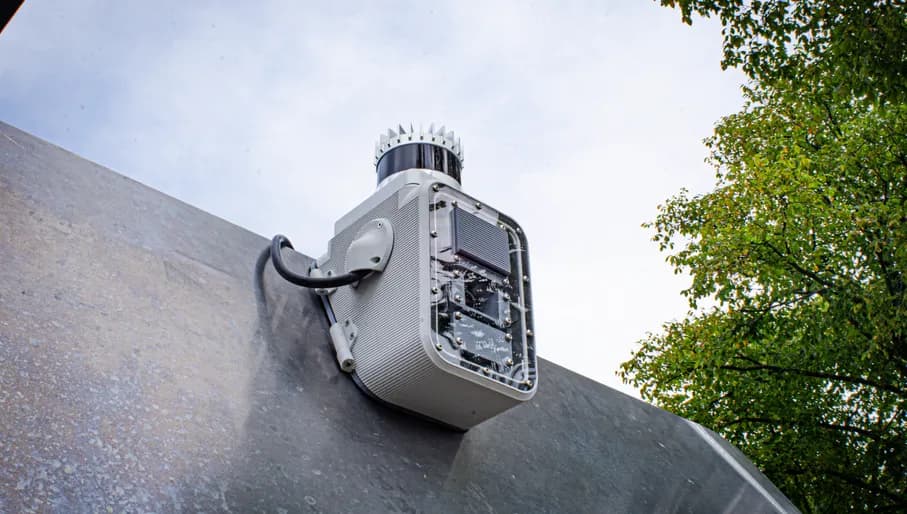
With a host of different vessels navigating inland waterways across the Netherlands and Europe – it’s crucial that Roboat’s technology works on all types of ships. Roboat’s system is built to help vessel operators navigate complex environments safely and efficiently. Features like Sailing Assist provide real-time overview about nearby obstacles and other vessels, offering improved safety, especially in low-visibility, high-stress situations.
This work is particularly relevant in cities like Amsterdam, where ferries are a vital part of daily transport, carrying up to 70,000 passengers a day. Roboat’s technology aims to support skippers in this crucial work to make their work easier, safer and more efficient.
Our tech works best in short-range, high-complexity situations like harbours, canals, and urban waterways. We’re here to support the skipper and improve day-to-day operations.
Ynse Deinema
The growing demand for sustainable transport and a shortage of skilled workers makes Roboat’s solutions a timely advantage. Roboat’s latest partnership with GVB Ferries will see its software assist skippers on Amsterdam’s busy ferry network, using data-driven insights to boost efficiency. The focus: safer, more comfortable, and cost-effective operations. Innovations the company will showcase at the Autonomous Ship Expo at RAI Amsterdam later this year.
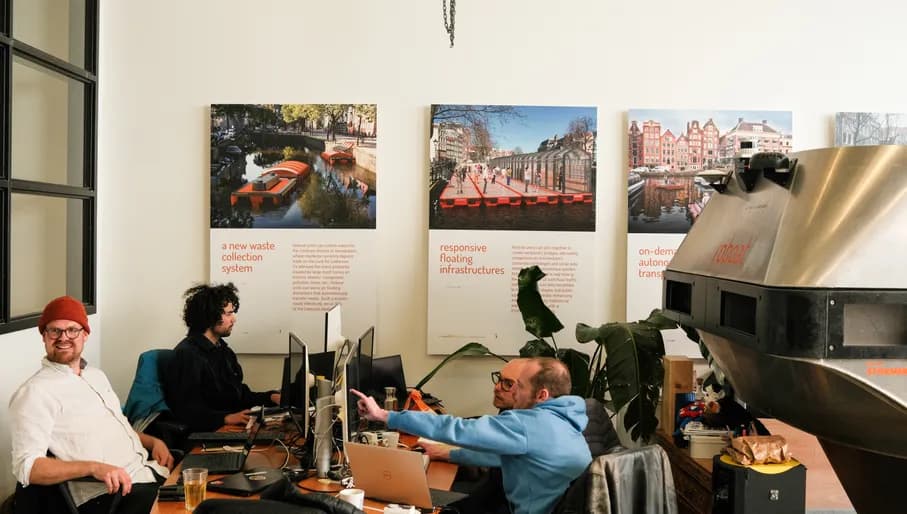
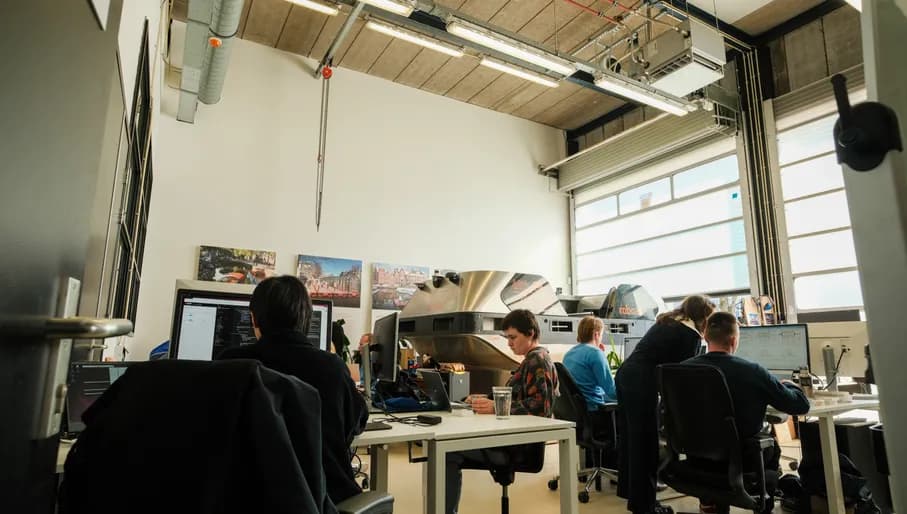
Roboat’s story is a testament to Amsterdam’s role as a magnet for pioneering ideas. With its unique mix of historical innovation and modern outlook, the city provides fertile ground for robotics, AI, and sustainability to interact seamlessly with one another. When it comes to technologically experimenting in the outside world, there is no better place than Amsterdam.
The city’s Living Lab at Marineterrein, a dynamic testing ground, allows companies to experiment with new ideas in a real-world urban setting. An essential resource for a robotics company like Roboat.
We are in the field of robotics. We are not just doing software platform app development. We actuate things in the real world. There aren’t many workplaces where you can do that. So we have an advantage here in Amsterdam.
Ynse Deinema
And it’s not just the collaborative spaces that Amsterdam provides, but the presence of diverse talent from around the world. Roboat has 12 full time employees from across the globe, coming together with their expertise to bring Roboat’s software to as many urban waterways as possible.
Deinema explains that having an international and diverse team was important to Roboat as it allows them to be more resilient when it comes to problem-solving in their industry.
Amsterdam is a very potent place to be if you want young, talented, smart people to work with you.
Ynse Deinema
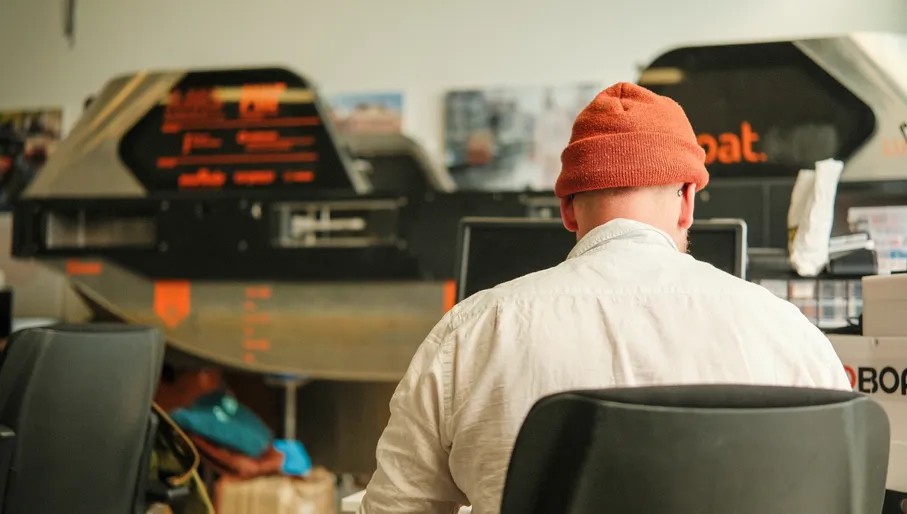
As the conversation comes to an end, it’s clear that the next phase of Roboat’s journey is expansion, with the goal that in 5 year’s time they will be the number one provider of automated navigation technology in Europe’s inland shipping market.
Born on Amsterdam’s waterways, Roboat’s commitment to reinventing the waterways through their expertise in robotics is evident in each of the steps that they take – not only for shipping companies and skippers but also for the future of the planet.
I want it to be a no-brainer. When you go on an urban ferry or an inland barge, of course there’s a Roboat system on board – in close collaboration with the skipper and the crew. How else are you going to optimise safety, comfort and efficiency? I want people to expect that there is a Roboat system supporting day-to-day operations on the vessel.
Ynse Deinema