Key facts on Amsterdam's mobility industry
12 June 2025
Amsterdam has a long history of weaving together sustainable transport, digital innovation, and strategic policies. It’s the result of decades of intentional policy shifts, each responding to social and environmental challenges.
In the postwar years, Amsterdam, like many cities, embraced cars as a symbol of modernity. By the 1960s, with a booming economy and rising car ownership, urban planners envisioned a future of streets and roads designed for cars. However, as congestion increased and traffic-related deaths peaked at 3,300 in 1971, public demand for safer streets grew.
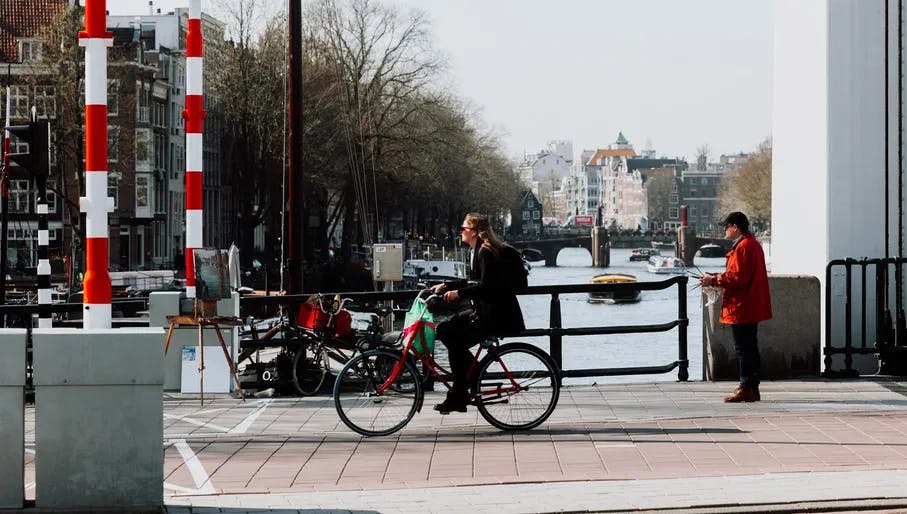
In response, various action groups advocated for change, prompting policymakers to recognise the benefits of cycling. This led to a shift in planning, with the introduction of car-free zones, expanded bike lanes and policies discouraging car ownership in the city centre. Today, Amsterdam is now home to 515km of vast cycle paths spanning the entire city.

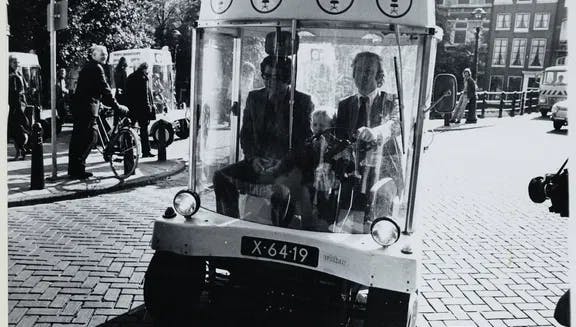
And it didn’t stop with bikes. In 1974 the city became home to one of the world's first electric car-sharing schemes: the WitKar. Developed by Luud Schimmelpennink, an inventor and industrial designer, the Witkar was implemented throughout the city as a self-service, electric vehicle program to reduce car ownership and congestion.
The fleet of cars were capable of reaching speeds of 30 km per hour, and could operate for approximately 30 minutes before needing to be recharged. Though technological and financial limitations prevented the scheme from scaling up, Witkar set the stage for the modern smart mobility solutions we now see with companies such as Greenwheels and automated quick charging.
So how is Amsterdam continuing to set an example for cities who are looking to implement similar solutions? Several key innovations show how Amsterdam’s mobility policies actively shape public space today:
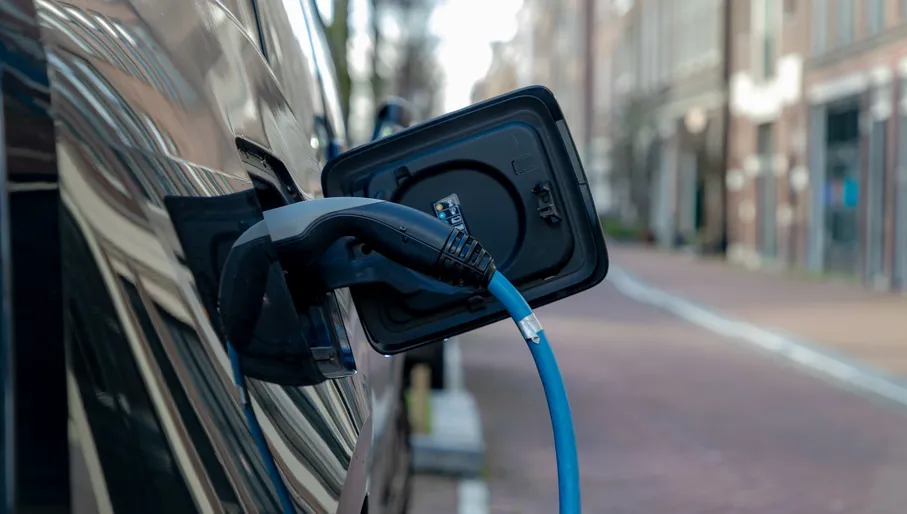
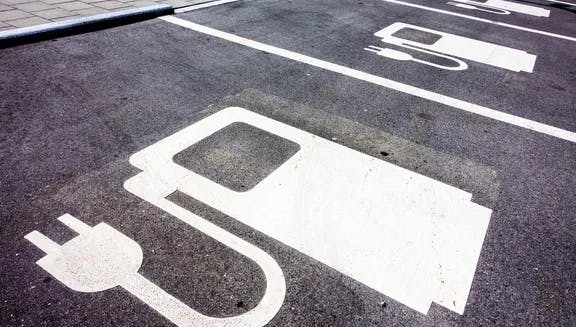
Amsterdam has one of the highest densities of electric vehicle (EV) charging stations in the world. Under its ten year plan for charging infrastructure, the city aims to expand electric charging points from 8,000 to 80,000 by 2030. This not only supports the transitions to emission-free transportation but also supports collaboration with companies such as Fastned and Greenflux who are focused on accessible EV charging.

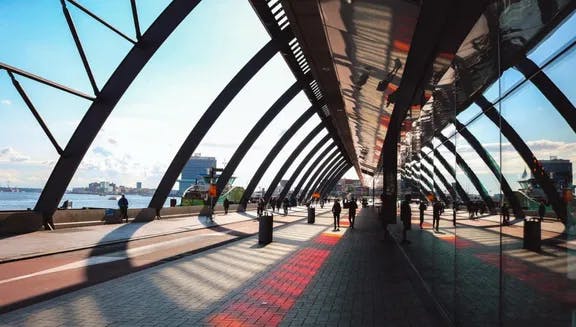
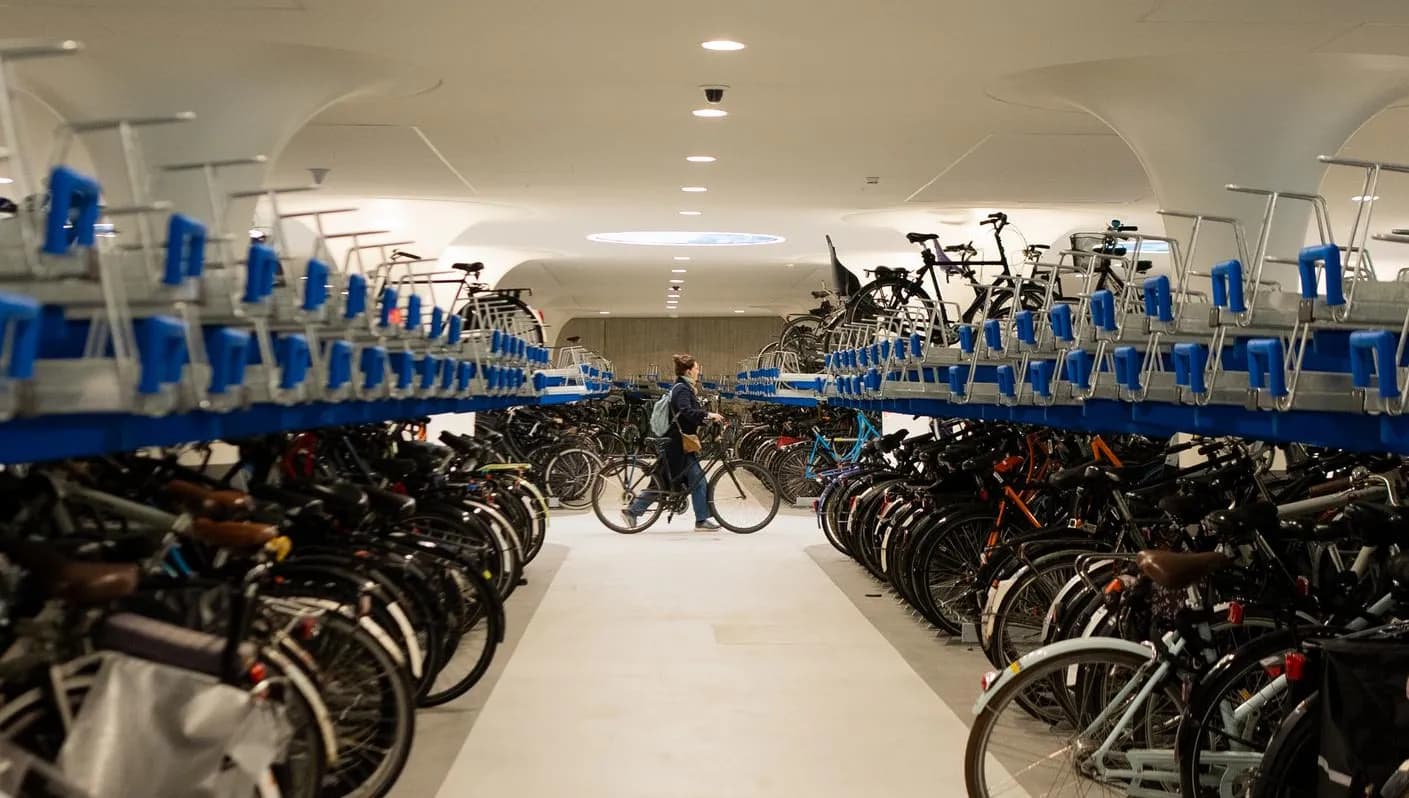
With cyclists at the centre of Amsterdam’s mobility scene, the city is also continuing to develop space-saving solutions to prioritise cycling-friendly infrastructure. A major example of which is the recently built underwater bike garage at Amsterdam Central Station. Using space below the city’s canals, the space provides parking for over 4,000 bikes. Not only contributing to space underground, but also creating 6,000 m2 of public boulevard above water, offering more accessible street-level space for pedestrians.

The city's approach to mobility is part of a broader vision for sustainability. In 2020, Amsterdam became the first city in the world that adopted a doughnut economy, with the mission to become fully circular by 2050. This focuses on minimising waste and maximising resource efficiency with the core aim to reuse, repair, refurbish, and recycle materials and products to keep them in use for as long as possible.
This goes hand in hand with Amsterdam’s smart mobility policies to refurbish transport vehicles, instead of being scrapped. By embedding circular economy principles into policy, the city continues to create a future that balances economic growth with environmental responsibility.
While not all policies are immediately popular, many are essential for long-term sustainability. We’ve explored how policies have shaped smart mobility in Amsterdam’s past and present, but what about the future?
Amsterdam and the Dutch government are implementing policies designed to benefit both residents and the planet. One key initiative, the Implementation Agenda for Emission-Free Mobility (active until 2026), aims to phase out fossil-fuel vehicles. And changes are already visible. By the end of 2025, all new taxis, vans, and buses must be electric or hydrogen-powered, with a goal of eliminating petrol and diesel cars in the city centre by 2030.
Such transitions will require ongoing investment, adaptation, and cooperation between government, businesses, and residents. As cities worldwide grapple with similar challenges, Amsterdam’s efforts may serve as a reference point, demonstrating what is possible, and how sustainable mobility can evolve in the years to come.