How FRONT is building a more circular future, one WasteBasedBrick at a time
14 July 2025
Our mission is to create healthy, resilient cities worldwide. For over 25 years, we’ve been capturing, storing, and reusing rainwater, not just to manage flooding, but to turn water into a valuable resource for cooling cities, growing greenery, and improving human health. Where cities once rushed to get rid of water, we’re saying: no, keep it. Use it. It’s vital for the future of urban life.
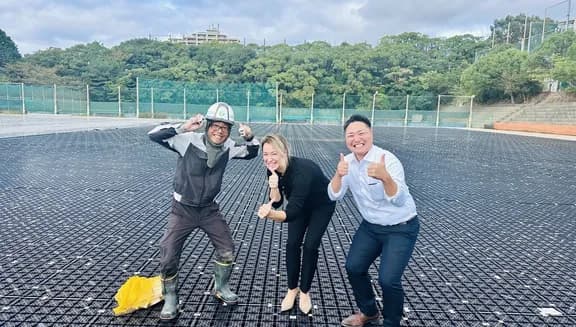
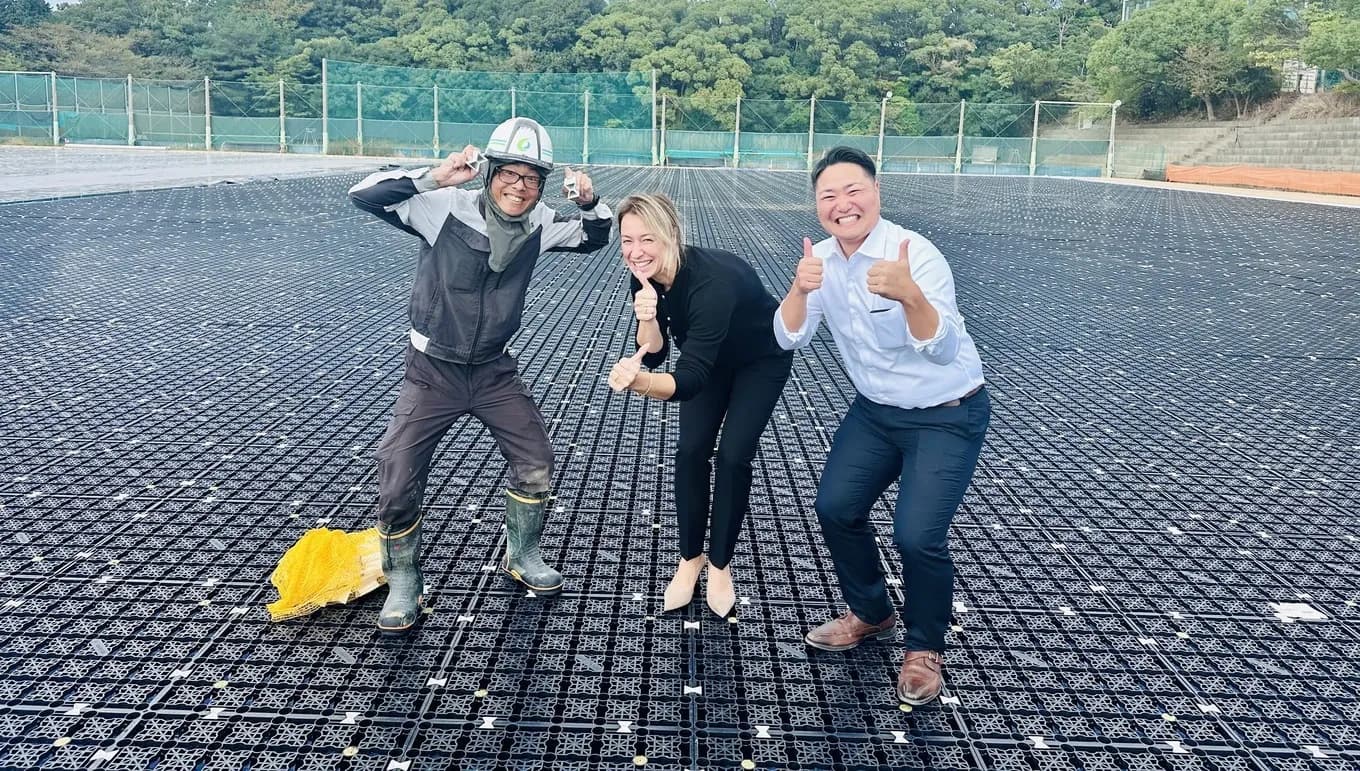
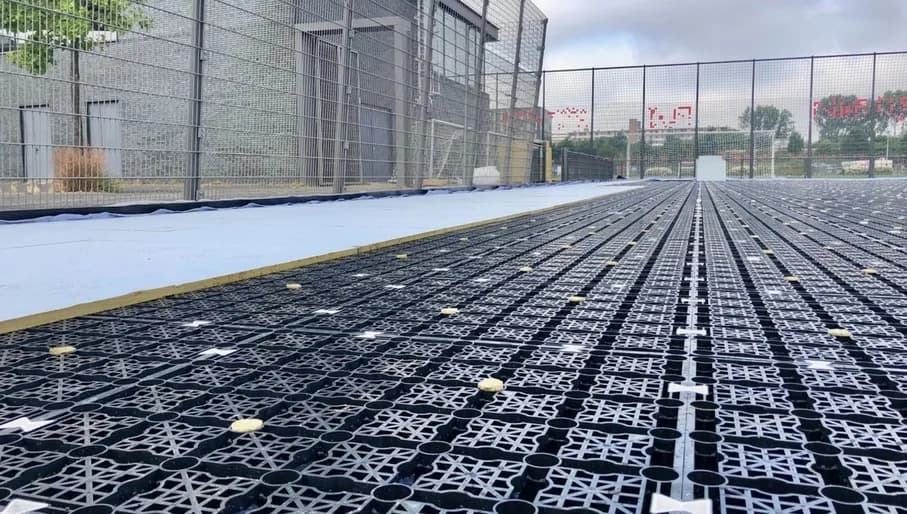
Take synthetic turf pitches for example, on a hot summer day, surface temperatures can reach up to 70 C degrees which is extremely unhealthy for anyone playing on them. With our technology in place, we can cut that maximum temperature in half, down to around 35 C degrees. That’s a huge difference, not just for climate resilience, but for the people who use these spaces every day.
It started at a birthday party in Amsterdam! A friend’s father, Permavoid’s founder Ron van Raam, was explaining his work. I had a background in communication science and challenged him to make the impact of his projects visible. When he mentioned they were working on the London Olympics, I said, ‘’Why don’t more people know this?’’.
That was 11 years ago. I joined to help build the brand, and later moved into R&D and partnerships. Since then, we've worked on everything from blue-green roofs, bike paths, to community pitches in South Africa to World Cup stadiums in the U.S.
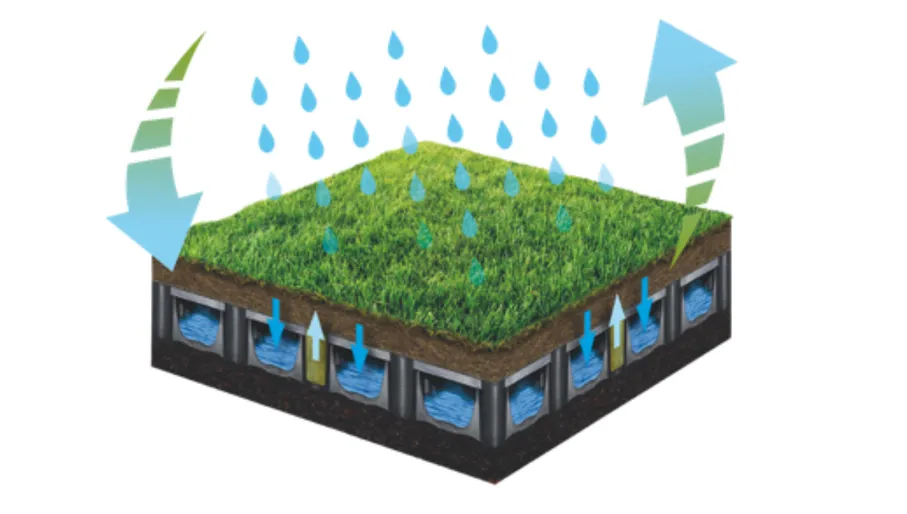
Permavoid started its journey over 25 years ago, in the civil engineering sector. And a true breakthrough came in 2015 with our capillary irrigation system. A technology that works like a sponge and straw combined. Just like nature, it stores rainwater and only releases it when plants actually need it. The process is entirely passive, mimicking the natural water cycle. This opened the door to building sustainable, healthy green infrastructure, on rooftops or in the streets.
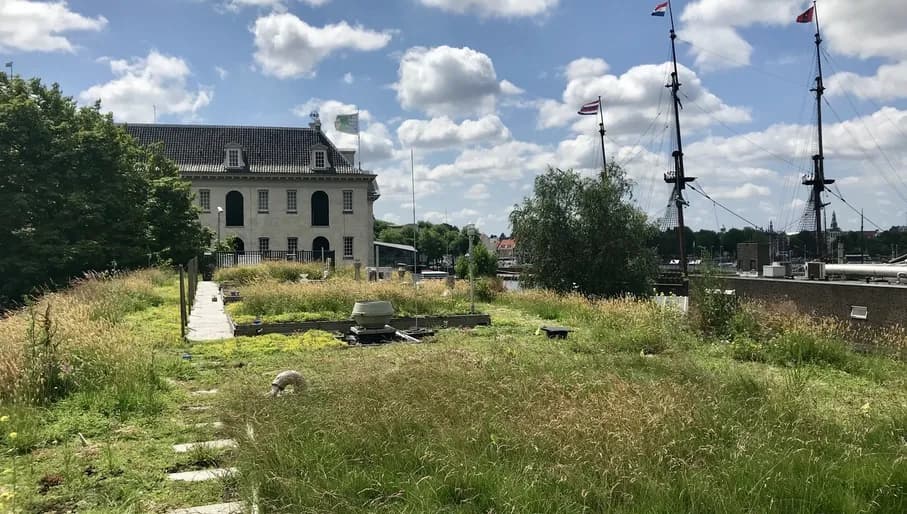
Around that time, we also joined forces with the City of Amsterdam, KWR Water Research Institute, and Wageningen University & Research. Years of independent research confirmed what we already believed: our blue-green approach works! And among one of the most groundbreaking examples is the Smart Roof 2.0 project, which proved just how critical the rainwater-retaining storage layer with capillary irrigation is beneath a green roof. Without it, conventional green roofs behave like deserts in summer; exactly when cities need cooling rooftop gardens the most. We showed the world it’s possible. Every patch of green thrives when it’s supported by enough blue.
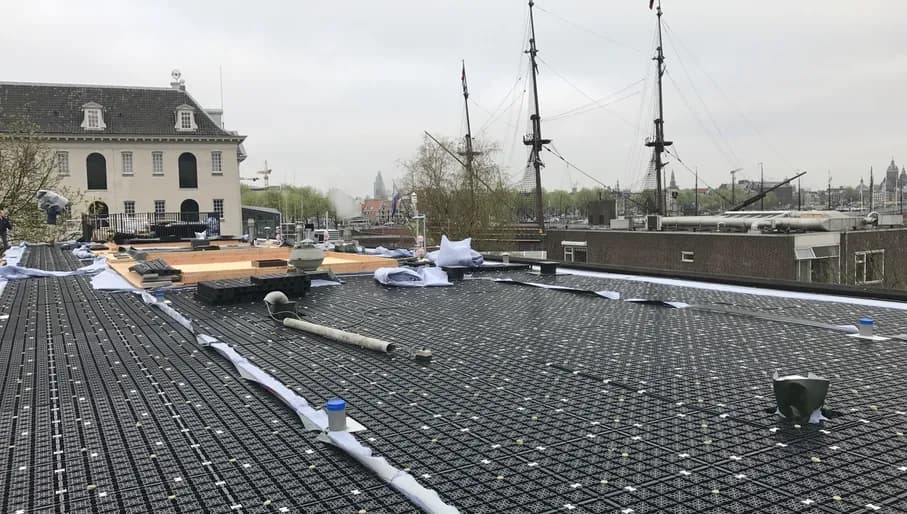
It’s definitely in our DNA. Our founder is a born-and-bred Amsterdam entrepreneur, and in a city so deeply shaped by water, it made perfect sense to base our headquarters here. What’s been invaluable is the city’s willingness to invest in innovation, from offering pilot locations like Marineterrein, where we’ve built real-life test beds, to actively supporting early-stage research and development.
The City of Amsterdam’s sports division has been especially supportive. They’ve given us the space to experiment, knowing that real innovation takes time and trial and error. We’ve been fortunate to work with people like Rob Alberts (Director, Sport & Bos) and Bert Klein (Team Leader, Sporthallen en -parken). Their openness to innovation and willingness to collaborate has made a huge difference in bringing pilot projects to life.That openness to work together, to adjust, and move forward towards better solutions has been crucial. It’s not just about showcasing what we can do, but about truly listening to the city and understanding the challenges they’re trying to solve.
For us, the biggest opportunity is connecting all the layers of the city, rooftops, sports pitches, trees, bike paths, so rainwater can be stored and reused across each one in a smart, integrated way. The ultimate goal is to create a fully connected system where, with the help of sensors and AI, water is guided exactly where it’s needed, when it’s needed.
So for example, if a rooftop has stored rainwater and a nearby pitch needs cooling, the system could automatically transfer that water at the right moment. And we aim to make it happen all around the world - of course tailored to the specific needs of each region. That’s the kind of circular, responsive infrastructure we’re working toward.