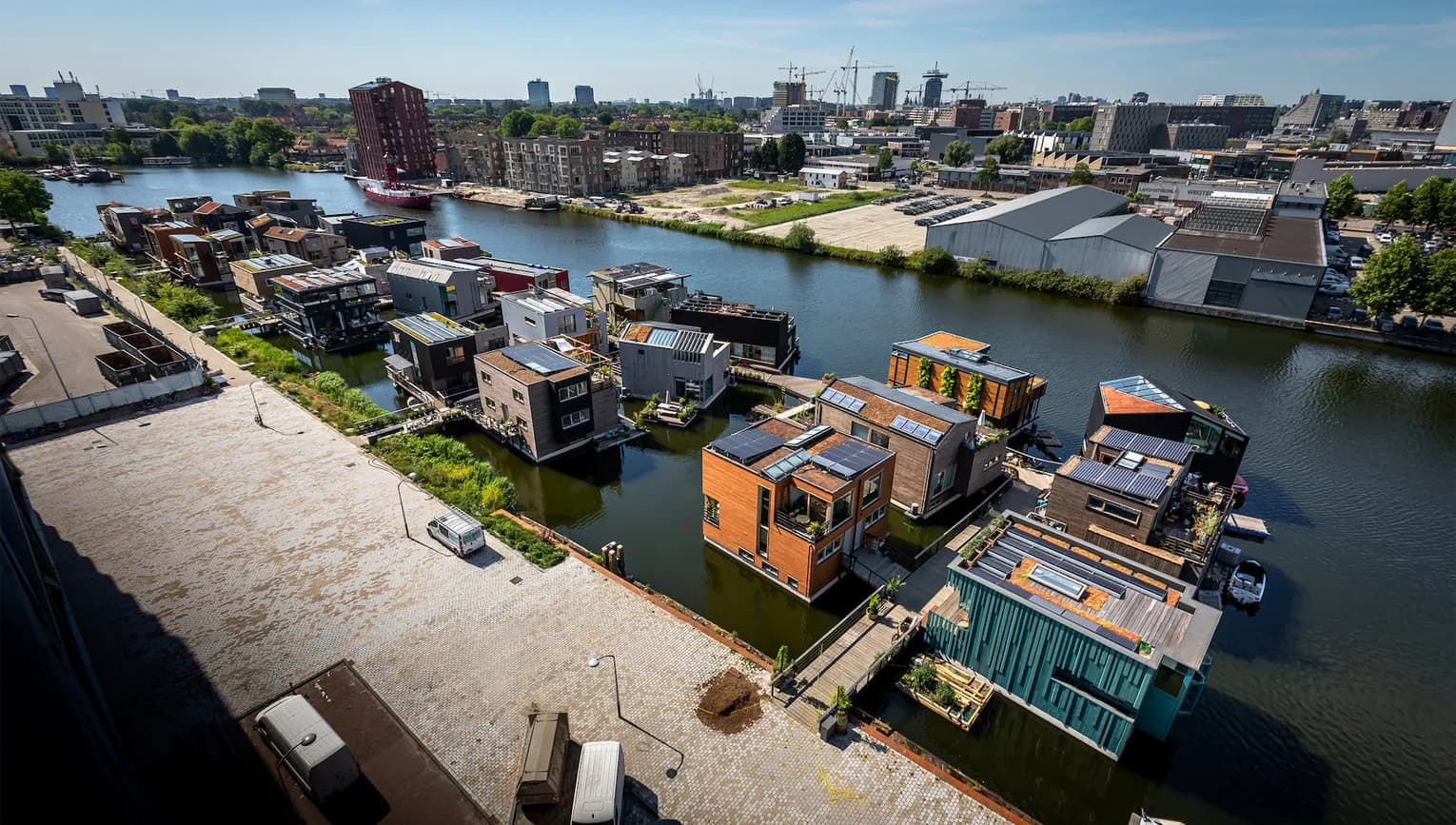
Schoonschip cicular neighbourhood. A nature initiative for increasing biodiversity.
Image from Space&Matter

Become part of Amsterdam’s circular transition

Updated 13 January 2026 at 12:43
The City of Amsterdam has committed to becoming a fully circular economy by 2050. Working towards this goal has transformed the city into a global frontrunner in the field, and Amsterdam’s ambitious circular strategy is a strong driver of economic competitiveness and business innovation.

A frontrunner in the circular transition

Amsterdam’s circular strategy involves a shift to a regenerative system, keeping resources in use, minimising waste and restoring natural systems. It’s not just an environmental initiative – it creates jobs and boosts the local economy. Circular jobs make up 11% of employment in the Amsterdam Area, and the city is widely seen as a global leader in sustainable innovation.

How Amsterdam is implementing a circular economy

Cities consume around 75% of the world’s natural resources and produce nearly half of global carbon emissions. Amsterdam’s circular economy model minimises the use of raw materials, designs out waste, keeps materials in use for longer and regenerates natural systems. Progress is tracked through a dedicated Circular Economy Monitor and supported by partners such as the AMS Institute, who help test and scale circular solutions through research and pilot projects.

Work opportunities for talent in the field: innovators and startups

The focus of Amsterdam’s circular strategy is on three key sectors:

Those sectors have been identified as having the most potential for impact. In practice, this means prioritising making the use of recycled or bio-based materials in new buildings mandatory, strengthening local food systems, reducing overconsumption and promoting second-hand markets and repair solutions.

Companies shaping sustainable urban development in Amsterdam

  • FABRICations: an Amsterdam-based architectural and urban design firm specialising in research-driven solutions for healthier, future-proof cities.
  • Finch Buildings: designs pre-fabricated, modular homes made from solid cross-laminated timber, which enables fast construction of high-quality, all-electric homes.
  • MOSS: using rooftop gardens, green facades and moss walls to transforms urban grey spaces into green, sustainable environments that cool cities, boost climate resilience and manage stormwater.
  • Space & Matter: designs adaptable buildings, circular neighbourhoods and community-led spaces such as De Ceuvel and the floating neighbourhood Schoonschip.
  • HOP Architects: specialises in sustainable and healthy design using natural, low-carbon materials, energy-efficient systems and features such as green roofs.
  • UNStudio: an Amsterdam-founded global design network that addresses urban challenges through human-centric and adaptable design.
  • Benthem Crouwel Architects: design circular infrastructure and buildings using recyclable materials and integrating energy-neutral, biodiversity-enhancing features
  • Seenons: a sustainable waste management service
  • Solarix: designs and manufactures colourful solar panels that can be installed on façades

Fashion and textiles

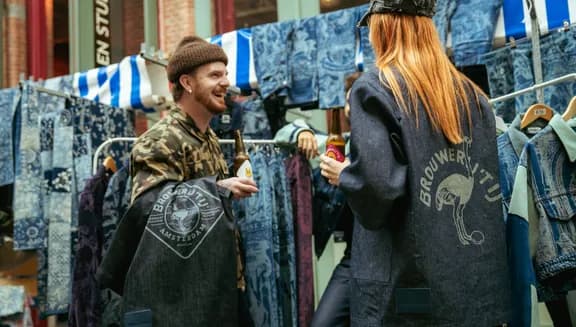
Key players in Amsterdam’s circular fashion ecosystem include innovative companies such as Bright.Fiber, which pioneers sustainable textiles and recycling, LENA, which offers fashion rentals, and the United Repair Centre, which pairs garment repair with social impact. 

Circular innovators

In other industries, Droppie tackles waste in furniture and leather, while Pretty Plastic transforms household plastics into durable, design-led building materials. Meanwhile, food waste initiatives like Grow It Away and The Waste Transformers work to cut landfill emissions and promote local, circular food solutions.

Career opportunities and sought-after skills

The Amsterdam Area is a leader in circular building policy and practice, and there’s a huge variety of roles available in the sector. In-demand skills and expertise include:

  • circular design specialisations – designing for disassembly, reuse and adaptability
  • circular procurement
  • materials expertise – bio-based, low-carbon, recycled and reusable materials
  • experience with material passport platforms such as Madaster and BAMB
  • regulatory insights and knowledge of circular building legislation – experience in working with environmental product declarations (EPDs), lifecycle assessments (LCA) and MPG (MilieuPrestatie Gebouwen) requirements
  • technical and construction skills – including skills in modular and prefab construction
  • materials recovery, salvage and circular demolition
  • digital and data skills – digital twins and lifecycle tracking of materials

International job boards and platforms

International professionals can access career opportunities in the field through several platforms:

  • I amsterdam Job Search: Search for job vacancies for non-Dutch speakers
  • IamExpat: Find jobs for internationals in Amsterdam through recruiters and international companies
  • Welcome to NL: Another job board that lists jobs for internationals in the Netherlands
  • LinkedIn, Indeed, Glassdoor and Monster – on the main platforms, new positions in the field are being added daily

Education and research

Amsterdam’s universities dedicate significant research and education to the circular transition. The Vrije Universiteit runs a research project called Accelerating the Circular Transition (ACT!), which aims to systemically accelerate the fair transition to a circular society. The Amsterdam University of Applied Sciences has a Circular Design and Business research group. The University of Amsterdam (UvA) regularly organises open courses and summer schools in the field. And the AMS Institute’s CircuLaw platform helps policymakers develop circular regulations and leverage available legal instruments.

International community and quality of life

The fact that the Amsterdam Area is regarded a global leader in circular practices and sustainable innovation means it’s a popular destination for international talent with an innovative mindset, and talent working in the field will find a thriving, active community. More generally, the region offers a collaborative, international working culture, pioneering organisations and a famously great work-life balance.

Key facts & highlights

  • The City of Amsterdam aims for 100% circular procurement by 2030
  • Circular jobs make up 11% of employment in the Amsterdam Area
  • 80% of public space materials are reused or recycled in circular neighbourhoods