
Amsterdam wrapped: key rankings from 2025
Amsterdam listed among Europe’s tech powerhouses: #5
Amsterdam claimed an impressive 5th place in Europe’s Global Champions 2025 in the Global Tech Ecosystem Report, celebrating its strength in innovation, startup productivity and output relative to city size. It also placed 16th globally for Density and Innovation, showing the city’s startup scene is thriving as well as strong linkages between research and industry.
This ranking shows up on the ground in the steady flow of scaleups moving from startup hubs and the Startup Village into larger offices across the city, and in international tech firms choosing Amsterdam for European product, engineering and AI teams rather than sales-only outposts.
Sustainability leadership: #1 and #40
Amsterdam’s sustainability credentials remain strong across global indices. In the Global Destination Sustainability Index 2025, the city climbed from 60th to 40th place, reflecting tangible progress in destination management, supplier standards, environmental performance and circular policies. While the 2025 Arcadis Sustainable Cities Index is still to be released, Amsterdam’s #1 global ranking in 2024 continues to anchor its reputation as a climate-forward city, built on long-term investment in regenerative urban development and sustainability in practice.
Amsterdam’s sustainability gains are visible in everyday infrastructure, from the rollout of zero-emission zones for city logistics to large-scale circular construction projects such as timber-based housing and the reuse of materials in public buildings.
Quality of Life rankings: #5, #6, #12
Amsterdam consistently ranks highly for its quality of life. In 2025, Numbeo placed the city 12th globally, while Mercer ranked it sixth in Europe in 2024. Another independent index from Statranker ranked Amsterdam fifth worldwide in 2025, reflecting strong performance across safety, services and urban amenities. High standards of living continue to make Amsterdam a magnet for global talent and international businesses.
High rankings translate into daily life through short commute times by bike, easy access to green and blue spaces like the Amstel and Amsterdamse Bos, and neighbourhoods where childcare, schools, healthcare and cultural venues sit within walking or cycling distance.
Student and academic prestige #55–60
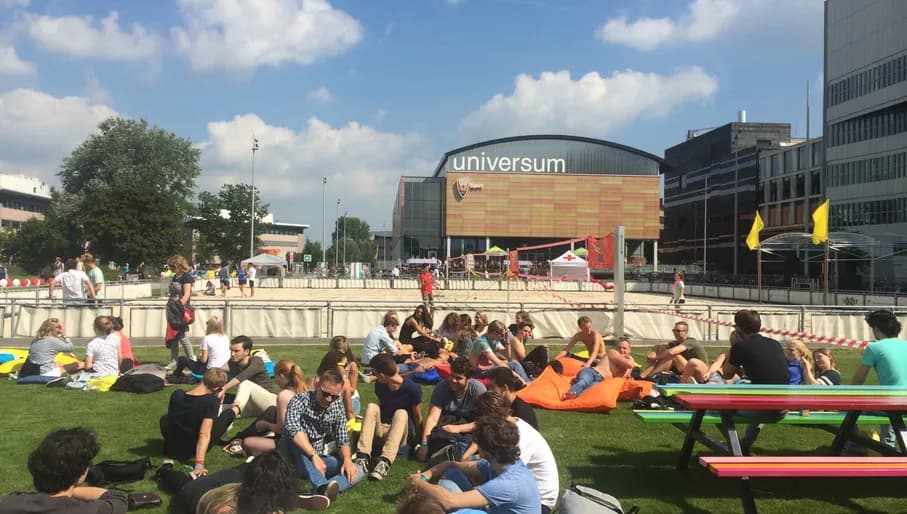
Amsterdam’s academic standing is backed by clear positions in global rankings. The University of Amsterdam typically places in the mid-to-upper tier of the global top 100, ranking around the #55–60 range in recent QS World University Rankings and within the top 70 in Times Higher Education tables.
At programme level, Amsterdam Business School featured four master’s programmes in the QS Global Top 100, including strong placements in fields such as business analytics, finance and management. These subject-specific rankings matter in practice, as they directly influence where international students choose to study and where global employers recruit.
These rankings are reflected in the city’s international lecture halls and research labs, where students and researchers work directly with industry on topics like AI, life sciences and sustainability, and where graduates regularly move into Amsterdam-based startups, corporates and research institutes.
Most attractive Dutch city: #1
In the 2025 Municipality Atlas, Amsterdam was again ranked the most attractive city to live in the Netherlands, based on amenities, connectivity and lifestyle factors. Local quality of life and cultural vibrancy keep Amsterdam at the top of domestic migration and preference surveys.
Professionals and families continue to choose the city for its cultural offerings, international schools, diverse neighbourhoods, and access to jobs across various industries, including technology, finance, healthcare, and the creative sector.
Amsterdam–Rotterdam innovation cluster #22 #50
In wider innovation rankings, the Amsterdam–Rotterdam region placed among the world’s top 100 innovation clusters, supported by strong patent activity, scientific output and venture capital deals per capita. Landing at 22ⁿᵈ for the largest innovation cluster in 2025, and 50ᵗʰ innovation cluster by intensity (relative to population density) in 2025. This highlights the Amsterdam Metropolitan Area’s position as a collaborative European innovation hub, closely linking technology, life sciences and research-driven industries.
This cluster ranking becomes tangible through cross-city collaboration, such as life sciences research that links Amsterdam’s universities and hospitals with Rotterdam’s medical and port innovations.