
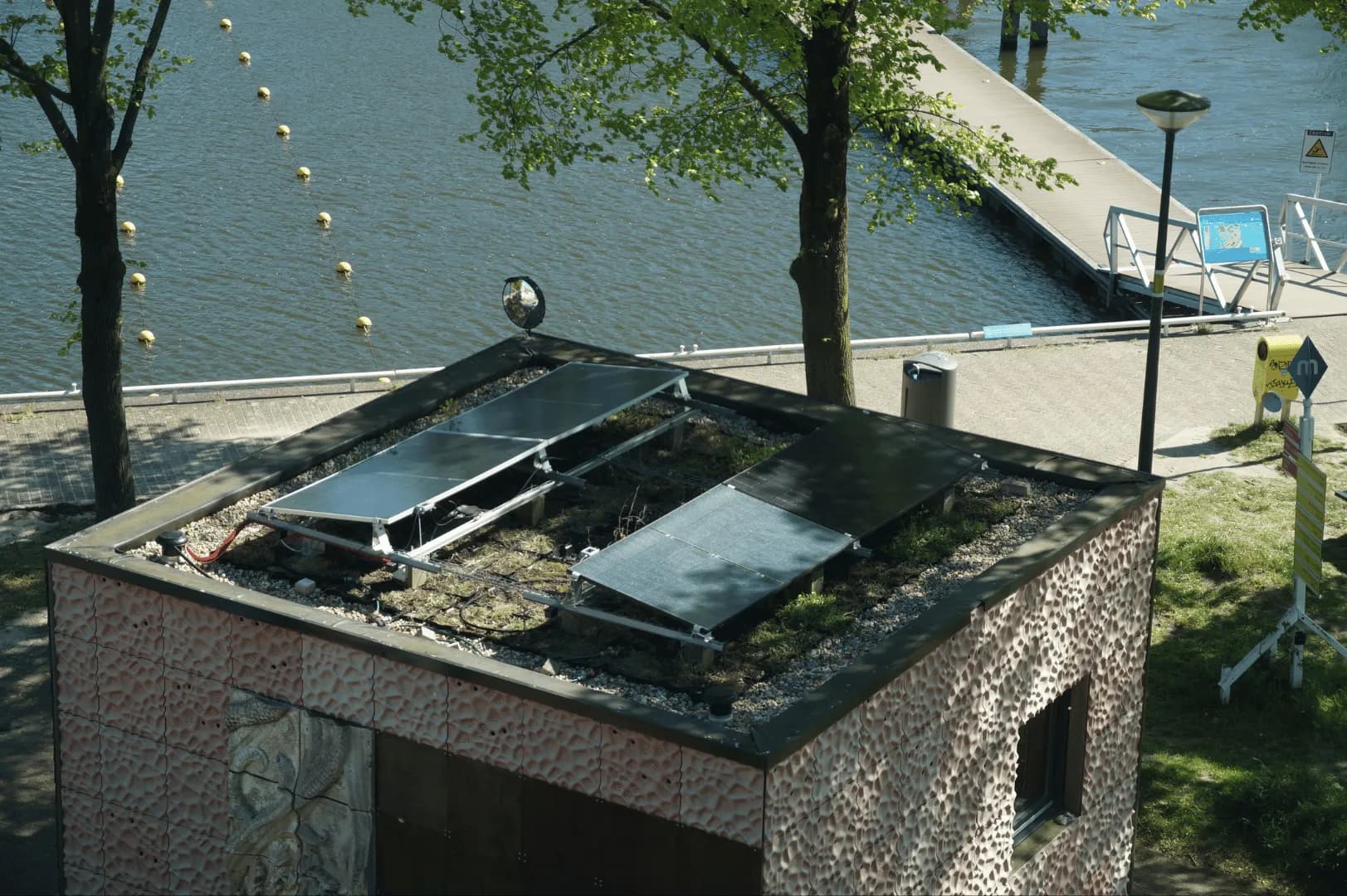
FAIR-PV's repairable solar panel begins real-world testing in Amsterdam
The project brings together AMS Institute, TU Delft, Biosphere Solar and Circularise. Its latest prototype combines a modular design with a digital product passport, helping both the panel’s components and the information about them remain useful throughout its lifespan.
How do repairable solar panels work?
Conventional solar panels are built to withstand decades outdoors. Their components are typically bonded together using ethylene vinyl acetate, or EVA, which protects the solar cells but also makes the different layers difficult to separate.
FAIR-PV replaces this permanent lamination with a liquid encapsulant and an edge seal. This allows the module to be opened so that individual components can be repaired, replaced, reused or recycled instead of the entire panel being discarded.
In peer-reviewed research, small liquid-filled prototypes achieved efficiency comparable to conventionally laminated panels. Researchers also demonstrated that recovered components, including glass and solar cells, could be reused in new modules, with reused solar cells delivering similar efficiency to new ones.
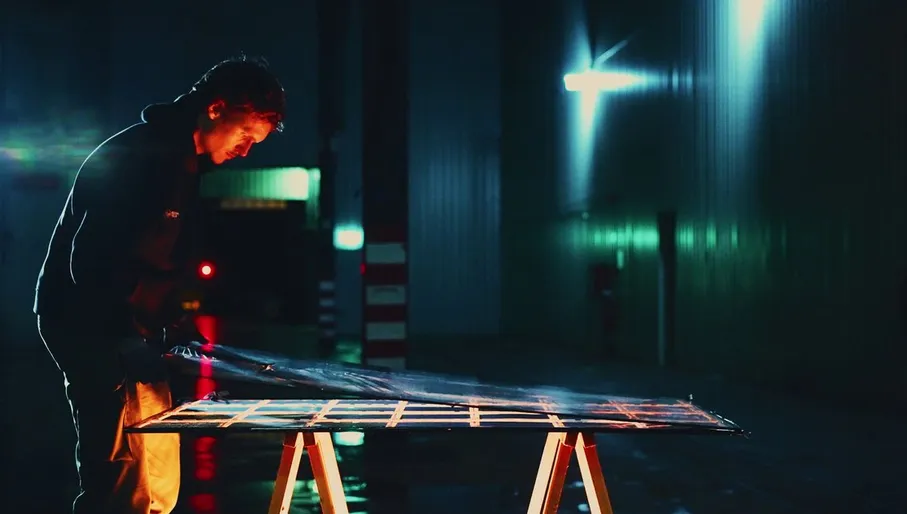
Digital product passport tracks materials and repairs
Designing a panel that can be taken apart solves only part of the problem. Repairers and recyclers also need to know what it contains, where its materials came from and what happened to it during use.
Circularise and TU Delft therefore developed a dynamic digital product passport for the module. It records information including material composition, manufacturing data, maintenance and performance while allowing companies to protect commercially sensitive information.
The data can help determine whether a panel should be repaired, refurbished, remanufactured or recycled. Although solar panels are not yet required to carry digital product passports under the EU’s Ecodesign for Sustainable Products Regulation, the project anticipates future product-information requirements.
Amsterdam’s Marineterrein tests circular solar technology
The latest FAIR-PV prototype has now been installed on the roof of AMS Institute’s Innovation Pavilion at Marineterrein. Researchers can monitor its performance under changing weather and temperature conditions and compare it directly with conventional panels. Visitors can also access the module’s digital product passport through a QR code.
The technology is not yet commercially available. Further development is needed to scale the design and test its long-term performance, including its resistance to ultraviolet light.
There is already progress on the manufacturing side. Kameleon Solar, a company specialising in building-integrated photovoltaics, has adapted its existing production line to accommodate the circular process. This is an early step towards understanding how repairable solar panels could be produced beyond the laboratory.
The Marineterrein trial also highlights Amsterdam’s role in bringing research and industry together to test new technologies in a real urban setting.
The wider FAIR-PV consortium includes the City of Amsterdam and Amsterdam Economic Board. Its focus on longer product lifespans and material reuse connects with Amsterdam’s ambition to use 50% fewer new raw materials by 2030 and become fully circular by 2050.
For now, the rooftop trial will help establish whether the technology can deliver reliable performance outside the lab. If successful, it could bring repairable solar panels closer to commercial production and help reduce material waste as solar energy expands.