
CuspAI raises $100 million to speed up climate-tech breakthroughs
New capital to accelerate the hunt for new materials
British–Dutch start-up CuspAI has secured $100 million (€92 million) in new funding to develop materials for carbon storage and advanced batteries. The round, announced on Wednesday, brings the total raised to $130 million (€110 million) in just 18 months. It is a rare achievement for a young European technology company.
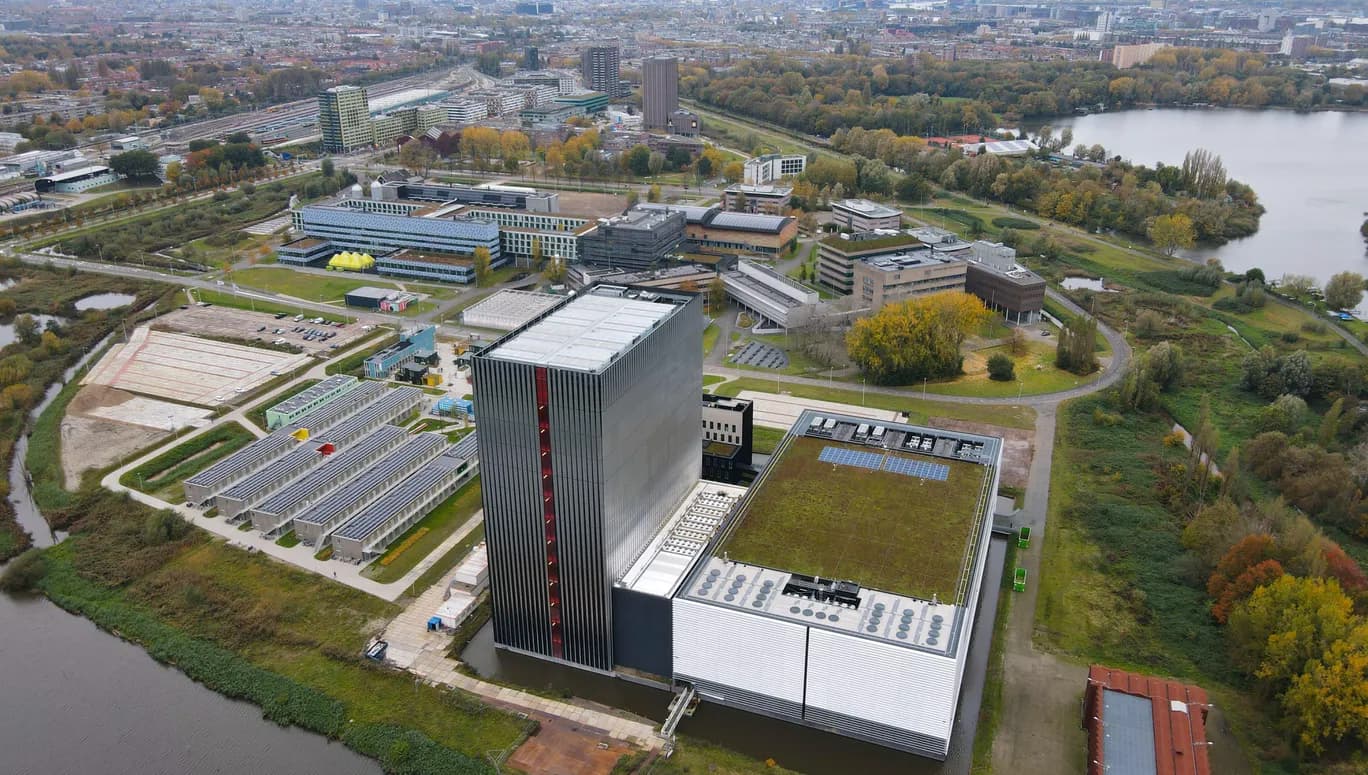
CuspAI is headquartered in Cambridge, UK, but its Amsterdam office at Science Park is its second-largest site. The company employs around 30 people across Cambridge, Amsterdam, Berlin, Tokyo, Edinburgh and Lausanne.
Co-founded by University of Amsterdam professor Max Welling and British chemist Chad Edwards, CuspAI says its platform can shorten the search for new materials by up to ten times, from carbon dioxide capture to bioplastics and nuclear fusion components.
Material use is fundamental to everything we do in human societies. New materials are therefore key to solving major societal problems. Artificial intelligence can ensure that we develop suitable materials for absorbing CO₂ from the atmosphere much faster.
Max Welling, co-founder and technology director of CuspAI and professor at the University of Amsterdam.
The new capital will be used to expand computing capacity, enlarge its materials databases, and grow operations. Investors include New Enterprise Associates (US), Singapore’s sovereign wealth fund Temasek, Nvidia’s NVentures, and Dutch investor Durk Kingma, co-founder of OpenAI. In July, for example, the start-up signed a deal with chemical group Kemira to develop materials that remove PFAS from contaminated water.
Linking science, capital and entrepreneurship in Amsterdam
CuspAI’s rapid growth shows how more capital is now flowing into European climate-tech and deep-tech ventures. For Amsterdam, where the company maintains a key hub, it highlights the city’s increasing role as a base for materials and cleantech innovation.
CuspAI’s success speaks to a wider shift in Europe: more private and institutional capital is being unlocked for science-based SMEs tackling climate, energy and health challenges. This trend is feeding business growth and helping to create the conditions for new innovation systems, not only in deep-tech and cleantech, but also in financial technology.
For cities like Amsterdam, which is positioning itself as a centre for sustainable finance and high-impact start-ups, such deals show how scientific breakthroughs, capital markets and entrepreneurial ecosystems are increasingly linked.