The Dutch Impact Ecosystem presents a national framework for a future-proof and resilient economy.
The Netherlands is taking a decisive step towards an economy where societal value — both social and ecological — is structurally embedded. With the Impact Agenda 2030, governments, entrepreneurs, financiers, and knowledge institutions are joining forces. Together, they are sending a clear message to the national government: impact is not a niche, it is a necessity. And it has real economic value — for impact-driven organisations and traditional businesses alike.
Five months ago, a broad Dutch delegation of social entrepreneurs, local authorities, foundations, knowledge institutions, and civil society initiatives took part in the Global Social and Solidarity Economy Forum. The insights and experiences gained from this exchange laid the foundation for the Impact Agenda 2030.
The Impact Agenda 2030 is a collective step towards a future-proof and resilient economy. It charts a course for a national strategy on the social and solidarity economy — directly responding to the call from the European Commission in its Social Economy Action Plan.
The agenda is built around five central themes for 2030: impact governance, impact procurement, impact finance, social and digital innovation, and education. These are underpinned by three enabling conditions: a national framework, an appropriate legal structure, and alignment with the existing ecosystem. The agenda also sets out concrete action perspectives for a broad range of stakeholders, including local, regional, and national government, network organisations, knowledge institutions, financiers, and entrepreneurs.
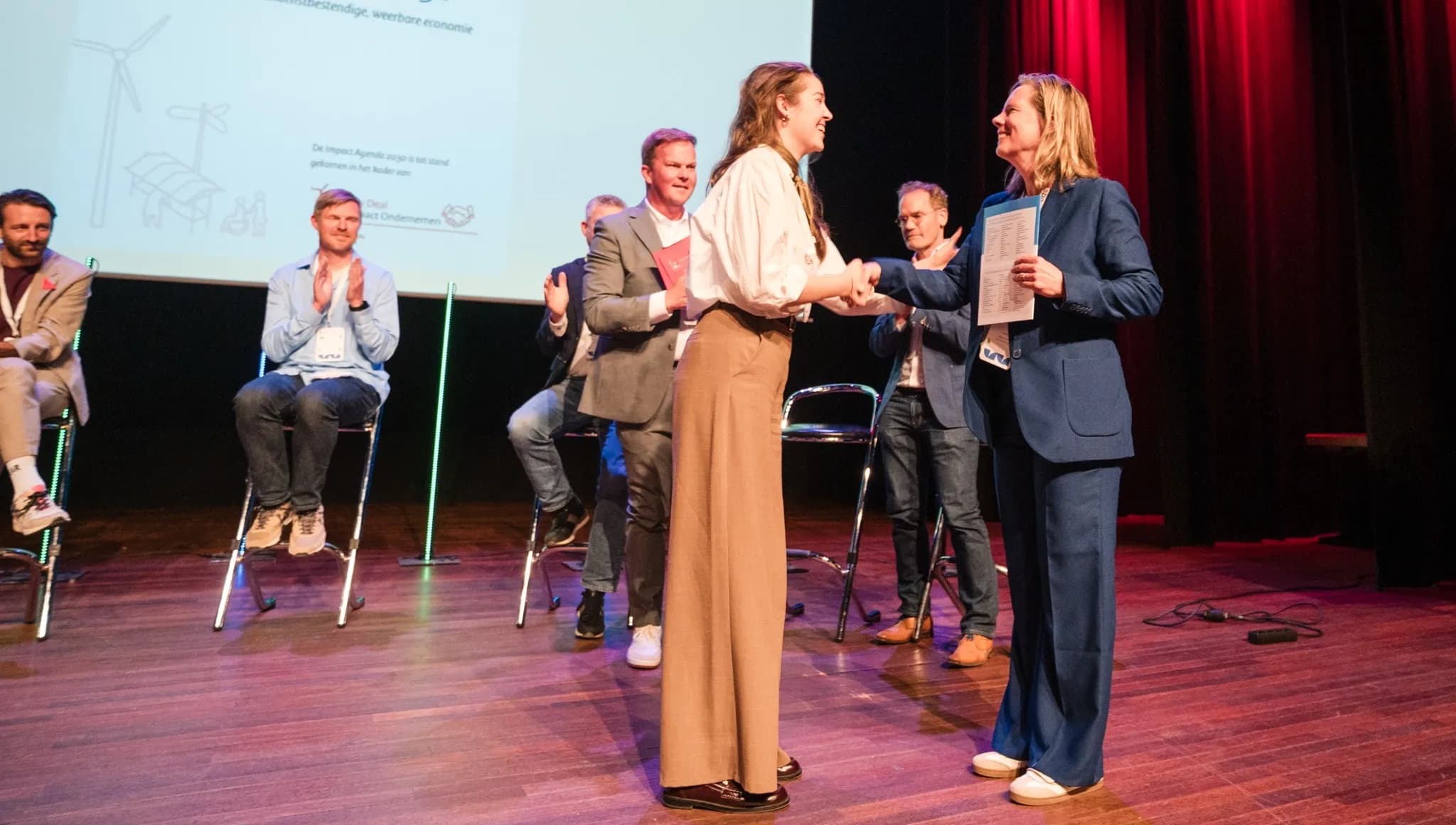
At the Social Enterprise Government Congress and the closing event of the City Deal Impact Entrepreneurship on 8 April, the agenda was presented to Anna Pot (National Coordinator for Sustainable Development Goals, Ministry of Foreign Affairs) and endorsed by Ruth Paserman (Director General of DG Employment, Social Affairs and Inclusion at the European Commission).
The Impact Agenda 2030 is not a destination — it is a starting point. In the period ahead, governments, entrepreneurs, financiers, and knowledge institutions will build on the progress made in recent years: moving from pilots to policy, from intentions to investments, and from local best practices to a national approach in which societal impact is permanently embedded in the economy.