#Founders Fridays: In Conversation with Benjamin Namane of De Tweede Jeugd
7 November 2025
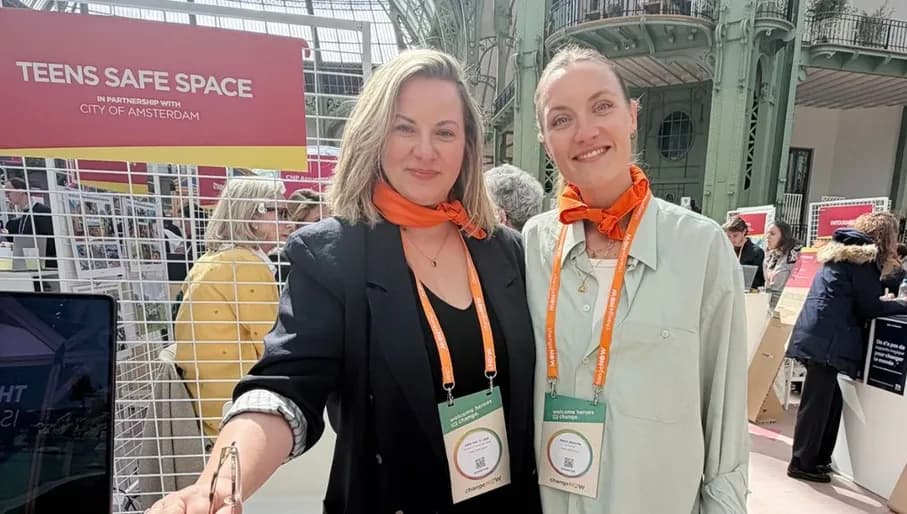
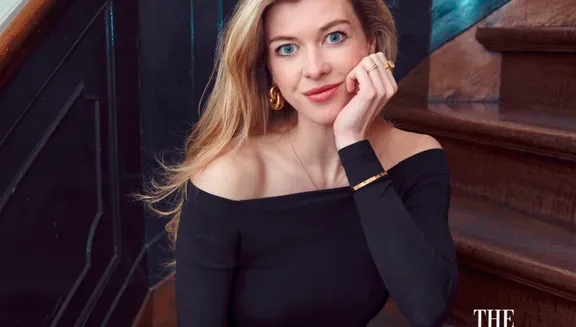
In this Founders Fridays edition, we speak with Jana van ’t Land, founder of TeensSafeSpace, together with Marta Jakschik, a psychologist with extensive experience working with young people. TeensSafeSpace is a privacy-first educational ecosystem for teenagers aged 13–18, based in Amsterdam. It was created to support schools that often lack the psychological capacity to guide all students, with support typically reserved for high-risk cases.
Through a combination of digital tools, expert-led content, and offline programmes, the initiative helps young people navigate the complexities of growing up in a digital world.
We’re building a privacy-first educational ecosystem at the intersection of teenage psychology and technology. We combine digital tools, expert-led content, and offline programmes to help 13–18 year olds navigate the challenges of growing up today.
Based on our research, we focus on topics that have a real impact on young people’s mental wellbeing—such as body image, anxiety and school stress, worries about the future and climate change, neurodiversity, identity and self-discovery, and the feeling of being hooked on social media without knowing how to step away.
Alongside this, we create space for real-world connection and dialogue. Together, these elements form an integrated system that supports young people, while also equipping educators with anonymous insights into what teenagers are really experiencing—so they can strengthen their support systems.
I have a background in finance. In my twenties, I worked in the financial sector, where profit was the main driver. Over time, I noticed that the creative part of my brain wasn’t being engaged anymore, and I moved into product design as that field started to grow.
I became a mother when I was 29, and it shifted my perspective. My three children, part of Generation Alpha, are growing up in a fully digital environment. Unlike many digital tools designed to maximise engagement, I wanted to be part of the solution in helping them navigate these online challenges.
When I grew up, topics like mental health and emotional wellbeing were still quite taboo. They aren’t taboo anymore, but I feel the time has come to move from awareness to practical tools. Just like students learn biology or maths, they should also have tools to navigate stress, identity questions, and everyday pressure.
My favourite aspect of working in Amsterdam is its combination of ambition and pragmatism. It’s often referred to as the “Silicon Valley of Europe,” and I really value the Dutch mindset of focusing on real impact, which is actively supported across the city.
I also appreciate the international environment. You meet people from all over the world, with different backgrounds and perspectives, which really accelerates collaboration and innovation.
It’s a city that feels both big and small at the same time. Everybody seems to know each other, which makes it easy to connect and move quickly between different circles.
From my perspective, I really like the focus on circularity and impact in Amsterdam, but I think there are still other important areas to broaden the conversation. Social issues, for example, could be included more. What exactly do we define as impact? I think that definition can be wider and more inclusive.
Another point is that female founders still receive less attention and support, while research often shows that women-led initiatives create significant impact. I think it’s important to raise awareness around this and explore how we can better support more female founders.
We are running two pilots at Dutch high schools with around 1,000 students to measure, test, and improve our approach. The fact that we’ve gained the trust of these schools is a major win for us.
We’ve also just joined the ChangeNOW delegation and received a lot of positive feedback from people all over, including potential partnerships.
From a personal perspective, entrepreneurship can be a lonely journey. Connecting with others in this way gives a lot of positive energy and valuable insights. That sense of energy, interest, and validation is important, otherwise you can start questioning yourself.
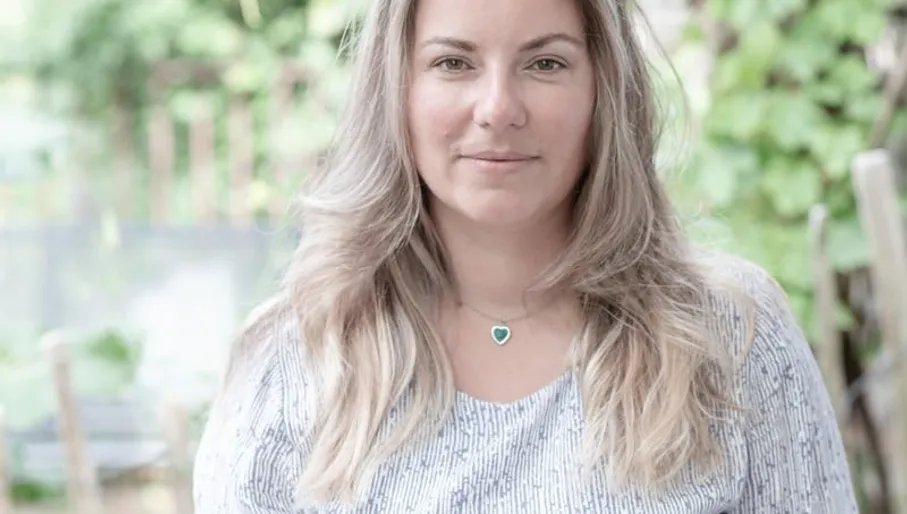
I don’t think there’s a formula for entrepreneurial success that can simply be replicated. What works for me is very much connected to how my mind works.
I have a good eye for spotting patterns and often come up with 20 different ideas to solve a problem. I can both ideate and dream, but I’m also able to roll up my sleeves and execute.
My community and network are very important. For me, it’s about building trust and staying curious, both about the people you want to help and the people who can help you along the way.
I often hear people say that you should choose the advice that suits you. I get a lot of advice, but I try to trust my own judgement and really look at the person giving the advice. I ask myself how they run their own life, and whether that aligns with what I want or need.
We are still in the early stages, so the whole journey is a challenge. One of the first hurdles was finding pilot schools, because schools are not typical business partners. That’s why the big win right now is having the trust of these schools that want to partner with us.
Also, at the moment, I’m basically doing the work of three people, which is tough. I also have to stay true to my own rhythm, and the rhythm of my family. If I start waking up at 3 a.m., I need to set clear boundaries. Good thing I’m not in my twenties anymore, so I see things more clearly and have the courage to act on what I feel.
I think for women founders especially, success is often closely tied to the wellbeing of the founder. I have three kids, so balance is important. I naturally work in cycles: April to June is very active, summer is slower, September picks up, and in winter I slow down again. I’m not building a startup that is focused on making profit within two years. I believe it shouldn’t be a sprint, but a marathon.
More pilots in the Netherlands, a partner school in France, partnerships in Finland and Latin America, I would really like this to become more than a local initiative, and to help make these topics less taboo and more manageable by building better tools and systems.
We are also moving more into ecosystems, connecting with companies, municipalities, and schools. They are very welcome to reach out; that is one of the most important things right now.
We’d also like to expand more offline work, for example around topics like body image and nutrition. Companies and institutions that want to collaborate on this are very welcome to explore collaborations.
Just do it, don’t wait for perfection. I could have started much sooner. If you have a good idea, don’t wait to begin your journey. Start, learn along the way, and refine as you go.
More about #FoundersFridays
#FoundersFridays is an interview series about founders, by founders. Each edition features a founder sharing key lessons, milestones, challenges and reflections — with a particular focus on Amsterdam's role in the Dutch innovation and impact ecosystem.
If you're a founder based in Amsterdam, working on an innovative solution to an urban or social challenge, and you'd like to share your story with our audience, please get in touch with Anne Dirks by email.