#Founders Fridays: In Conversation with Benjamin Namane of De Tweede Jeugd
7 November 2025
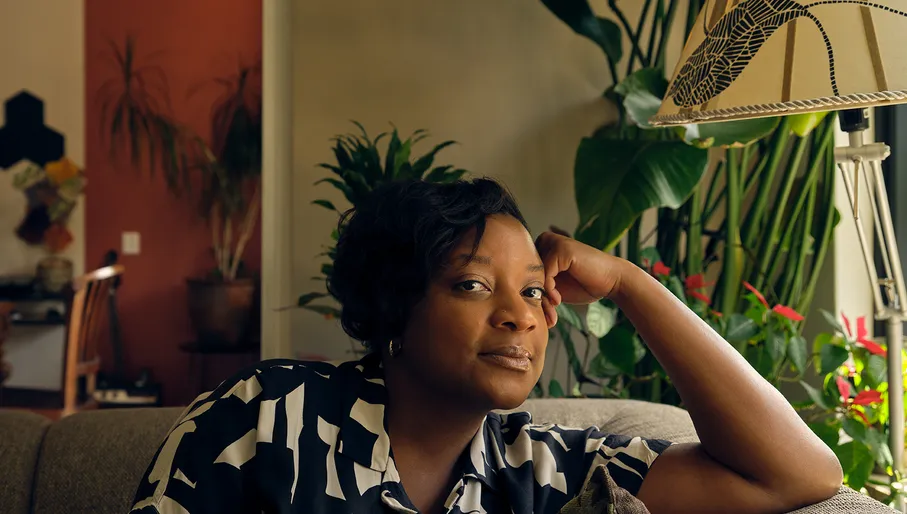
In this Founders Fridays edition, we speak with Samantha Maynard, who is building environments that bring together architecture, technology, the senses, and community — under the name Sensorium.
Sensorium is a vision for how architecture, nature, technology, and human-centred design can come together to create environments that support wellbeing, creativity, learning, and connection.
Looking back, I wasn't changing direction. I was collecting pieces. My father was a carpenter who taught me that meaningful things are built long before anyone sees the finished result. My mother spent her career caring for others, which taught me the importance of wellbeing, empathy, and creating environments where people feel supported. Professionally, my path took me through creative production, hospitality, events, entrepreneurship, administration, and operations — each stage teaching me something about people, spaces, systems, creativity, and connection.
Whether working in post-production studios, supporting business operations, helping deliver events, or observing how hospitality environments shape experiences, I became increasingly interested in the relationship between people and the spaces they inhabit. Sensorium emerged from bringing those pieces together into a single vision: exploring how thoughtfully designed environments can support wellbeing, creativity, learning, sustainability, and community.
The idea had actually been forming quietly for years before I spoke about it publicly.
Over time, I noticed that many of the conversations emerging around health, housing, urban development, and wellbeing were asking similar questions: how do we create environments that help people thrive, rather than simply function? The more I paid attention, the more I realised those questions sat at the heart of what Sensorium was becoming.
There wasn't a single dramatic moment — more a growing realisation that I couldn't stop thinking about the relationship between environments and human experience. While freelancing as an Executive Assistant and coordinating across multiple departments, I kept returning to the concept in my spare time. I was doing the work in front of me, but my mind kept circling back to questions about wellbeing, sustainability, design, and how spaces influence the way we feel, connect, and function.
At a certain point, I realised that if an idea continues to follow you for years, it deserves your attention. Sensorium became the project I could no longer ignore.
The Netherlands has long been recognised for its innovative approach to design, sustainability, urban development, and quality of life. Living here has allowed me to observe how thoughtful planning — cycling infrastructure, public spaces, environmental initiatives, community-focused design — can influence every aspect of wellbeing.
Amsterdam in particular draws people from diverse cultures, disciplines, and industries. It encourages experimentation, collaboration, and forward-thinking ideas. For a project like Sensorium, which sits at the intersection of multiple fields, it feels like a natural place to grow.
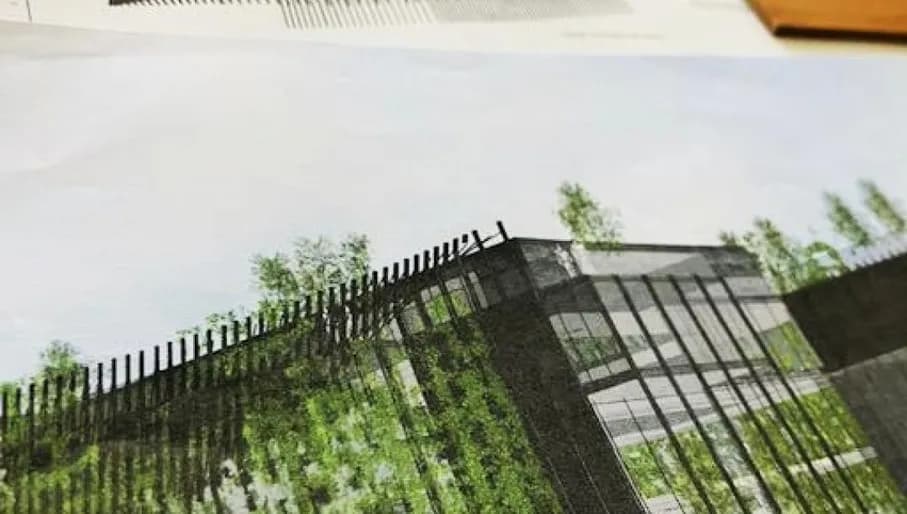
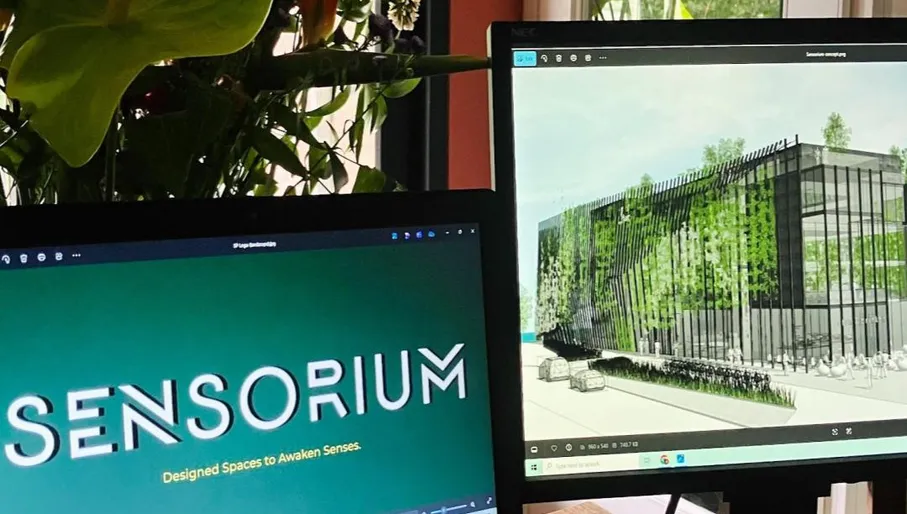
Conversations across healthcare, housing, urban planning, and community development are increasingly exploring the relationship between our environments and our wellbeing. Questions around loneliness, mental health, access to nature, social connection, and preventative approaches to health are becoming ever more visible.
Sensorium was born from a similar curiosity: what role can our environments play in helping people feel healthier, more connected, and better supported in everyday life?
People are experiencing high levels of stress, isolation, overstimulation, and disconnection from nature. At the same time, many sectors are seeking new ways to support health, creativity, learning, and social connection in spaces primarily designed for efficiency — where human wellbeing is often treated as an afterthought. Rather than focusing on a single problem, Sensorium is exploring how architecture, sensory experience, sustainability, technology, and community can work together to create environments that support people more holistically.
Sensorium is still in its early stages, so many of the wins have come through conversations rather than construction.
What continues to encourage me is the response from people when they hear the vision. Across different industries and backgrounds, I've repeatedly heard people say: "This is needed."
Those conversations have reinforced the growing appetite for spaces that prioritise wellbeing, inclusion, creativity, and connection. For me, creating dialogue around those themes is already a meaningful contribution — because change often begins with shared conversations and collective imagination.
For me, connection begins with making people feel comfortable enough to be themselves. Many environments unintentionally create barriers — they can feel overwhelming, exclusive, stressful, or disconnected from the needs of the people using them. Sensorium explores how design can do the opposite.
That might mean incorporating natural elements, creating opportunities for rest and reflection, attending more carefully to sensory experience, or designing spaces that encourage people to gather, learn, create, and engage across different backgrounds and abilities.
Inclusion isn't something that gets added at the end of a project — it has to be considered from the very beginning. Ultimately, I want Sensorium to explore how environments can help people feel welcome, supported, curious, and connected: both to themselves and to one another.
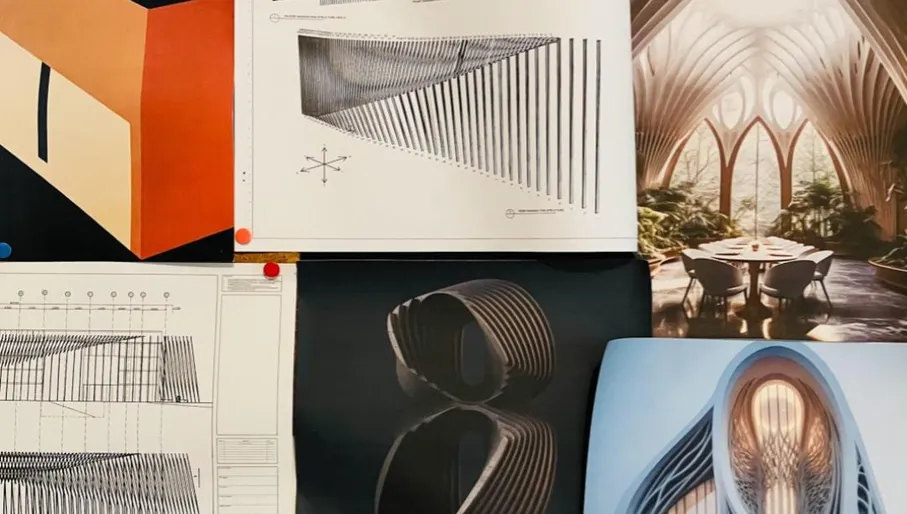
The biggest challenge has been continuing to build the vision without significant funding, whilst balancing the realities of everyday life and work. Building something ambitious often means working without certainty. There are moments when progress is highly visible, and moments when work happens quietly in the background — through research, relationship-building, design development, outreach, and learning.
I've had to become comfortable with taking small steps whilst holding onto a much larger vision. At the same time, those constraints have taught me resilience, patience, and resourcefulness. They've pushed me to focus on building strong foundations rather than rushing towards quick results.
Sensorium is still evolving, but every conversation, collaboration, concept sketch, prototype, and partnership discussion has become part of that journey. In many ways, the challenge has reinforced one of the project's core ideas: meaningful things are built piece by piece.
I'm particularly excited about exploring how sensory design can be translated into real-world experiences through materials, light, atmosphere, and hospitality environments.
One area I'm currently developing is a concept called Plantlight, which explores the relationship between nature, illumination, wellbeing, and sustainable design. It's still evolving, but it embodies many of the themes at the heart of Sensorium: creating environments that feel restorative, engaging, and connected to the natural world.
More broadly, I'm looking forward to continuing conversations with designers, researchers, hospitality professionals, and potential partners who share an interest in how spaces can positively influence human experience. At this stage, every prototype, partnership, and conversation feels like an opportunity to learn something new and move the vision forward.
Don't be put off if your path doesn't look linear. For a long time, I thought I was moving between different industries. Looking back, I was collecting pieces — gaining knowledge, building understanding. Some experiences that seem unrelated today may become the foundation for something much bigger tomorrow.
I'd also encourage people to stay curious. Spend time listening, observing, asking questions, and learning from people outside your immediate field. Some of the most interesting ideas emerge where disciplines overlap.
And most importantly: don't wait until everything is "perfect" before you begin. Meaningful projects rarely arrive fully formed. They develop through experimentation, collaboration, persistence, and the willingness to keep building — even when the final picture isn't entirely clear. Progress doesn't always happen in leaps and bounds. Often, it happens piece by piece.
One of the strongest sensory memories I return to is food.
Growing up, many of our family gatherings revolved around cooking, sharing meals, and passing recipes between generations. There was always a sense that food carried more than flavour — it carried stories, traditions, memories, and connection. The smells drifting from the kitchen could instantly bring people together. Certain dishes could transport you back to a specific moment, place, or person.
As I've grown older, I've become increasingly fascinated by the relationship between memory and the senses — particularly how smell and taste can trigger experiences that remain deeply embedded within us. Research into dementia and Alzheimer's has shown how powerfully sensory memories can remain connected to identity and emotion.
I think that understanding has found its way into Sensorium. The project isn't only about architecture or design — it's about creating experiences that people remember, spaces that resonate emotionally, and environments that engage the senses in meaningful ways. I've always believed that some of our most powerful memories are sensory ones, and Sensorium is rooted in that idea.
If I had to choose one, it would be possibility.
I hope people leave feeling a little more connected — to themselves, to others, to nature, to an idea they hadn't considered before. Sensorium is ultimately about creating experiences that stay with people. Sometimes that might be a moment of calm, a meaningful conversation, a sensory memory, new knowledge, creative inspiration, or even the beginning of a collaboration.
The goal isn't simply for people to visit a space. It's for them to leave with something that continues to resonate long after they've gone. If someone leaves feeling better than when they arrived — even in a small way — I think we've done something worthwhile.
More about #FoundersFridays
#FoundersFridays is an interview series about founders, by founders. Each edition features a founder sharing key lessons, milestones, challenges and reflections — with a particular focus on Amsterdam's role in the Dutch innovation and impact ecosystem.
If you're a founder based in Amsterdam, working on an innovative solution to an urban or social challenge, and you'd like to share your story with our audience, please get in touch with Anne Dirks by email.