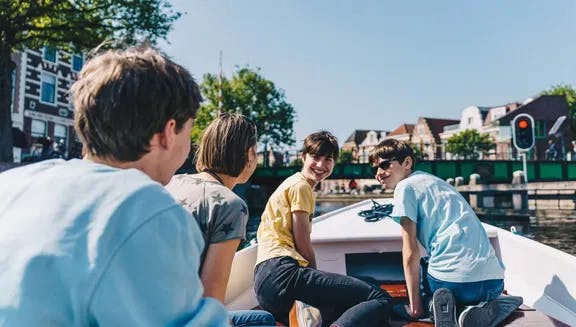
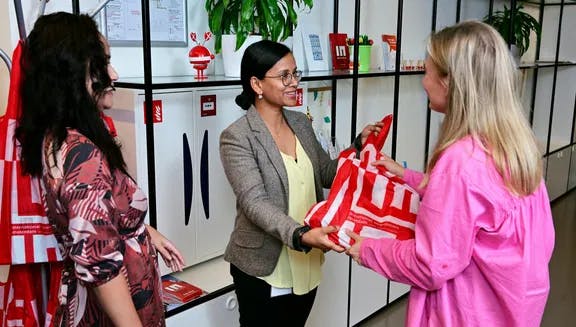
Getting involved in your community by doing volunteering helps build social connections and learn about local society and culture – and it’s a great way to practice your Dutch, too!
Getting involved
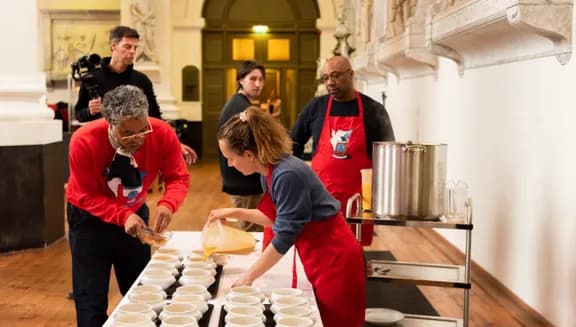
When it comes to volunteering in Amsterdam, there are many options. Organisations such as Serve the City and Volunteer Center Amsterdam (VCA) offer a wide range of activities to join. Get involved with community gardening, help at the local animal shelter, cook lunch for refugees or tackle odd jobs for an elderly neighbour. For many activities, speaking Dutch is not a requirement, but if you do want to test out your language skills, volunteering can offer great opportunities to do so. “You are meeting new people who are often open to connect,” says Brigitte Vonck-Makkinje, director at Serve the City.
Tips for first-timers
The best starting point is to find an initiative that matches your skills and interests. Both Serve the City and the Volunteer Center Amsterdam (VCA) offer clear search functions, and they group their volunteering opportunities by categories such as social work, neighbourhood and community, gastronomy and nature. “I think what’s most important is that you choose something you feel confident in doing. And just take that first step. It’s often only a couple of hours, and you’re doing something good,” says Vonck-Makkinje. “The volunteers that sign up are often open to meet new people, and the organisations we help love working with volunteers.”
Getting started with informal chats
“Volunteering is one of the most natural ways to practice your Dutch,” says Linda Slagter, communications advisor at the Volunteer Center Amsterdam (VCA). “You meet Dutch people and other Amsterdammers, meaning you get to pick up everyday phrases and habits. Because you work together and have a common goal, conversations usually feel less nerve-wracking than in a formal language lesson. Lots of our international volunteers have said that they’ve gained confidence by regularly using the language in real-life situations.” Plus, volunteering activities usually come with built-in opportunities for chats: “The best conversations often happen during informal moments such as coffee breaks and team lunches, letting you practice your Dutch in a relaxed way,” says Slagter.
How to practice your Dutch when volunteering
Slagter has some useful tips for internationals who want to practice their Dutch:
Don’t be afraid of making mistakes! People really appreciate it that you’re trying to learn.
Let people know that you’re still practicing your Dutch. They will help you by talking more slowly and explaining certain words or phrases.
Listen in to other people talking, even if you don’t understand everything. There is a lot to learn from hearing the language being spoken around you.
The best volunteering activities for practicing Dutch
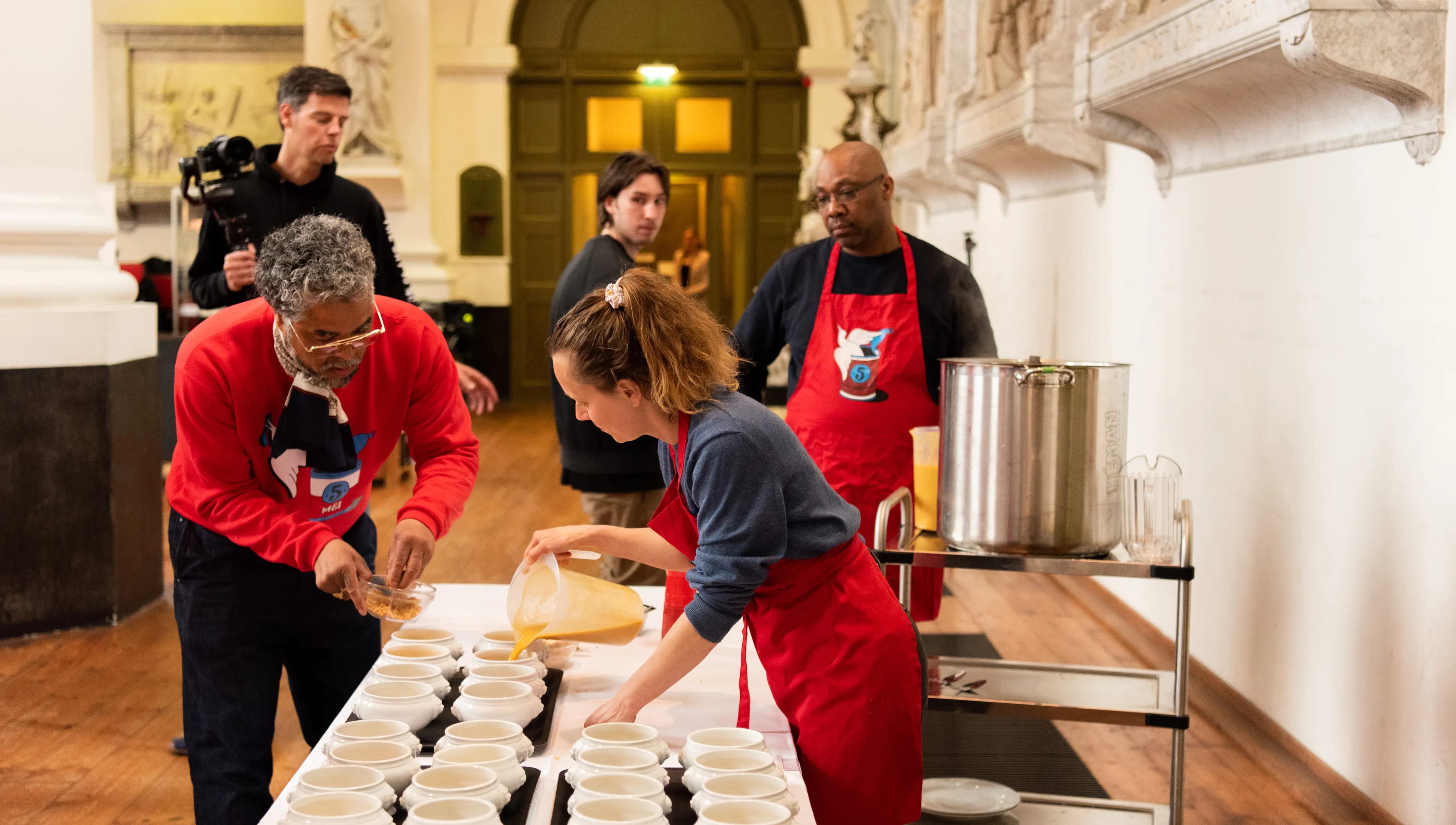
While it’s important to choose an activity that you feel comfortable with and enjoy doing, it’s also worth considering where you might get the best chances of practicing your language skills. Volunteering with smaller, local organisations might mean there is a greater likelihood of the general language of conversation being Dutch. “If you want to practice your Dutch, do a cooking project with Buurtbuik or another buurthuis [community centre] and stay for dinner,” says Vonck-Makkinje. “Many locals come to these dinners, and it’s a great way to connect with Dutch-speaking people. Projects with the elderly are also a great way to practice your Dutch. They are often more patient.”
Slagter agrees that neighbourhood and community projects and work with elderly people offer great opportunities for honing your language skills, but says that helping out with gardening projects or litter-picking or at cultural events can also create plenty of opportunities for chats and connections. And because volunteering work is so flexible, you can really tailor your experience. “Many internationals start out in an organisation where they can talk English and then start introducing more and more Dutch practice into their volunteering work,” says Slagter.
Useful phrases
Finally, to get you started, here are a few helpful phrases to test out on a day of volunteering:
Hallo, ik ben nieuw hier. – Hello, I’m new here.
Wat kan ik doen? – What can I do?
Zullen we samen koffie drinken? – Shall we have coffee together?
Tot de volgende keer! – See you next time!
Engels hoeft niet, ik wil heel graag mijn Nederlands oefenen! – No need to speak English, I'd really like to practice my Dutch!